Qubits Made in Ordinary Silicon, on an Industrial Chip Line

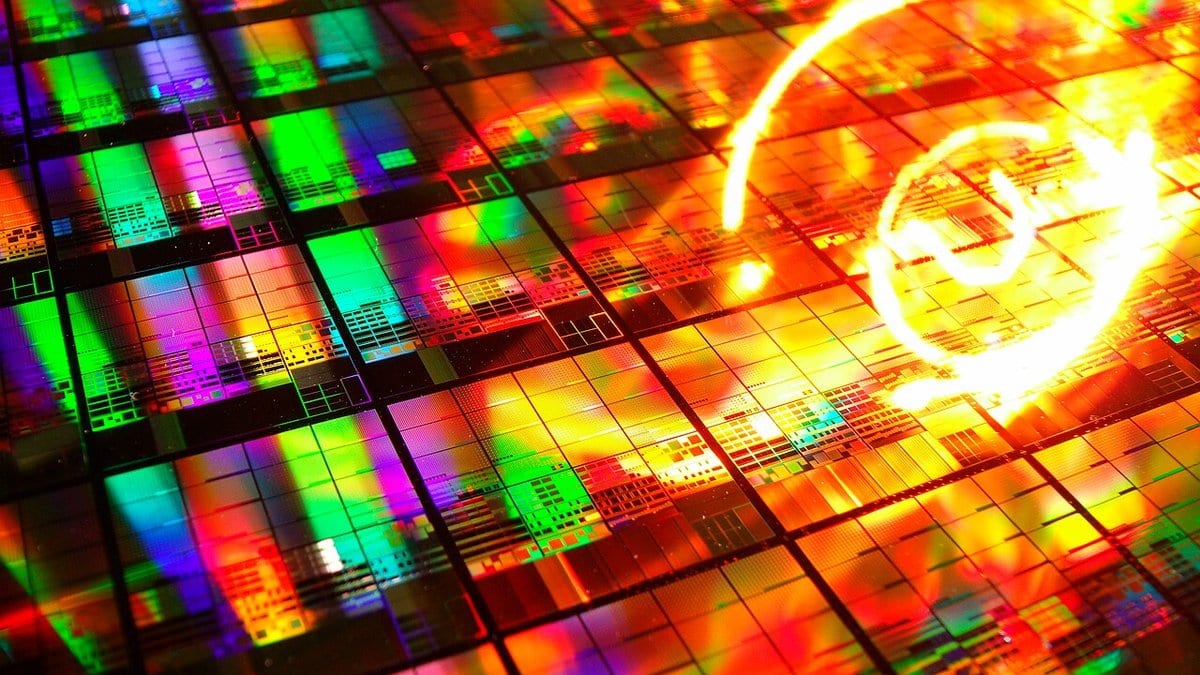
Most record-setting spin qubits start with silicon that has had one of its own isotopes taken out. About one silicon atom in 20 is silicon-29, the element's only stable isotope with a magnetic nucleus, and each of those nuclei tugs faintly at a qubit sitting nearby until the information it holds smears away. Enriching the material to almost pure silicon-28 removes them, and the qubit stays coherent far longer. What enrichment does not do is come out of a chip factory. Purified silicon is a specialty product, so a qubit that depends on it carries a standing question about whether it could ever be made in quantity.
A team at the University of New South Wales and the Belgian research institute imec has now run quantum logic in the other kind of silicon, the ordinary unpurified mix a semiconductor line already buys by the wafer. Writing in Nature Communications on Aug. 27, Isaac Vorreiter, Alexander Hamilton and their colleagues report single-qubit gate fidelities of up to 99.8 percent in devices made on imec's CMOS foundry platform in Leuven.
They also report a two-qubit gate quality factor of 240, a ratio between how fast a pair of qubits can be operated and how long it stays coherent. That number, they say, indicates a physical fidelity limit of 99.7 percent: a ceiling the hardware implies, not a gate accuracy anyone measured.
This is the highest performance reported in natural silicon to date. It is not a record for spin qubits. Hole qubits in germanium have been published above 99.9 percent, and electron qubits in isotopically enriched silicon are past that mark too. Accuracy is where the field already was; the material is what moved.
Fidelity is the number this field lives on. Error-correcting codes only begin removing more errors than they introduce once the physical operations underneath them clear a threshold in the region of 99 percent, and every additional nine after that cuts the number of physical qubits a single protected one costs. Getting there in a material that needs no isotopic preparation changes the cost of the whole exercise.
The qubits themselves are unusual in a second way. They store information in holes: the vacancy left where an electron is missing, which behaves like a particle in its own right, with a charge and a spin. Electron spin qubits generally need a microwave antenna or a small magnet fabricated beside each one to drive them, while a hole's spin responds to a voltage on a nearby gate, which the paper calls "compact all-electrical control." The same sensitivity that makes holes easy to steer has made them hard to keep still, and the authors say as much: silicon hole spin qubits are "not as advanced as electrons, due to increased susceptibility to disorder and more complex spin physics."
Where the devices were made is the part the authors put in their title. imec is a public research institute in Leuven rather than a merchant foundry, but its line is industrial equipment held to industrial tolerances, and the work was done inside imec's Industrial Affiliation Program on Quantum Computing. The detail that carries the claim is a comparison: the hole qubits were measured in what the paper describes as "a near-identical device as used for highly reproducible, high-fidelity electron spin qubits." The same process, with the same recipe, has already turned out a different species of qubit repeatably. A quantum device that comes off a line built for ordinary chips is a different manufacturing proposition from one assembled a few at a time in a university cleanroom.
Andrew Dzurak, one of the senior authors, is chief executive and a director of Diraq, a UNSW spin-out building silicon spin qubits commercially. He and three co-authors declare an equity interest in the company, and one of the fellowships behind the work is co-funded by Diraq as well. The manuscript was received in April and accepted in July, and it went up as an accelerated preview: peer-reviewed and citable, with the final version of record still to come.
The last line of the paper's abstract says what the group wants next. Given isotopic purification and further device-level optimization, they write, silicon hole spin qubits are "poised to unlock a new operation regime for quantum CMOS architectures." In their telling, enrichment is now a way to improve a working result rather than the price of getting one.
Sources
- Nature CommunicationsPeer-reviewed