Songbird Evolution Came in Bursts That Line up With a Cooling Planet, an AI Finds

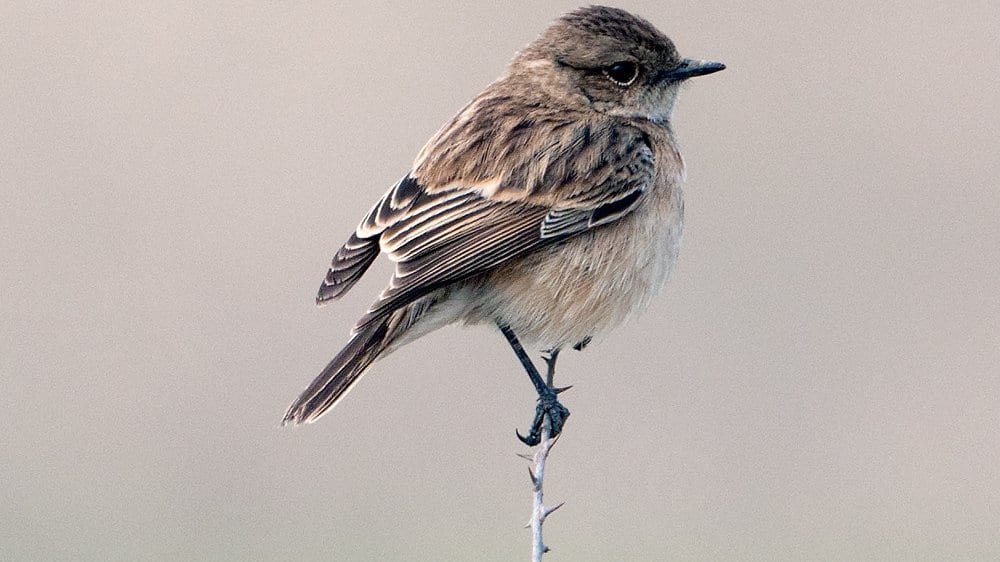
A museum drawer of songbird skeletons does not look like a story. It looks like a lot of small, pale, similar bones. Sparrows, finches, warblers, thrushes: the group biologists call Passeriformes accounts for well over half of all living bird species, and to the eye their skeletons blur together. The differences that matter are spread across the whole frame at once: a slightly longer leg here, a broader breastbone there, a subtle rebalancing of the entire body plan. Read one bone at a time, and the pattern hides.
So Jacob Berv, a postdoctoral researcher at the University of Michigan, stopped reading one bone at a time.
Berv built a statistical method he calls bifrost, designed to treat a skeleton as the single integrated object it actually is rather than a checklist of parts. "The whole organism is an integrated, complex morphology," he has said of the approach, every element interrelated with every other. Feed bifrost the measured shape of thousands of species and their family tree, and it works backward to ask which sequence of evolutionary changes best explains the range of body shapes alive today, and how fast those changes came.
The measurements themselves came from a second piece of machinery. Over a seven-year collaboration, the Michigan team trained an AI vision tool, Skelevision, to find and measure a dozen bones on a photographed skeleton in about 45 seconds. Pointed at museum trays, it produced more than 170,000 individual measurements from roughly 15,000 specimens, most of them drawn from the university's own Museum of Zoology. That scale is the point. Hand-measuring 15,000 skeletons was never realistic; the machine made a 45-million-year sample tractable.
What emerged from the numbers was not a smooth curve. Across the roughly 45 million years of songbird history the group reconstructed, body-shape evolution mostly idled, punctuated by a few sharp accelerations. The largest of these bursts lands about 35 million years ago. That date is not a random point in the record. It sits on the Eocene-Oligocene transition, one of the most abrupt cooling episodes in the planet's recent geological past, when global temperatures fell and ice began to build. A cluster of evolutionary slowdowns, meanwhile, gathers around 15 million years ago, alongside another major shift in the Earth system.
Here is the line worth holding onto carefully. The study reports that the bursts coincide with these climate shifts. It does not show that the climate caused them. That distinction is not pedantry; it is the actual finding. What bifrost recovers is timing: a correlation in deep time between when songbird bodies changed fastest and when the world lurched into a cooler state. The mechanism that would connect the two is a separate question the data cannot settle on its own.
The researchers are careful about it, and their favored explanation does not require climate to reach in and reshape a bird directly. Senior author Brian Weeks, an associate professor in Michigan's School for Environment and Sustainability, framed the pattern in terms of opportunity rather than force. "This pattern we found with rare, big increases in rates of evolution... is really consistent with a pattern where lineages explore new ecological space," he said. The idea, long discussed under the name adaptive radiation, is that a disruption (a cooling climate opening up new habitats, say) creates fresh ecological room, and lineages evolve quickly to fill it. As that room gets used up, the pace falls off again. Evolution proceeding in pulses, rather than at a constant crawl, is what you would expect if opportunity comes and goes. It is also, the team notes, roughly what the songbird data show.
That interpretation is a hypothesis the timing is consistent with, not a proven chain of cause and effect, and the paper presents it that way. The evidence is peer-reviewed (it appears in Nature Ecology & Evolution), but the honest summary is that a striking correlation has been documented and a plausible story offered to explain it, with the mechanism still open.
The tool may outlast the particular result. bifrost is built to detect and characterize shifts in how multivariate traits (many measurements at once) evolve across any evolutionary tree, not just birds'. Paired with an AI that can measure specimens faster than a person can open the drawer, it points at the enormous, under-measured backlog of the world's natural-history collections. Songbirds were the first big test. The question the Michigan team leaves open is how much of the rest of the tree of life turns out to have evolved the same way: in long quiet stretches, broken by bursts that happen to arrive when the planet does not sit still.
For the underlying study and methods, see the paper in Nature Ecology & Evolution, the University of Michigan announcement, and Phys.org's report.
Sources
- Nature Ecology & EvolutionPeer-reviewed
- phys.org