Astronomers Say They Have Found the Milky Way's Fastest Star
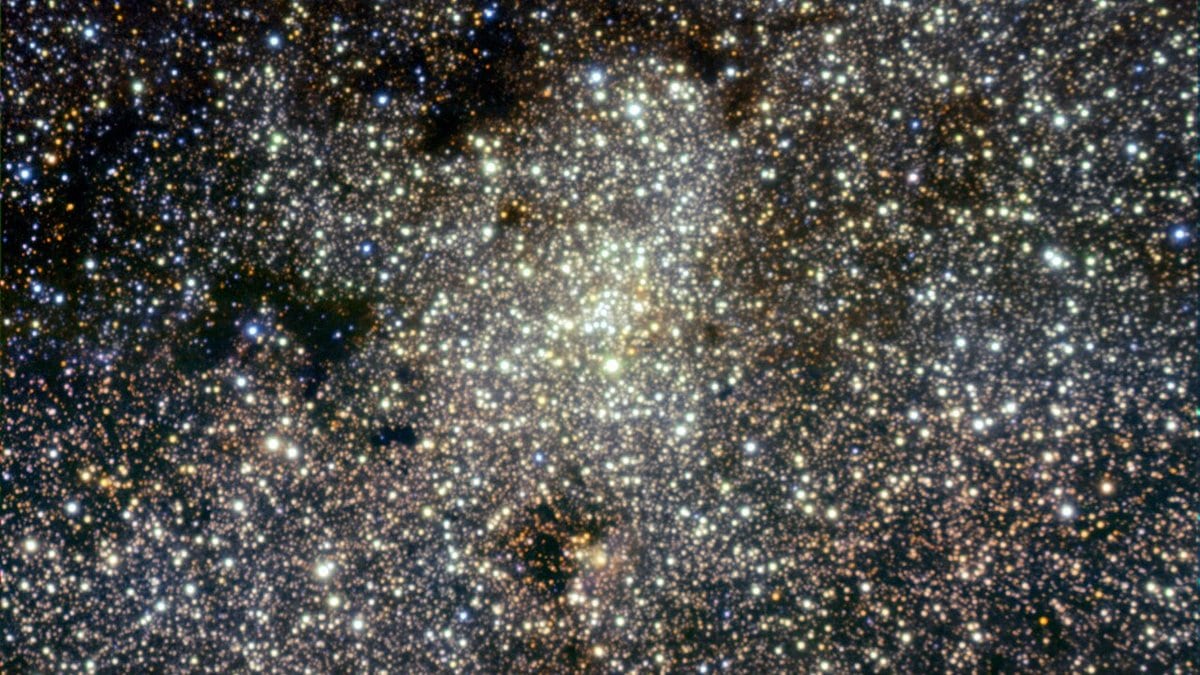
Astronomers using the European Southern Observatory's Very Large Telescope Interferometer in Chile have detected a star that circles the black hole at the center of the Milky Way once every 8.7 years, ESO announced Aug. 19.
The star, named S301, reaches about 25,000 kilometers per second at its closest approach to Sagittarius A*, the four-million-solar-mass black hole at the galactic center, according to ESO's release. That is a little over 8% of the speed of light. At that point it passes 1.78 billion km from the black hole, roughly 12 times the distance from the Sun to Earth, ESO says. The organization describes S301 as the fastest star known in the Milky Way and the closest yet observed to Sagittarius A*.
The measurement was made by the GRAVITY+ collaboration and published Aug. 19 in Nature under the title "Discovery of a star sensitive to the spin of Sgr A*." The team first glimpsed the star in spring 2023 with the GRAVITY instrument, traced its path back through data to 2017, and has followed it since to constrain the orbit, per the release. S301 appears about two billion times fainter than Betelgeuse. The interferometer combines light from four 8-meter telescopes into what ESO says is 15 times the spatial resolution of a single one.
The black hole's spin has not been measured. A rotating black hole drags spacetime around with it and twists the orbits of nearby stars, and the collaboration says S301 is the first star known to pass close enough for that effect to be read directly from its track. Felix Mang, an author of the study and a doctoral student at the Max Planck Institute for Extraterrestrial Physics, said the team hopes to measure the spin "within the next 10 years." ESO says that requires watching at least two full orbits, with the next close passage due in 2031.
S301 was probably one of a pair of stars torn apart by the black hole's tidal forces, its companion flung away, the release says.