Some Asteroids Spin Faster Than Gravity Alone Should Allow
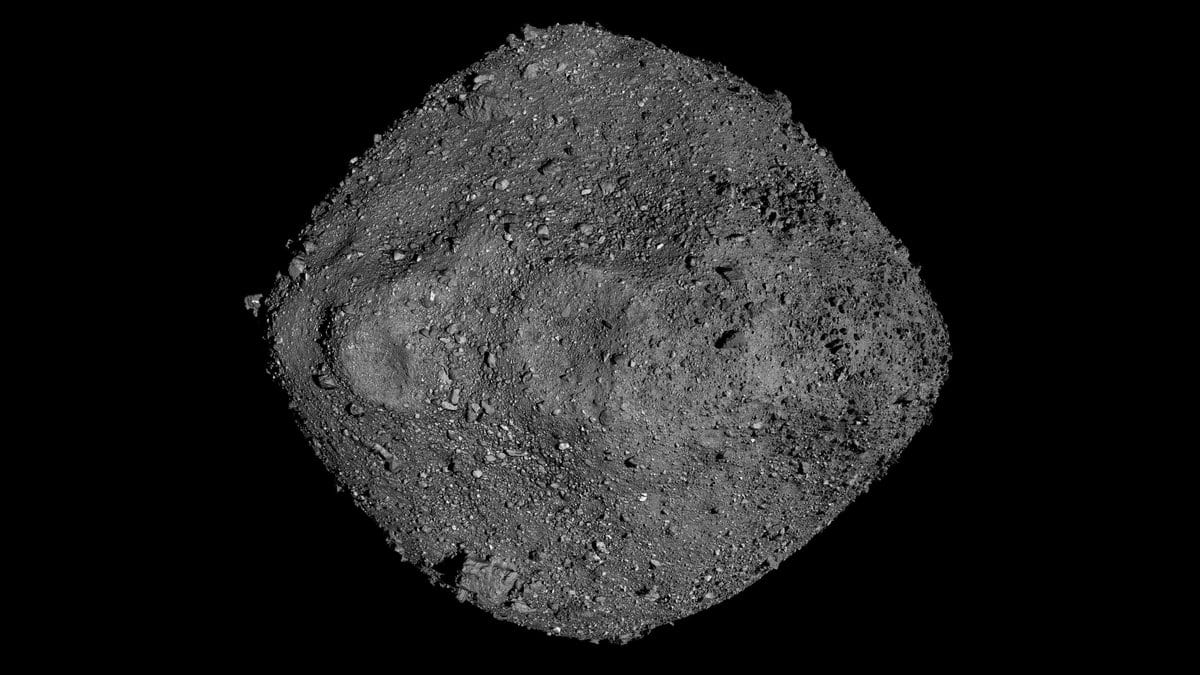
Astronomers have measured colors, sizes and spin rates for 15 near-Earth asteroids that nobody had characterized before, and several of the larger ones appear to turn faster than an object held together by nothing but its own gravity should manage. A. Carbognani, A. Buzzoni and colleagues posted the survey to the arXiv preprint server on Sept. 2. It has not been peer-reviewed.
In the preprint, the authors present that fast rotation as candidate evidence for internal cohesion: some weak strength binding the fragments of a loose pile of rubble together. A cohesive rubble-pile model gives a plausible explanation for the rotation rates they measured, and strengths of order 100 to 10,000 pascals would be enough to account for them. The cohesion is inferred from the spins rather than measured.
Colors were obtained for 14 of the objects, which run from 0.11 to 2.5 kilometers across, and compared with reference reflectance curves to sort the asteroids into the standard classes used to group them by surface color, mostly the S-, X- and C-complexes and V-types. Rotation periods were determined or constrained for several targets, though the authors say some of those periods stay tentative because the observations did not cover enough time.
The survey combined broadband color photometry with repeated brightness measurements that track each asteroid's light as it turns.
The limit the fast spinners cross is the rate above which a body with no internal strength would begin to shed material; the paper puts that rate near a 2.2-hour rotation period.
Sources
- arXivPreprint