Fifteen Years of Air Samples Show the Amazon Releasing More Carbon Than It Absorbs
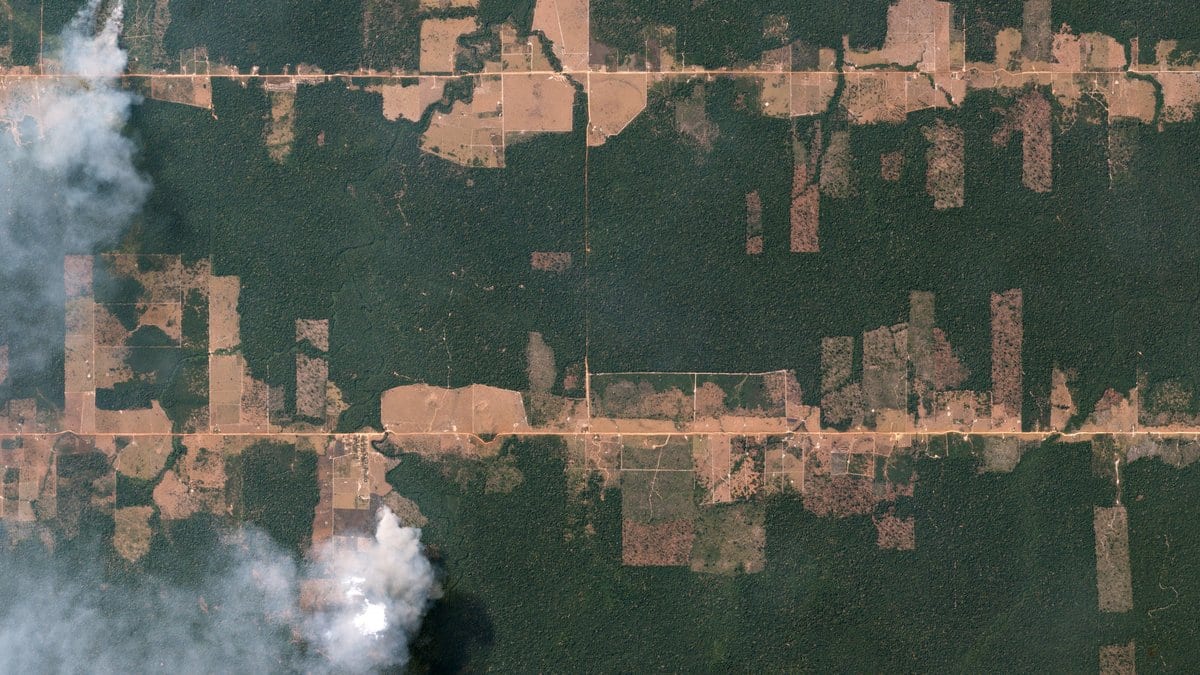
Fifteen years of air sampled by aircraft above the Amazon basin show the forest giving back more carbon than it takes up, with fire the largest single source. Luciana V. Gatti of Brazil's National Institute for Space Research (INPE) and colleagues report a carbon balance of 0.32 ± 0.08 petagrams of carbon a year, with fire emissions of 0.40 ± 0.07. A petagram is a billion metric tons.
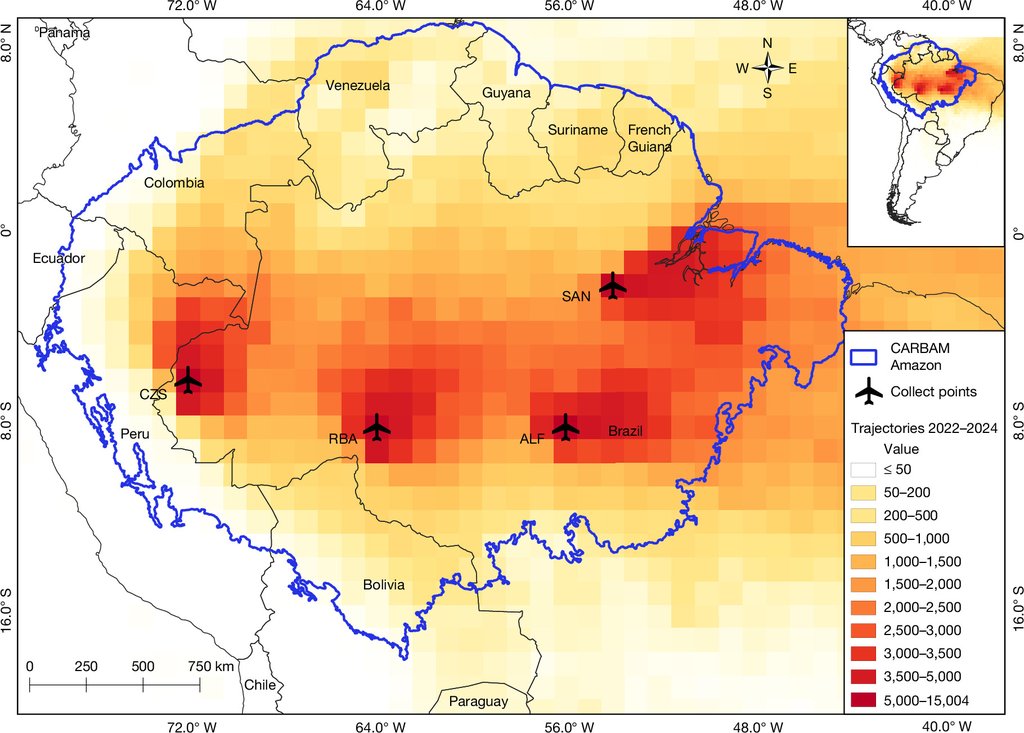
The figures come from the air itself rather than from a model of the forest. The team flew 1,017 sampling descents at four Amazonian sites, collecting air at a dozen heights on the way down and measuring its carbon dioxide and carbon monoxide at INPE's Greenhouse Gas Laboratory. The paper, published Oct. 21, 2026, in Nature, says the record was built to answer whether the Amazon's rising emissions come from global climate extremes or from direct human activity in the region.
Sorting the years by rainfall, temperature, deforestation and burned area, the authors identify three groups. Wet years with little clearing or burning came out near neutral, at 0.11 petagrams a year. Years of heavy deforestation under mild climate stress reached 0.43. Warm, dry years, several of them El Niño years, were highest at 0.49, and those two groups do not differ significantly. The highest single year on the record was 2024.
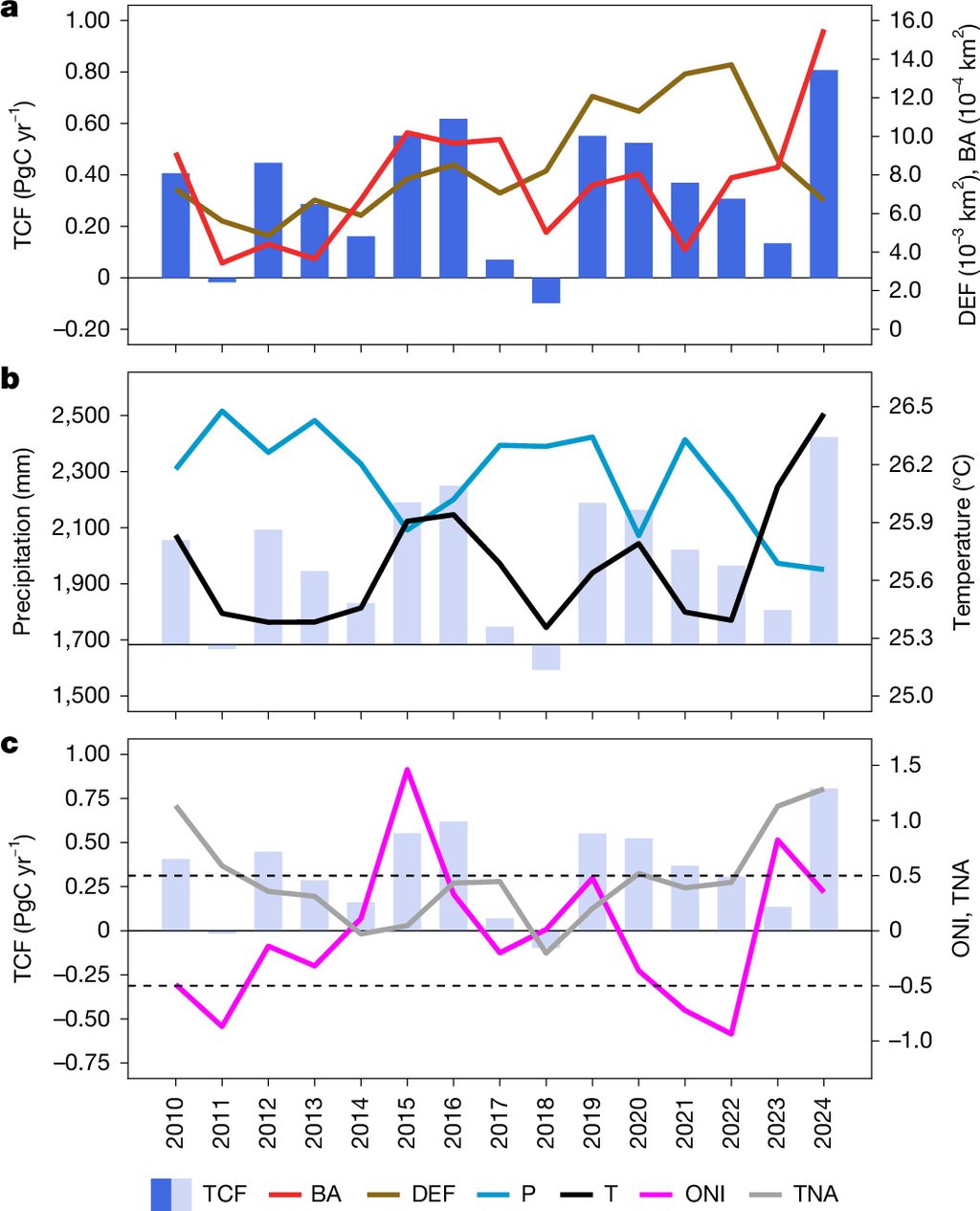
In all three groups the forest's own balance, everything other than fire, stayed close to zero. For 2023 and 2024 the authors traced under 2% of fire ignitions to lightning, and conclude that direct human activity, made worse by drought, is what drives the emissions.
Gatti and colleagues reported in Nature in 2021 that Amazonia had become a carbon source linked to deforestation and climate change. The measurements behind the new analysis are public in the PANGAEA data archive.
Sources
- NaturePeer-reviewed