As One Pacific Coast Turned More Acidic, Its Plankton Thinned Out

Writing in Nature Communications on Oct. 22, 2026, a University of Chicago team reports that seawater off a Washington island has turned steadily more acidic over 24 years, and that dissolved silicon and the chlorophyll marking plankton growth fell across the same record.
The study is a field test of something seen mostly in tanks: as seawater acidifies, the glassy shells of dead algae dissolve more slowly, so less silicon returns for the next generation to build with. Diatoms, the single-celled algae that make those shells, supply about 40% of the ocean's primary production, the growth at the base of its food webs. Models had put this kind of loss near the end of the century; the authors read their record as showing it already underway in some productive waters.
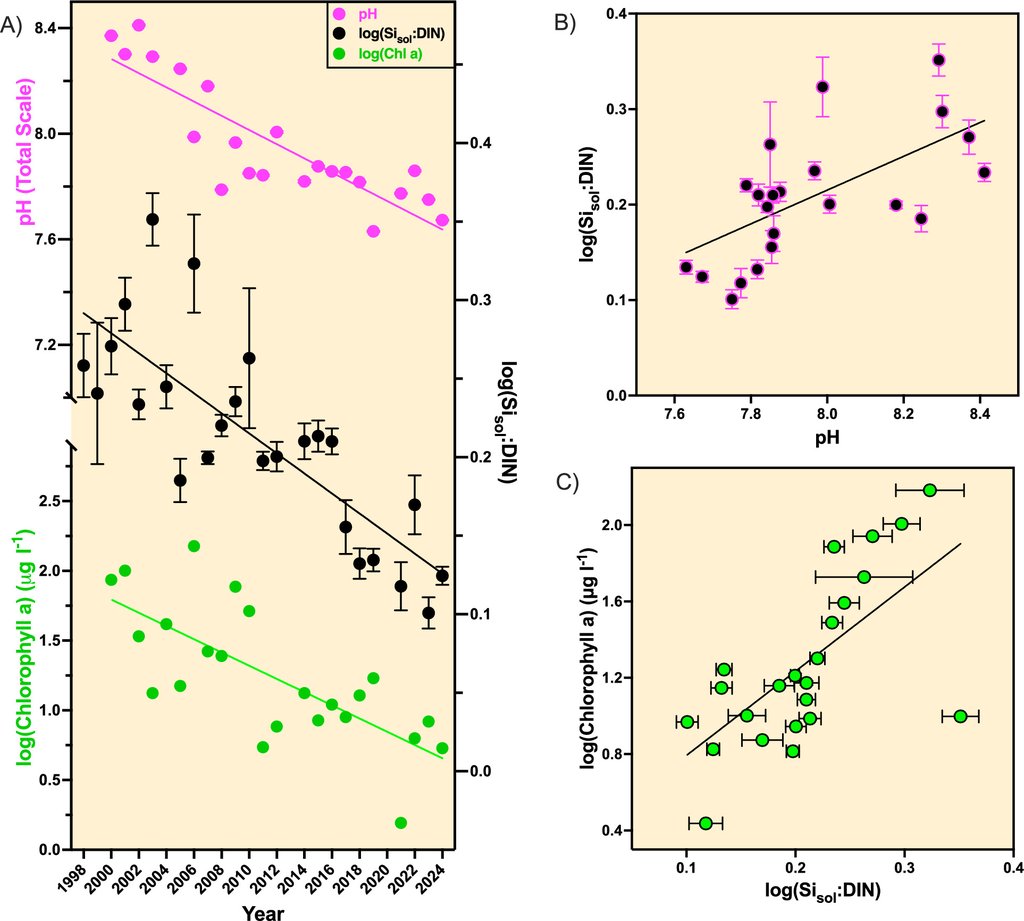
The measurements come from Tatoosh Island, in the Makah Tribal Nation off northwest Washington, where water samples and half-hourly instrument readings have been collected throughout. J. Timothy Wootton, Catherine A. Pfister and colleagues report that pH there fell by 0.027 units a year, that the dissolved silicon-to-nitrogen ratio they track fell 56%, and that chlorophyll fell 92%. They describe that pH slide as far faster than equilibrium with the rising atmosphere would produce, and treat the site as an early window on wider ocean change. The three declines move together across the years, an association in one coastline's record rather than a controlled experiment.
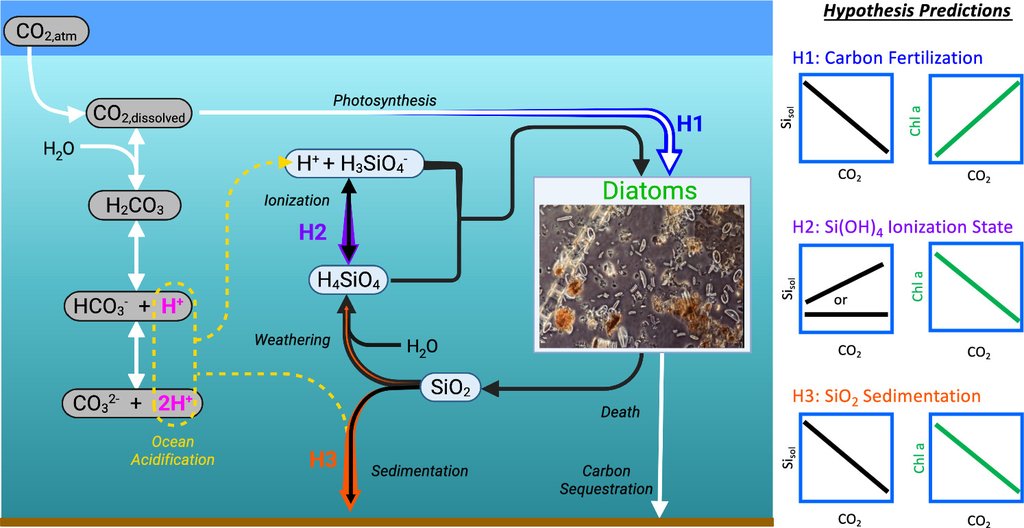
The team also checked other drivers: surface salinity fell by 0.89 parts per thousand but showed no significant tie to the silicon ratio, a standard coastal upwelling index showed no trend, and flow in the nearest gauged rivers did not change. Nitrogen and phosphate held steady. With upwelling, salinity and river flow statistically removed, both relationships held, and a model weighing the competing drivers assigns most of the silicon change to the falling pH.
Catch records from NOAA Fisheries for Pacific herring, a plankton-feeding fish, decline across the same years. The nutrient data are posted on the National Science Foundation's BCO-DMO repository and the instrument records on figshare.
Sources
- Nature CommunicationsPeer-reviewed