Astronomers Pin Down How Much Helium the Big Bang Made
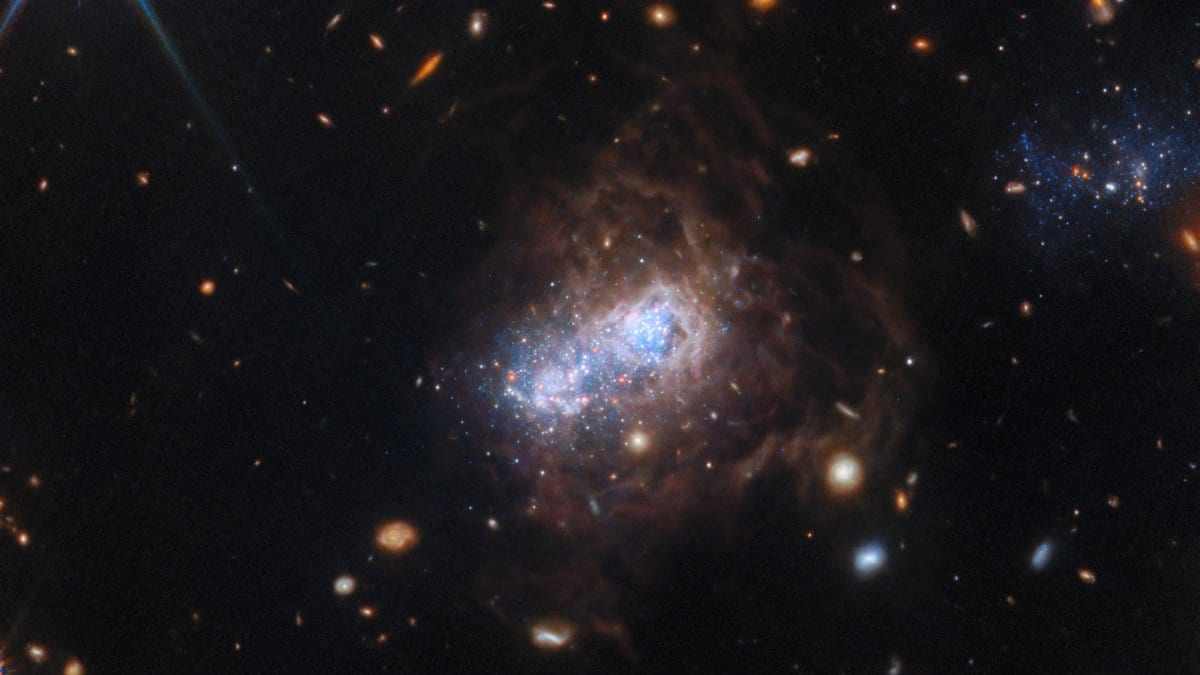
Astronomers have measured how much helium the universe made in its first minutes to a precision of about 0.5%, using 54 gas clouds observed with the Large Binocular Telescope in Arizona.
Erik Aver of Gonzaga University and colleagues, working as the LBT Yp Project, report a primordial helium mass fraction of 0.2458 ± 0.0013 in The Astrophysical Journal, published online Sept. 9. Helium makes up just under a quarter of the mass of ordinary matter. That fraction is one of the few direct tests of the physics of the universe's first minutes: how much helium formed depends on how much ordinary matter there was, and that amount can be measured separately from the Big Bang's afterglow. The new value agrees with the 0.2467 ± 0.0002 that follows from the Planck satellite's measurement of that matter density, the paper says.
All the clouds were observed and analyzed the same way, which the team says let it hunt for the systematic errors that can skew a single target. The published value is a weighted average of 15 clouds that combine high-quality spectra with very low levels of elements heavier than helium. The authors write that a dataset of that quality justifies a weighted average for the first time, and they call the resulting precision unprecedented.
Clouds with almost no heavy elements are the ones least changed by later generations of stars, which have been adding helium to the universe ever since. The helium in them is the closest astronomers can get to what the Big Bang left behind.
The measurement also rests on near-infrared spectra of metal-poor gas that the same project published alongside it, used to separate the density of the gas from its temperature.