Skip to content
See the World Through ScienceA project of ALLATRA

NASA Is Testing Future Heat Shields on a Trash-Filled Cargo Ship
Space

Republish this story

Our work is licensed under Creative Commons BY-NC 4.0. You may republish this piece for free — with credit to ALLATRA Media and a link to the original, unedited beyond length trims, and not for commercial use.

Read the full license

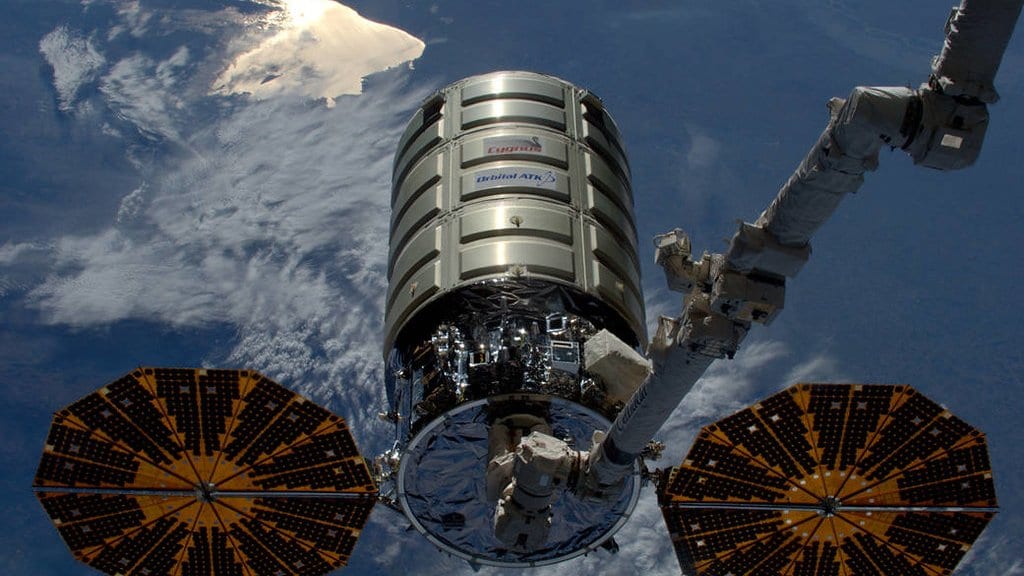
A barrel-shaped Cygnus cargo spacecraft with two round gold solar arrays, held by the International Space Station's robotic arm above a cloud-covered ocean.
A Cygnus freighter in the grip of the station's robotic arm, high above the Pacific. The twelve KREPE-3 capsules rode out the same way on Oct. 9, 2026 (illustrative)."Cygnus Cargo Craft Released From Space Station" by NASA's Marshall Space Flight Center, via nasa, BY-NC · CC-BY-NC-2.0

Twelve small capsules, each holding a different experimental heat shield material, left the International Space Station on Oct. 9, 2026, packed in with the trash. NASA's Ames Research Center says they are to record their own destruction when the cargo ship carrying them burns up on Oct. 12, 2026. The measurements do not exist yet.
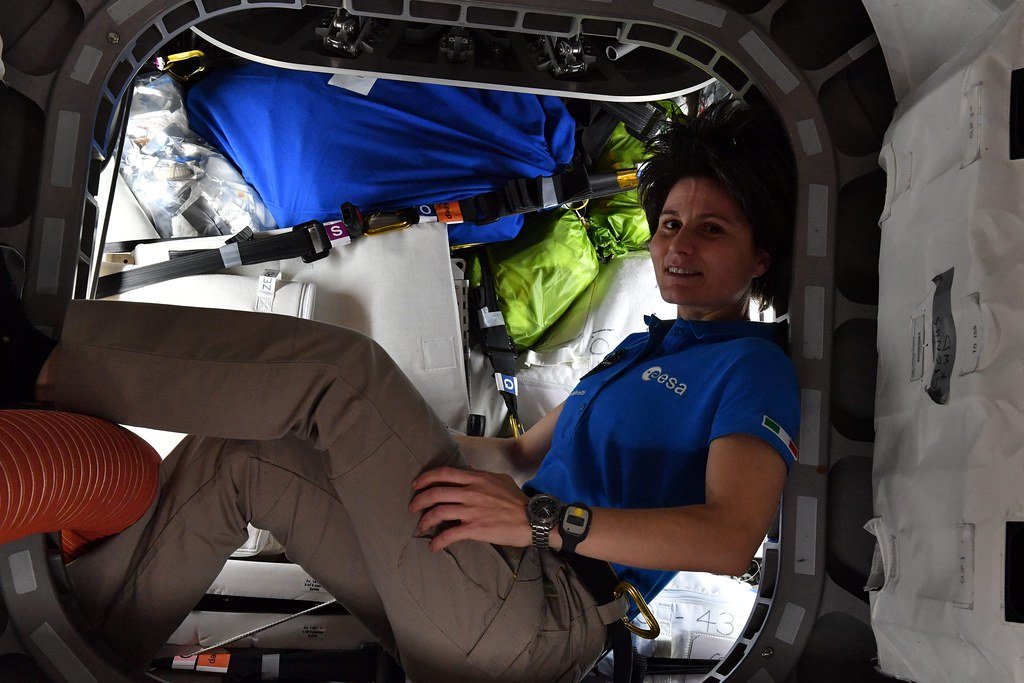
An astronaut floats inside a cargo freighter whose walls are lined with blue and green bags of packed waste and used equipment.
Bags of trash and used gear fill a freighter before it is sent back to burn up. The KREPE-3 capsules were loaded in the same way, then switched on by the crew (illustrative). "Cygnus Departure from Space Station" by AstroSamantha, via flickr, BY-NC-SA

NASA says the aim is flight data on heat shield materials that are still in development, the kind that would protect cargo or crew returning from the Moon and Mars. "We're essentially hitching a ride on a vehicle that's already coming back to Earth," said Keith Peterson, a materials engineer at NASA's Ames Research Center, in the agency's release.

NASA's space station blog recorded the release of Northrop Grumman's Cygnus XL from the station's Canadarm2 robotic arm at 12:44 p.m. EDT on Oct. 9, 2026, and says mission controllers will command the deorbit on Oct. 12, 2026. Astronauts switched the capsules on before departure. Each carries sensors for temperature, pressure, motion, magnetic field and light, and is to eject as the ship comes apart, and send its readings back by satellite.

The experiment is the third Kentucky Reentry Probe Experiment, or KREPE-3. NASA says University of Kentucky students designed the capsules, and names the state of Kentucky, its EPSCoR research program and several NASA centers as partners. The materials range from the ceramic tile flown on the space shuttle to a 3D-printed shield from NASA's Johnson Space Center and Oak Ridge National Laboratory. Two capsules carry a fabric of carbon and phenolic fibers stitched together like felt, developed at Ames, which the agency calls more flexible, faster to produce and less expensive than conventional materials; no independent evaluation of it has been published.
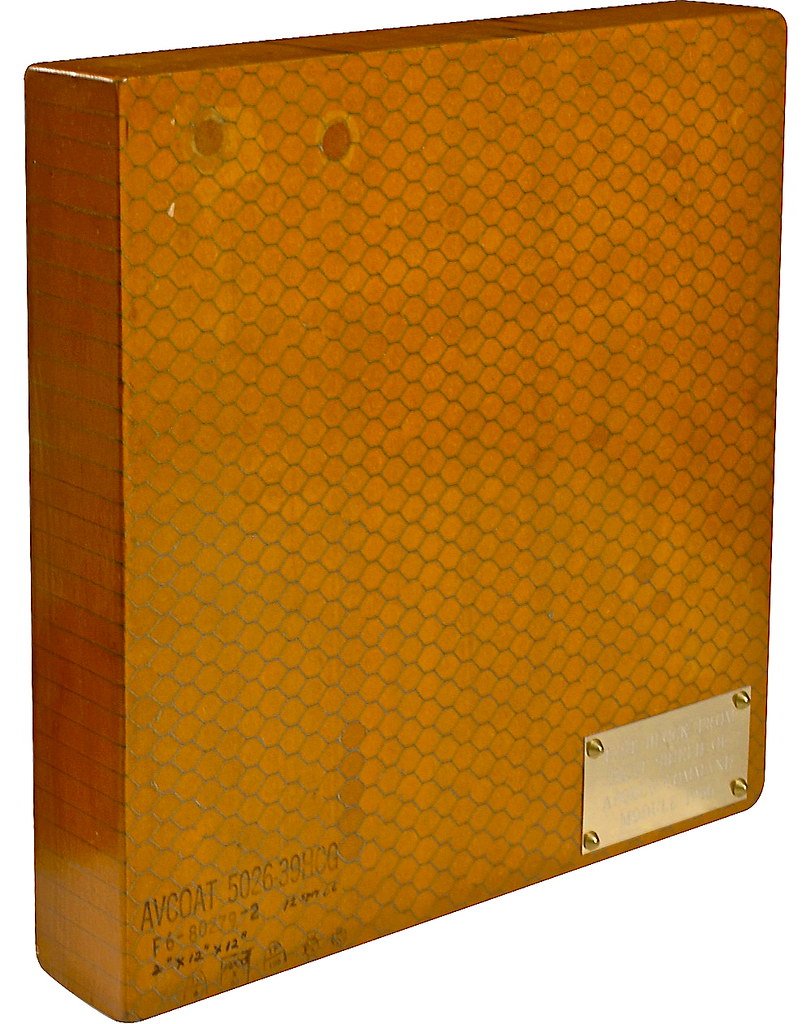
A square orange panel whose face is a dense grid of small honeycomb cells filled with ablative material, with a stenciled part number along the bottom edge.
An ablative panel from the Apollo program, its cells packed with material that chars away during reentry. The twelve KREPE-3 samples are newer candidates, among them a 3D-printed design and a stitched carbon fabric (illustrative). "Apollo AVCOAT Honeycomb Heat Shield" by jurvetson, via flickr, CC-BY-2.0

Other capsules test shapes rather than materials. One copies the shell that will protect NASA's Dragonfly mission as it arrives at Saturn's moon Titan, and another opens like an umbrella to slow its fall. A partner capsule carries a sensor built at the University of Stuttgart in Germany to measure how heat moves across a surface.

Sources

Spot an error?

Spot an error?

Report an error

Spotted a mistake on this page? Tell us what's wrong and our editors will take a look.

What kind of problem?

Only if you'd like us to be able to follow up. We won't use it for anything else.

We correct mistakes openly. Select any text to flag it. Fixes are logged under our Corrections Policy.

Report an error

Reporting on

NASA Is Testing Future Heat Shields on a Trash-Filled Cargo Ship

What kind of problem?

Only if you'd like us to be able to follow up. We won't use it for anything else.

We read every report. Corrections are logged publicly.