Venice's Flood Barrier Keeps the Sea out, and the Lagoon's Water in, Model Projects
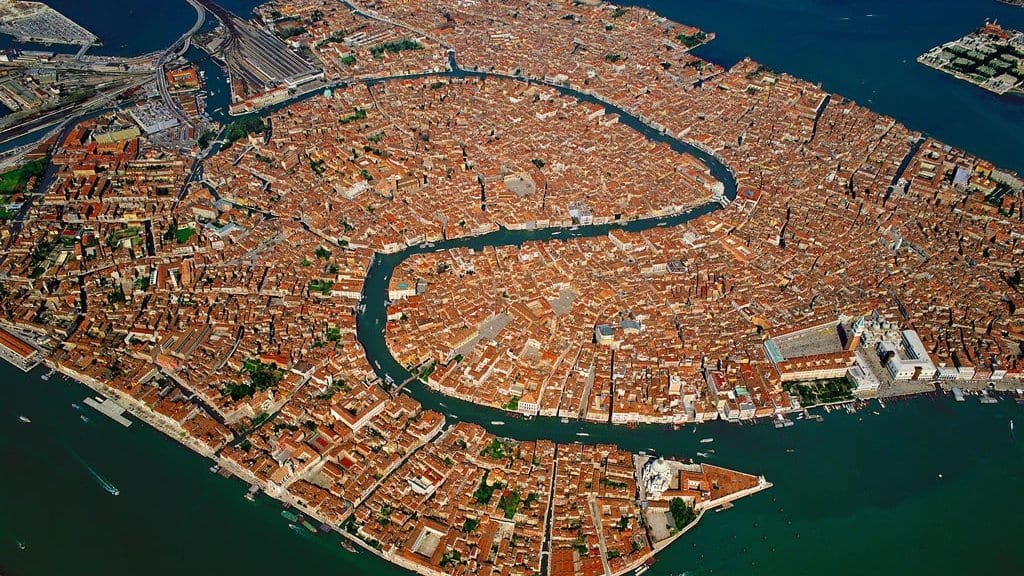
A high-resolution computer model of how water moves through the Venice Lagoon projects that the city's Mose flood barriers would close about 248 days a year by 2095–2099 on a high-emissions pathway, and that a third of the lagoon would then need more than 20 days to renew its water. D. Melaku Canu, C. Solidoro and colleagues at Italy's National Institute of Oceanography and Applied Geophysics in Trieste published the projections Oct. 9, 2026, in Scientific Reports.
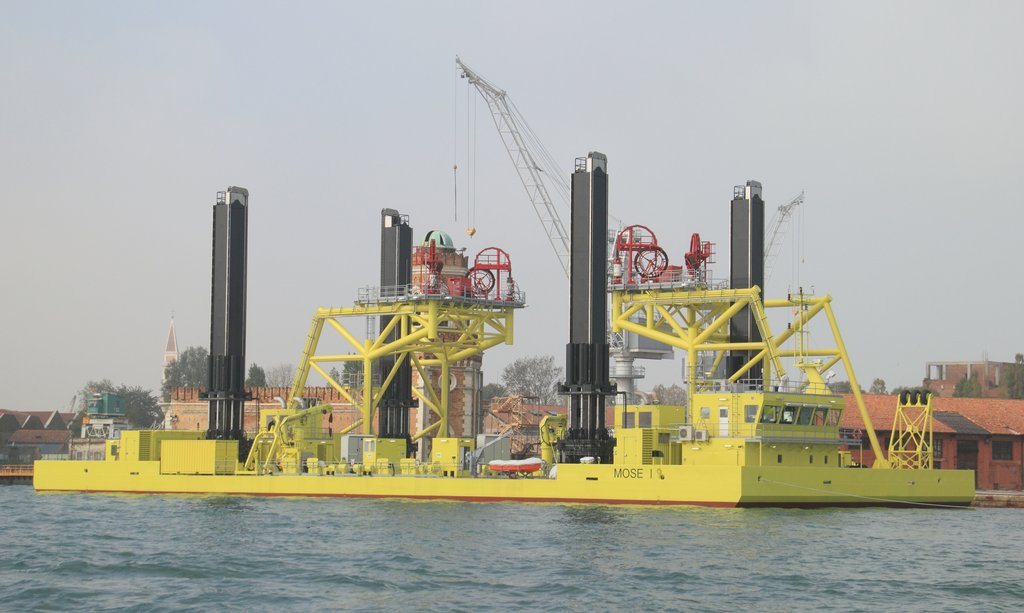
Mose's mobile gates were built to protect Venice from storm surges and rising seas while still letting water pass between the lagoon and the Adriatic. The Scientific Reports paper weighs that design against a side effect: the authors report that the barrier limits sea-level rise inside the lagoon but lengthens the time the lagoon takes to replace its water.
The model was driven by climate projections scaled down to the lagoon. The team ran it for a lower and a higher emissions pathway, for a mid-century and an end-of-century window, and with and without the barrier in operation. That closure projection is the end-of-century case under RCP-8.5, the pathway in which emissions keep rising. Under the lower pathway, RCP-4.5, the authors put the effects at about half as large.
The authors report the same split in the lagoon's heat: under RCP-8.5, summer temperatures stay above 30 °C for more than three months a year, with frequent, long-lasting marine heatwaves.
The paper presents this as a trade-off rather than a verdict on the barrier. It reports that Mose can protect Venice from flooding while confining the lagoon's water, and that this confinement and the projected warming together would amount to what the paper calls a severe cumulative pressure on the lagoon. Its conclusion is that long-term adaptation on coasts needs local measures alongside effective cuts in greenhouse gases, not a barrier alone.
The study is open access. The paper credits its funding to the regional public-works authority, with money from the state concessionaire Consorzio Venezia Nuova and coordination by CORILA, the research consortium for the Venice lagoon.
Sources
- Scientific ReportsPeer-reviewed