A Cheaper Way to Map the Universe and Test Dark Energy
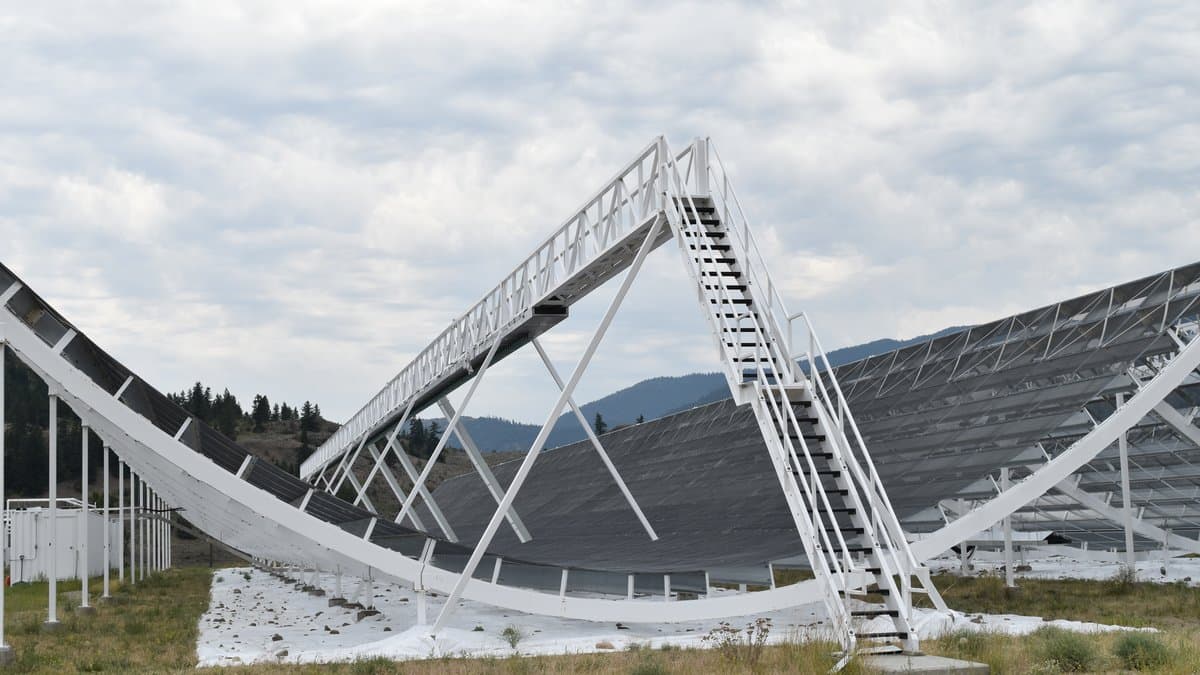
The CHIME radio telescope in British Columbia has picked out the faint radio glow of hydrogen gas spread through the distant universe using only its own observations. Earlier detections of that signal by CHIME only worked when its data were combined with galaxy surveys from other telescopes. The collaboration published the new measurement in The Astrophysical Journal on Sept. 28.
The University of British Columbia, one of the institutions that built and operate the telescope, says in its release that working from CHIME's data alone opens a faster and cheaper route to studying dark energy, the unexplained push behind the universe's accelerating expansion. The university adds that galaxy surveys ask the same question but cost millions of dollars more and cover only the regions dense enough to form stars.
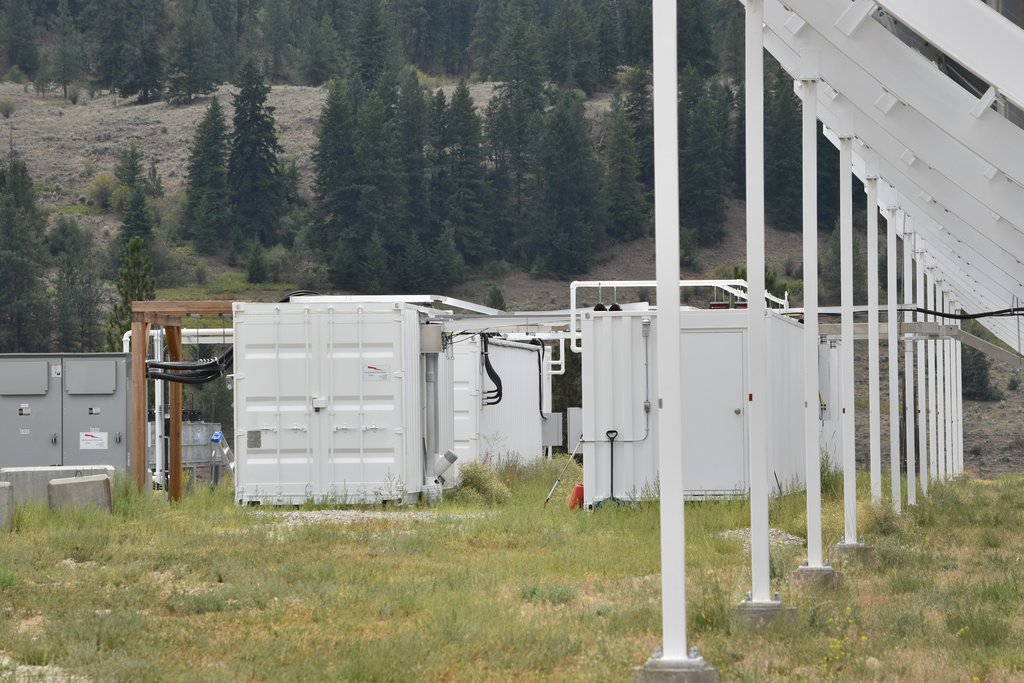
In the paper, the collaboration reports a detection at 12.4 sigma, a measure of how far a signal stands above the surrounding noise, drawn from 94 nights of observations recorded in 2019. Splitting those data into two independent slices gave a detection in each, at 8.6 and 9.1 sigma. The light set out when the universe was about five billion years old.
"Hydrogen is the most common element in the universe and the raw material from which stars form," said Arnab Chakraborty, a postdoctoral fellow at the University of Toronto and a co-author. "Its faint radio emission acts like a cosmic tracer, revealing how matter is distributed across space."
The signal sits under noise from the sky, from human technology and from the instrument itself, and the team spent more than a year testing it. "We worked very hard to convince ourselves that this wasn't a false alarm," Chakraborty said.
CHIME sits at a National Research Council of Canada observatory near Penticton, British Columbia, and is operated with McGill University, the University of Toronto and partners including Arizona State University. UBC says the analysis used a small part of what the telescope has recorded, and that the group is working to extend it further back in cosmic history.
Sources
- The Astrophysical JournalPeer-reviewed
- news.ubc.ca