Japan Adds a New Satellite Sensor to the Model Behind Its Weather Forecasts
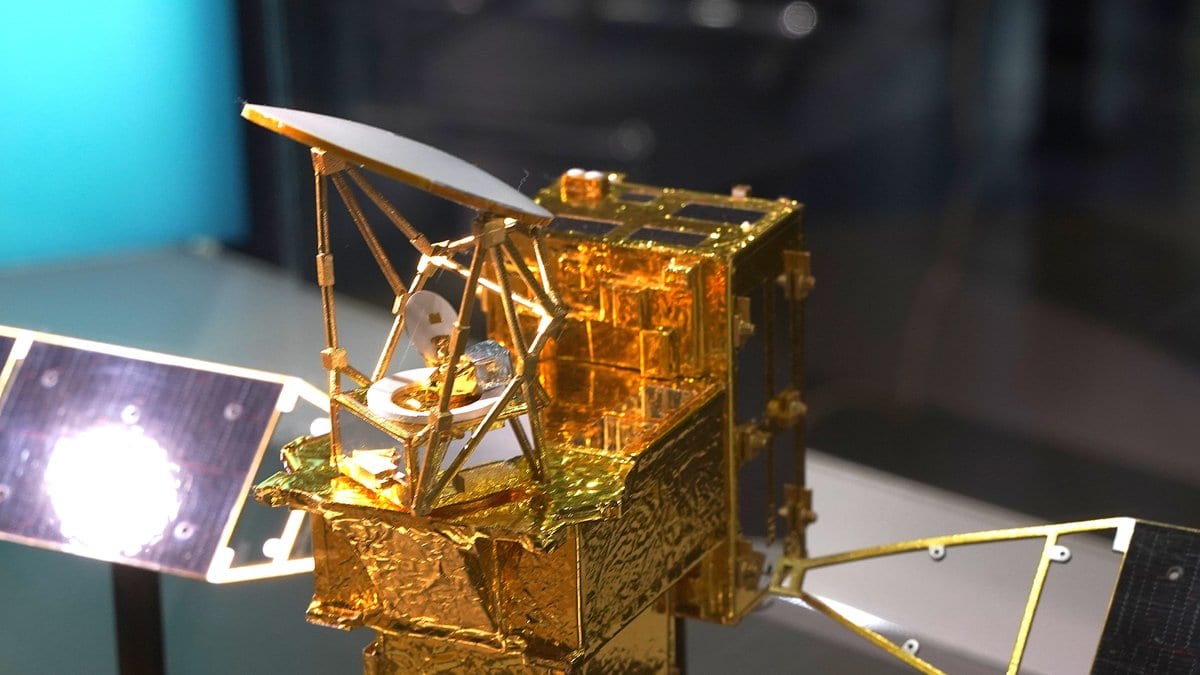
The Japan Meteorological Agency will begin feeding observations from a microwave sensor aboard a Japanese satellite launched last year into the computer model that underpins its public weather forecasts, starting Sept. 8, JAXA and the agency said in a joint release on Sept. 2.
AMSR3, the Advanced Microwave Scanning Radiometer 3, flies aboard GOSAT-GW, a polar-orbiting satellite also called "IBUKI GW" that JAXA launched in June 2025 to observe greenhouse gases and the water cycle. It measures microwaves emitted naturally by Earth's surface and by water vapor, cloud and precipitation, including snowfall, on a global scale.
JAXA and JMA say their joint investigation and technical development confirmed that using AMSR3 data improves the accuracy of water-vapor analysis and prediction, and that better precipitation forecasting can be expected as a result.
The release shows one case: rainfall over southwestern Hokkaido between 3 and 6 a.m. Japan time on Sept. 7, 2025. In a figure JMA produced, a 15-hour forecast from its mesoscale prediction system run without AMSR3 under-predicted the three-hour rainfall total, while the equivalent run using AMSR3 came closer to the analyzed rainfall.
AMSR3 succeeds AMSR2, which JAXA launched in May 2012 aboard the water-cycle satellite GCOM-W, or "SHIZUKU." JMA has used data from earlier AMSR instruments in the same forecast system, according to the release, and AMSR3 adds channels in frequency bands that carry information about water vapor in the middle and upper troposphere.
JMA has already begun using AMSR3 data in its sea-surface temperature and sea-ice analyses. Those results feed monitoring of ocean and sea-ice conditions, fisheries, and the selection of safe, efficient shipping routes.