Snipes and Woodcocks Crossed the Oceans Four Separate Times, Genomes Indicate
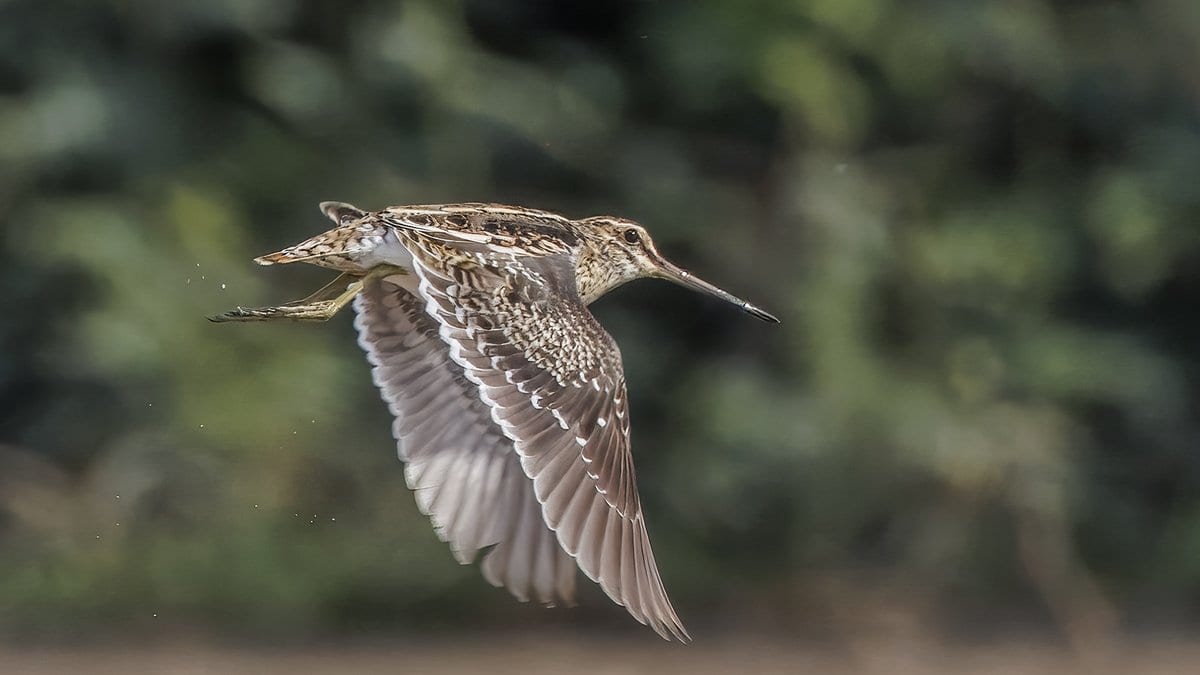
Genomes from living and extinct snipes and woodcocks point to four separate crossings from the Eastern to the Western Hemisphere, Min Zhao of Virginia Tech, Jessica A. Oswald of the Florida Museum of Natural History, and colleagues report in the Proceedings of the National Academy of Sciences.
The authors describe the work as showing how dispersal, adaptation to new conditions and the risk of extinction together generate and erase bird diversity on islands.
For the study, published Nov. 16, 2026, the team read selected stretches of DNA from key living and extinct snipes and woodcocks and compared the results with the birds' anatomy. The analysis also places a single crossing of the Pacific, from South America to the southwest Pacific islands.
Two examples show how far island birds have shifted. The small Austral snipes, genus Coenocorypha, sit inside Gallinago as the closest relatives of a group of much larger continental South American snipes. The other is Scolopax brachycarpa, an extinct bird of Hispaniola whose bones more closely resemble those of a woodcock — genetically it belongs with the snipes, and the authors refer to it as Gallinago brachycarpa.
According to the paper, most members of the shorebird family Scolopacidae are strongly migratory, a habit that likely underpins their long-distance reach. Snipes and woodcocks have colonized the southwest Pacific, the Malay Archipelago, Japan's Amami and the Caribbean, and none of the island endemics alive today migrate. The southwest Pacific and Caribbean species have suffered substantial recent extinction driven by human impacts.
In the authors' reading, the extinct Caribbean snipes may represent a radiation now lost for good.
The work was funded by two National Science Foundation grants and the Grainger Bioinformatics Center.
Sources
- Proceedings of the National Academy of SciencesPeer-reviewed