A Jurassic Fossil Kept Its Throat, and It Looks Like a Mammal's
A fossil from the Middle Jurassic of China has been described with its throat intact: the bony roof of the passage and the small bones that sit inside it, parts that almost never survive in an animal that old. Y. Li of Shenyang Normal University, Z.-X. Luo of the University of Chicago and colleagues described it in Nature on Oct. 7, 2026. They named it a new species, Megacauda sungei, in a new genus and a new family, Megacaudidae.
Swallowing, drinking and suckling are done with soft tissue in the throat, and soft tissue does not fossilize, so when mammals acquired that machinery has been hard to pin down. The authors report that the roof of the throat and the hyoid bones in this specimen are arranged as they are in marsupials and placental mammals. They read that arrangement as evidence that the anatomy for mammal-style swallowing, drinking and suckling was already in place in the common ancestors of mammals and of docodonts, the Jurassic group this animal belongs to.
The specimen, PMOL-AM00026, is held at the Paleontological Museum of Liaoning in Shenyang and is preserved as a main part and a counterpart. The team imaged it with CT scans and with X-ray fluorescence, which maps chemical elements. The scans picked out soft tissue preserved in the rock.
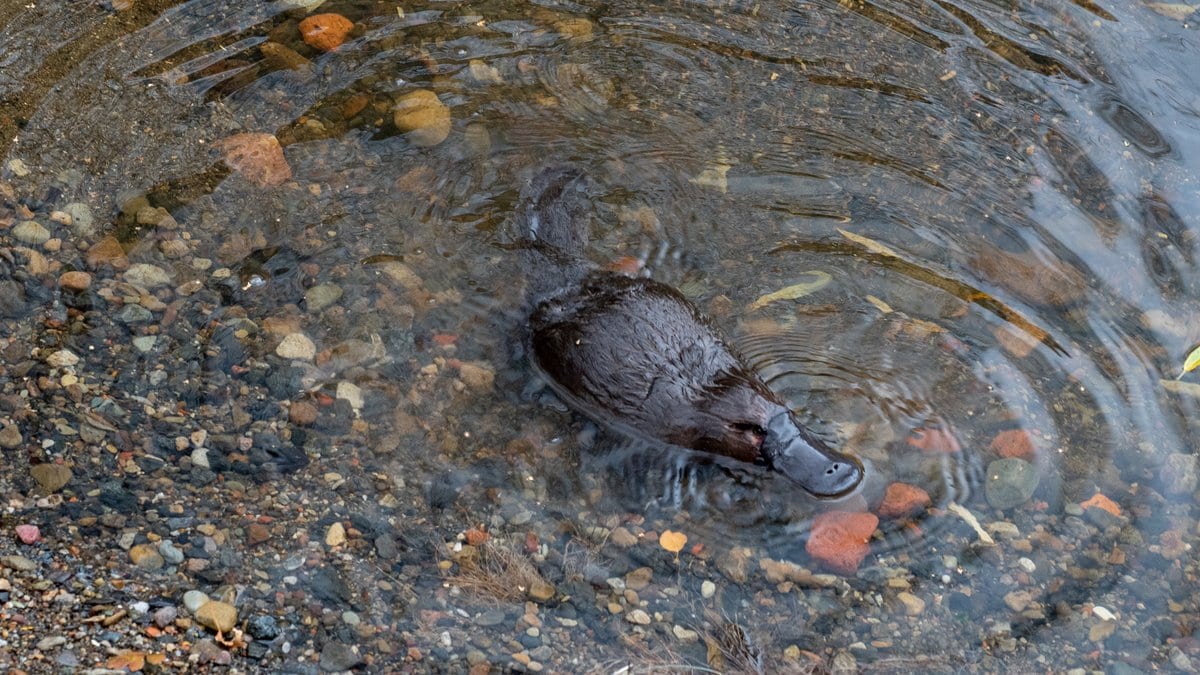
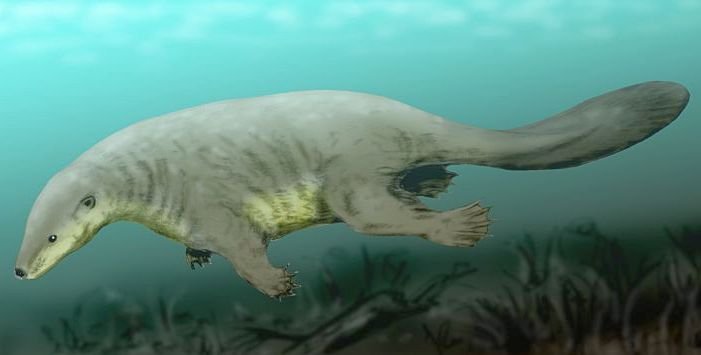
Much of the rest of the skeleton points to water. The paper describes a broad tail, overlapping bony plates along the ribs of the kind seen in the living platypus, an ankle that could swing the foot far outward, and long outer toes for paddling. Its canines and blade-like cutting cheek teeth point to a diet of animal prey. The authors interpret the animal as semiaquatic, swimming and foraging in water, and compare its way of life to the platypus.
The paper calls it the largest known of the Jurassic mammaliaforms, the forerunners of modern mammals, and says it widens the body-size range recorded for docodonts. The family, the genus and the species each carry a ZooBank identifier.
Sources
- NaturePeer-reviewed