Good Insulators Are Usually Soft. This One Is Rigid.
A thin film that conducts almost no heat while staying rigid has been measured by researchers at North Carolina State University. Ziqi Wang, Jun Liu and colleagues report that its thermal conductivity, the rate at which heat passes through a material, falls as low as about 0.04 watts per meter per kelvin at room temperature.
The team writes that materials that conduct almost no heat are desirable for insulation and for recovering waste heat, but that the ones reaching those figures are soft: foams and aerogels insulate about as well as still air and lack mechanical stiffness. The film has an elastic modulus of 7.7 gigapascals, a standard measure of stiffness, which surpasses that of most plastics, foams and aerogels. The measurements were published in Science Advances on September 18, 2026.
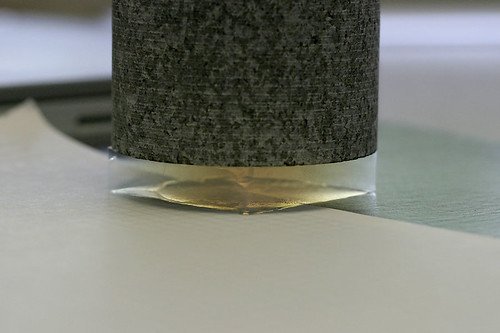
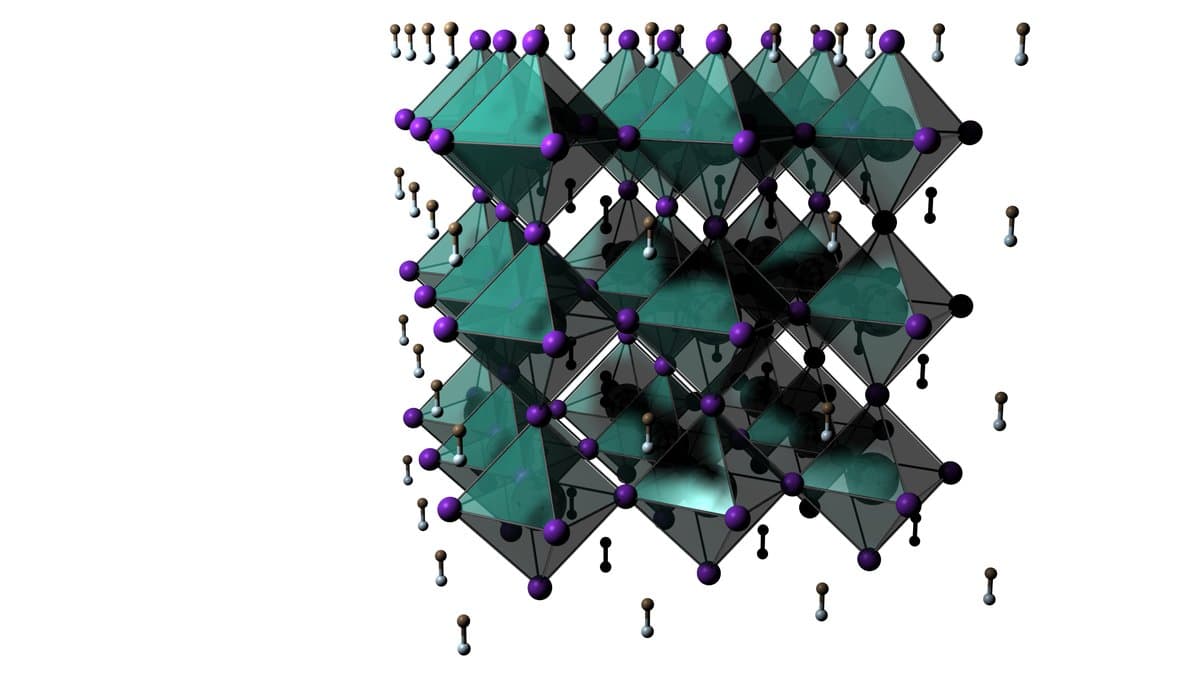
The material is azobenzene ethyl ammonium lead iodide, a layered hybrid perovskite, meaning a crystal built from alternating inorganic and organic layers. The films were spun-cast, a coating step in which liquid is spread across a spinning surface. The team attributes the pairing of very low heat flow with high stiffness to the organic cations, positively charged organic units, specially engineered into those layers.
The authors call the conductivity a record low and describe the wider point of the work as what molecular design can do in hybrid layered structures to push the limits of thermal insulation in dense, rigid solids.
The paper lists 25 authors, led from North Carolina State University, with funding credited to the National Science Foundation, the Department of Energy and the Office of Naval Research.
Sources
- Science AdvancesPeer-reviewed