A Small Protein Lets a Bacterium Shut an Antibiotic Out
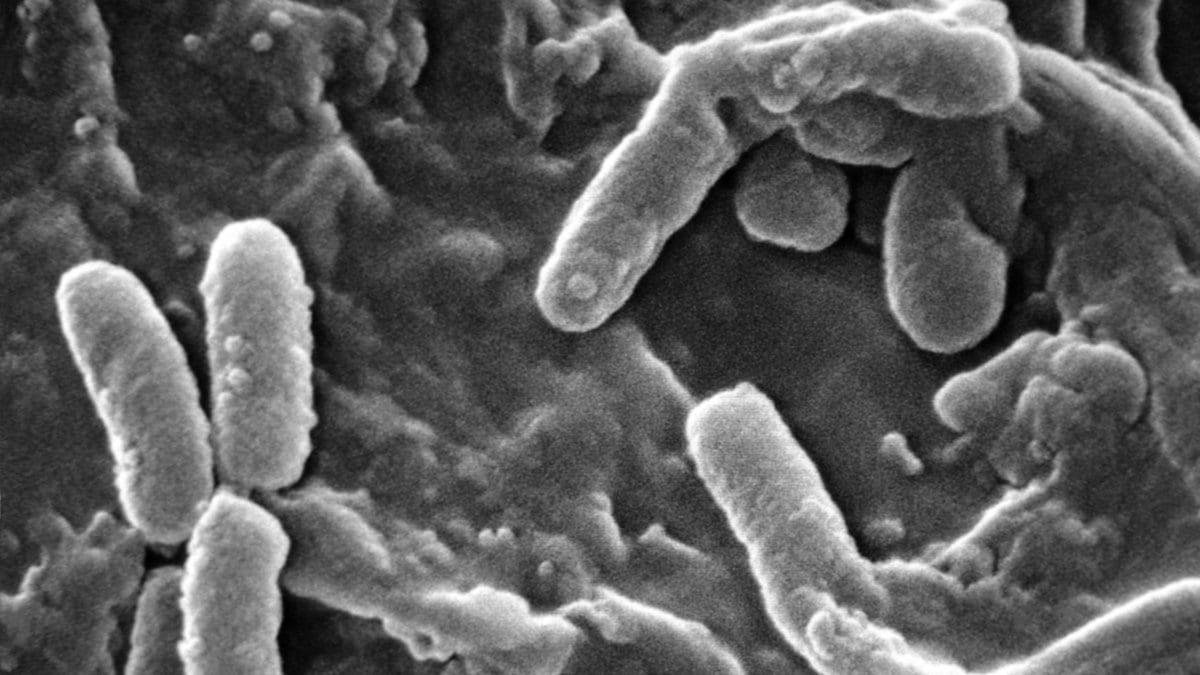
Researchers at the University of Geneva have identified a protein that helps the bacterium Pseudomonas aeruginosa keep the antibiotic imipenem out, with no change in the amount of the channel protein the drug uses to get in. Their paper was published Nov. 18, 2026, in the Proceedings of the National Academy of Sciences.
Verena Ducret, Karl Perron and colleagues report that how easily a drug crosses the outer membrane is one of the main things deciding whether it works against Gram-negative bacteria, which have a second membrane around the cell, and that this has generally been credited to how much channel protein a cell makes. The protein they identify acts earlier than that, in the periplasm — the narrow space between the bacterium's two membranes.
The protein, PtrA, promotes resistance to imipenem while the amount of OprD, the channel the drug enters through, stays the same. Less imipenem ends up inside the cell, and PtrA is found together with membrane assemblies that contain OprD.
Using zinc and copper as signals, the team separates this from the route already known, in which a regulatory system called CzcRS shuts down the gene for the channel, and places the PtrA step before the cell's supply of channels falls. On their account the two make a two-phase mechanism: fast regulation in the periplasm, then the slower remodeling of the outer membrane.
The group calls the effect adaptive impermeability, and describes it as a previously unrecognized link between a bacterium's sensing of its surroundings and the permeability of its outer membrane.
Sources
- Proceedings of the National Academy of SciencesPeer-reviewed

Medical Disclaimer: This content is provided for general informational and educational purposes only. It is not medical advice and should not be used as a substitute for professional medical advice, diagnosis, or treatment. Always consult a qualified healthcare professional regarding any medical condition, concern, symptom, or treatment decision.