Brain Recordings Show the OFC Flickers Between Competing States Before a Decision
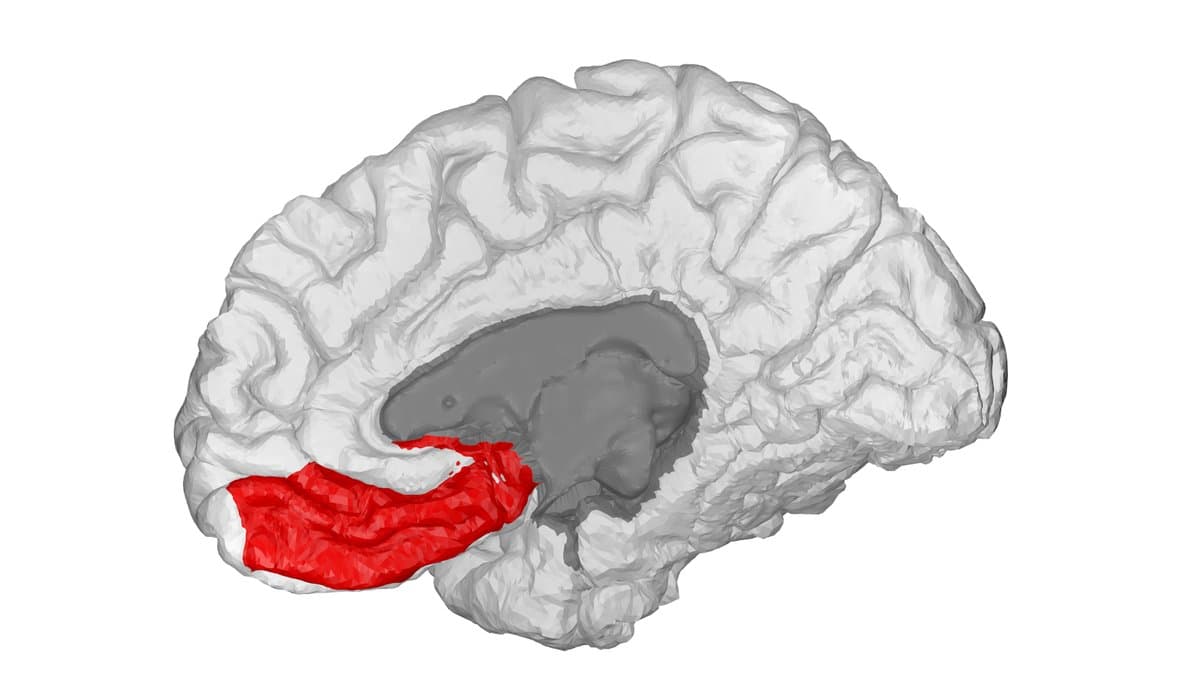
Intracranial recordings from six patients have revealed that two neighboring regions of the orbitofrontal cortex (OFC), a brain area long thought to weigh costs against benefits, do not signal competing options continuously. Instead, they rapidly flip between discrete pro-approach and pro-avoidant states in the seconds before each decision.
The paper, published Sept. 15 in Nature Neuroscience, set out to capture real-time neural activity during approach–avoidance decisions in humans. Earlier work in primates and imaging studies had implicated the OFC in arbitrating risky choices, but the moment-by-moment signals inside the human OFC were poorly characterized, in part because the region sits close to air-filled sinuses that limit conventional brain imaging.
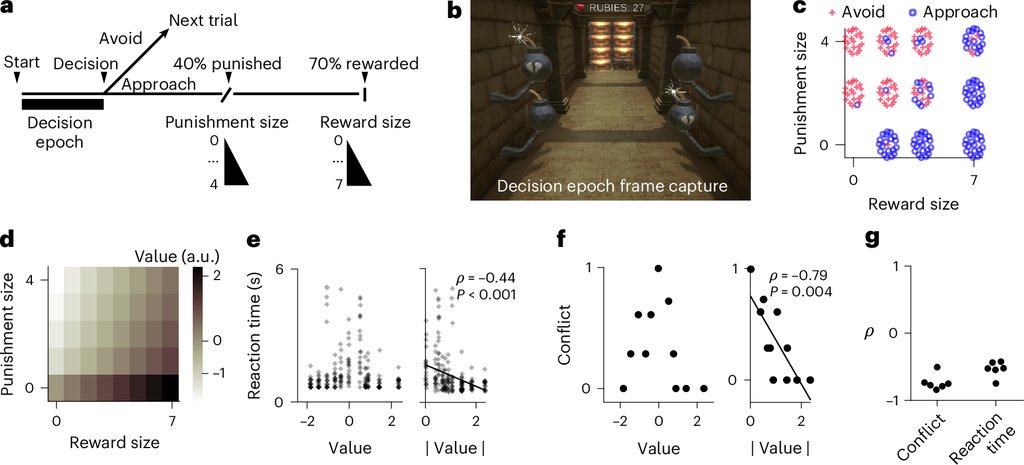
Clara Kwon Starkweather and Robert T. Knight at the University of California, Berkeley and San Francisco, and colleagues implanted stereotactic EEG electrodes in six patients being evaluated for epilepsy or depression. The patients played a video-game task in which they chose whether to enter a corridor containing bombs and treasure chests: a reward worth taking if the punishment odds were acceptable. Decisions were made quickly, averaging 1.32 seconds.
The electrodes ran from the medial to the lateral OFC, letting the researchers compare activity across the strip simultaneously. The medial OFC, near the medial orbital sulcus, increased its high-frequency activity before approach choices; the lateral OFC showed the opposite pattern. The two clusters were anticorrelated, with 45 electrode pairs showing statistically significant opposing activity. A decoding model trained on the electrode signals predicted the upcoming choice with 65.5% accuracy, compared with 56.9% at chance.
What the authors flag as the novel finding is that these opposing signals did not ramp steadily toward a decision. Instead, they switched between discrete states that averaged 72 milliseconds each, with higher-conflict trials producing more switches per second. State occupancy tilted toward the eventual choice 450–500 milliseconds before the response.
The patients in the study were implanted for clinical reasons; electrode placement followed surgical need rather than research design, limiting the sample to six and the electrode coverage to what clinical indications required.
Sources
- Nature NeurosciencePeer-reviewed