Immune Cells Make Proteins From Two Genes at Once, Nature Study Reports
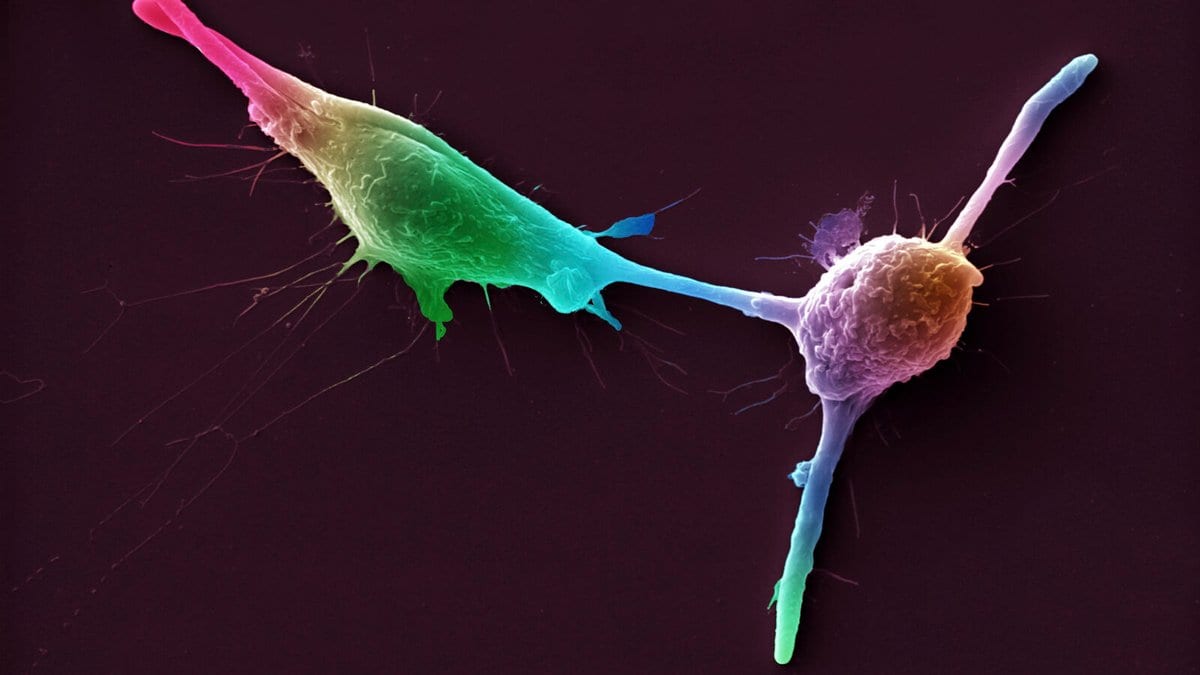
Researchers at Harvard Medical School and collaborating labs report that macrophages, the immune cells that engulf pathogens, produce messenger RNAs stitched together from two separate genes, and that at least one of those hybrids encodes a working protein. The paper was published in Nature on September 2 and is open access.
The team used long-read direct RNA sequencing, which reads a transcript end to end rather than in short fragments, to catalog the fused transcripts, which the paper calls chRNAs. In human monocyte-derived macrophages, the authors report identifying more than 900 of them.
Chromatin conformation experiments in the paper tie the fusions to cell state. Inflammation induces DNA interactions between chromosomes that bring the two parent genes physically close, the authors report. Depleting CTCF, a protein that organizes genome folding, abolished that increase after cells were stimulated with bacterial LPS.
One fusion joins gasdermin D, the pore-forming protein macrophages use to release inflammatory signals, to a segment read out of frame from a second gene, Tmem106a. In mice, the paper reports, priming of the inflammasome raises levels of the fusion, the protein moves to the cell membrane, and after activation it binds ordinary gasdermin D fragments to "accelerate and enhance pore formation and IL-1β release."
The animal results cut both ways, and the authors state both directions. In their words, loss of GSDMD–TMEM106A "protects against lethal sepsis but compromises antibacterial defence, whereas overexpression enhances host protection while increasing sepsis lethality." The fusion was tracked in mouse models of influenza A infection, Escherichia coli meningitis and LPS-driven sepsis.
The authors summarize the work as establishing that "protein-coding chimeric mRNAs formed by regulated transcript fusion events are operative during inflammation and immunity." They also write that in healthy mammals "few examples of trans-splicing exist," the process in which pieces of separate transcripts are joined.
Sources
- NaturePeer-reviewed