Electrodes on the Brain Read Syllables People Only Imagined Saying
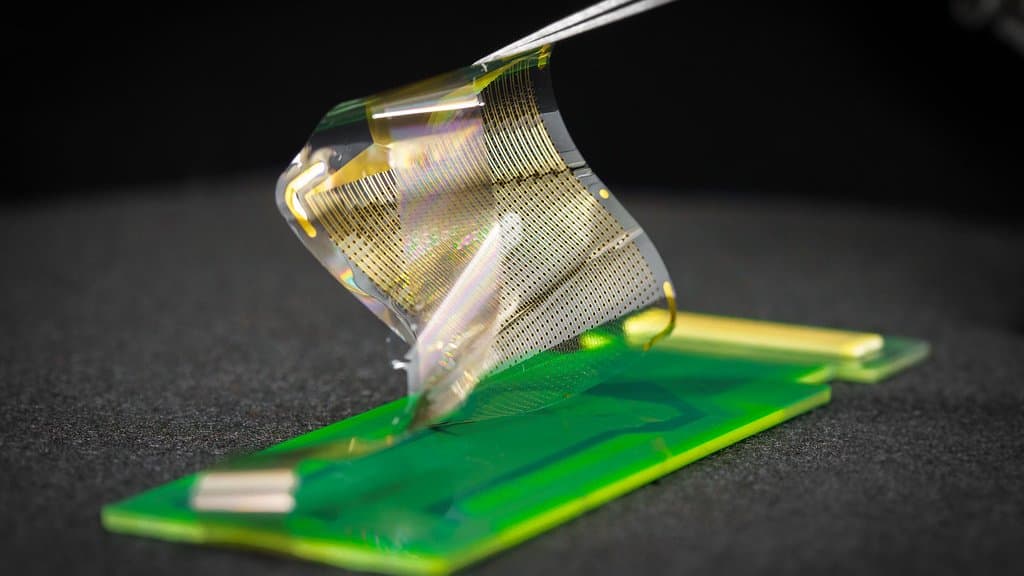
Recording directly from the surface of the brain in nine patients undergoing awake surgery for brain tumors, a team at Huashan Hospital, Fudan University, identified which syllable a person was silently imagining a median 80.4% of the time. Chance would have given 16.7%. The work appeared on September 29, 2026, in Nature Neuroscience.
The authors say the work is meant to inform brain-computer interfaces that could restore communication for people with severe speech impairments, such as after a stroke or with the motor neuron disease ALS, who can still form speech internally but cannot produce it.
Each patient had a 256-channel electrode grid laid on the cortex during the operation and alternated between saying a syllable aloud and imagining it, with no sound or movement. Accuracy for syllables spoken aloud was 78.3%, slightly below the imagined figure. The paper also notes that the test used a small set of syllables rather than continuous speech, and that whether the method extends to a larger vocabulary remains to be established.
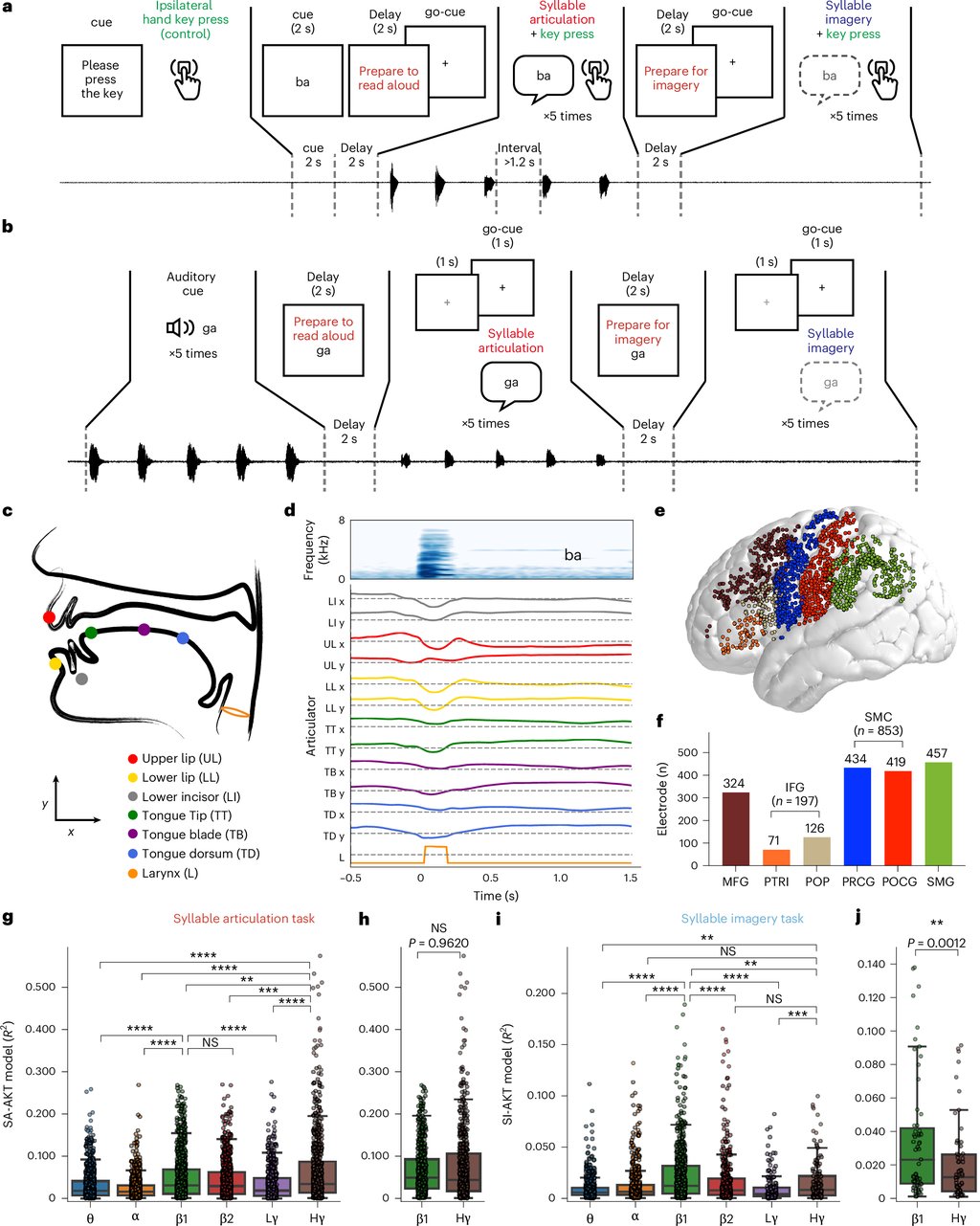
Two patterns in the recordings underlie the result. In planning areas of the frontal and parietal lobes, the same activity appeared whether the syllable was spoken or only imagined. In the strip of cortex that controls movement, separate electrodes responded to imagined speech alone, scattered among those tracking real articulation rather than forming a map of their own.
The authors cite earlier work that decoded imagined speech with finer electrodes, which penetrate the cortex and record single neurons; the grids used here sit on its surface. Their decoder also handled syllables it had not been trained on.
Sources
- Nature NeurosciencePeer-reviewed