Gravity From Earth's Inner Core Makes Our Days Longer and Shorter
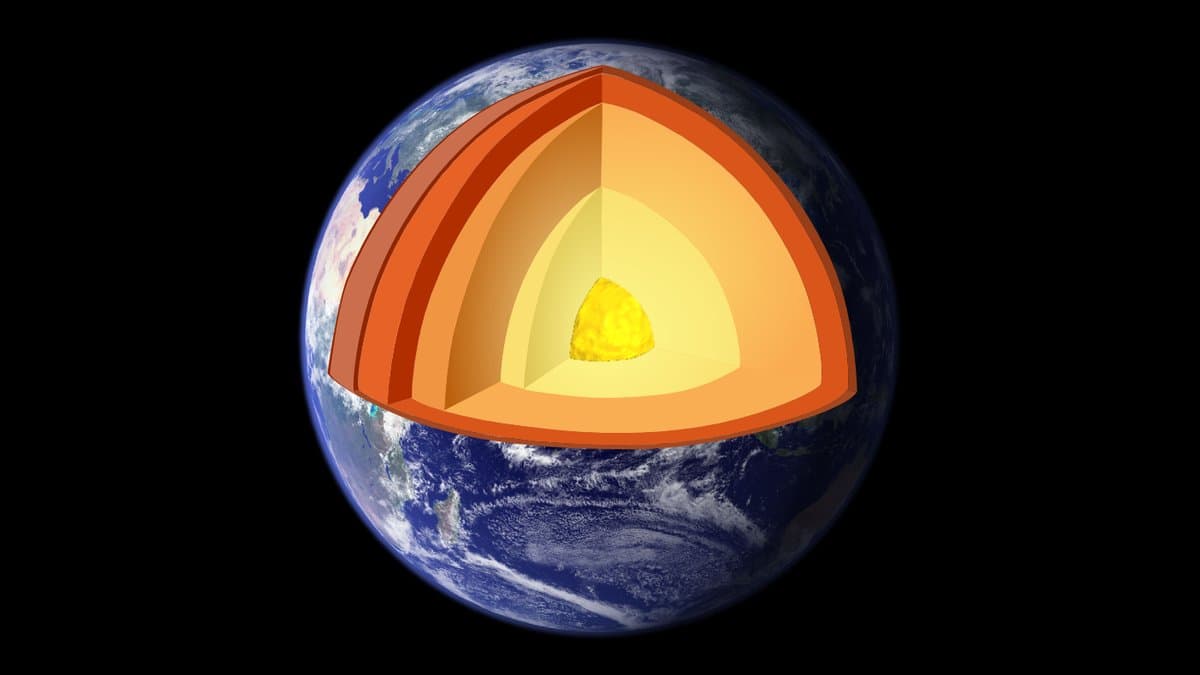
Huifeng Zhang and Mathieu Dumberry of the University of Alberta report that the gravitational pull between Earth's solid inner core and the rock above it drives the slow swings in how long a day lasts. Their analysis was published on September 23 in Nature.
Which force is driving it has been argued over for decades. Magnetic forces at the boundary between the core and the mantle, pressure pushing sideways on bumps in that boundary, and gravity from the inner core have all been proposed. The two authors say settling the question sharpens an emerging picture of the deepest parts of the planet.
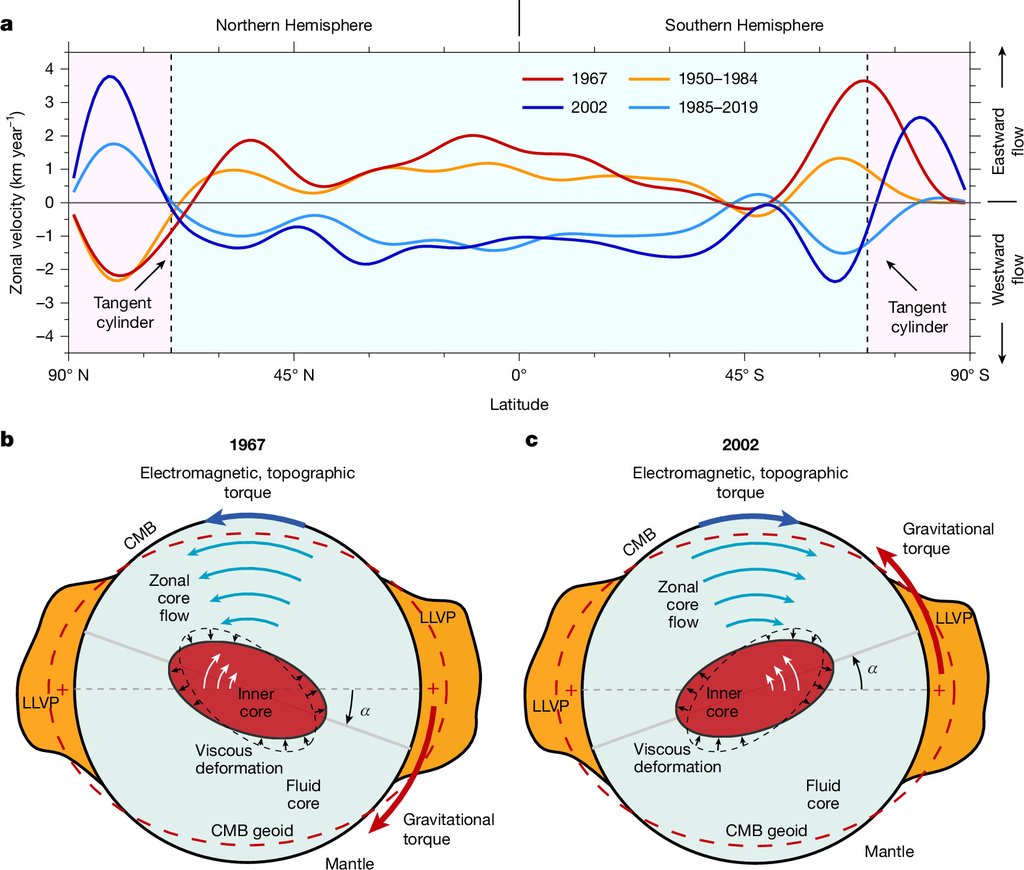
Day length shifts on many timescales, from daily tides to the Moon's slow drag on the planet. The Nature paper covers the fluctuations of several milliseconds that play out over 10 to 70 years, which come from the liquid core and the mantle trading spin back and forth. Zhang and Dumberry combined seismic estimates of how fast the inner core turns relative to the mantle with core flows worked out from changes in Earth's magnetic field, and kept to the period from 1964 to 2019, which both sets of models cover.
In the fit, the inner core's pull matches both the size and the timing of the twist needed to explain the observed record, while the magnetic and pressure effects at the core-mantle boundary run the other way and resist the change rather than cause it. The authors note their result is only as good as the inner-core rotation and core-flow models behind it.
The seismic model behind the work has the inner core swinging back and forth over about seven decades and switching from eastward to westward motion around 2010. A good fit also required an inner core soft enough to reshape itself within a few years rather than a rigid one. The same arrangement, with gravity driving and the boundary resisting, turns up in computer simulations of the churning core that generates Earth's magnetic field.
Whether the pattern repeats is unknown. The authors write that core flows worked out for earlier decades show hints of the recent pattern along with clear differences, and that the magnetic record from that far back may not be good enough to settle it.
Sources
- NaturePeer-reviewed