Platelets Kept Cold for Three Weeks Were No Worse in Heart Surgery, Trial Reports
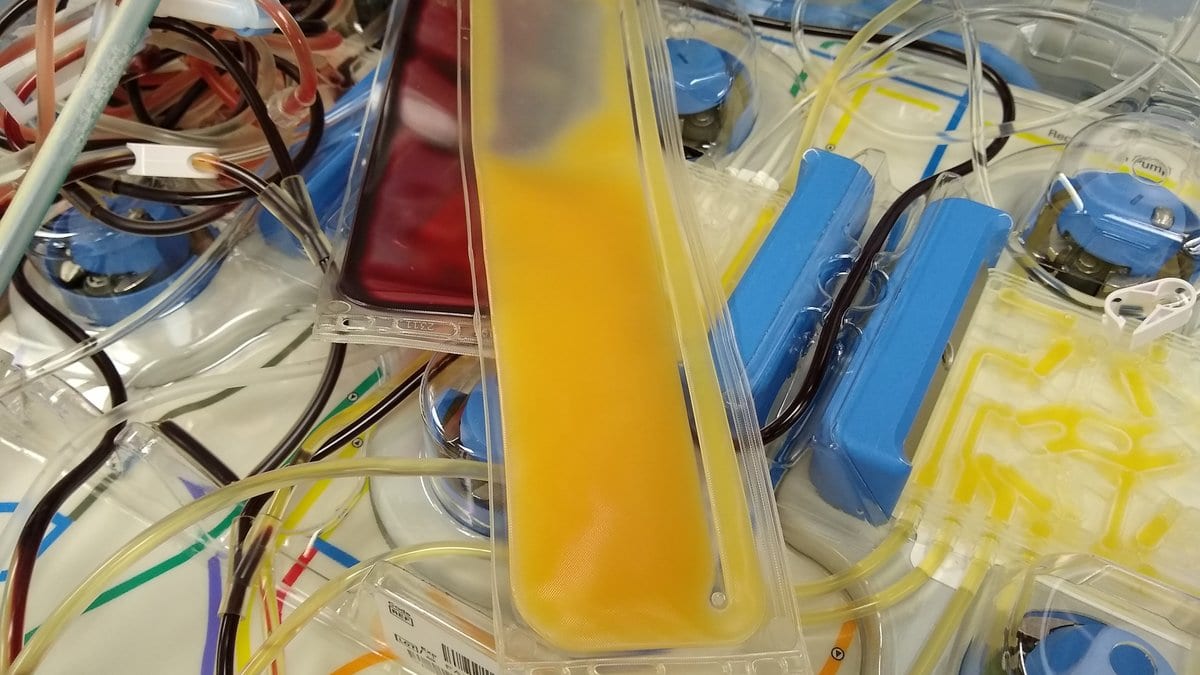
Platelets kept in cold storage for as long as 21 days controlled bleeding no worse than platelets stored at room temperature for up to seven days, according to a trial of 1,000 cardiac surgery patients published Aug. 17 in JAMA.
The phase 3 trial randomized children and adults undergoing cardiac surgery with planned cardiopulmonary bypass, the heart-lung machine, in a 2-to-1 ratio to the two kinds of platelets. It ran at 27 sites in the United States and Australia from December 2021 to March 2025, the published abstract states. Platelets are routinely held at 20 to 24 degrees Celsius for five to seven days; the cold arm held them at 1 to 6 degrees Celsius.
The primary measure was a bleeding scale from 1 to 5 on which higher values mean more bleeding, with a noninferiority margin of one point. Of the 1,000 patients transfused, 989 entered the primary analysis, 650 in the cold-stored group and 339 in the room-temperature group. The investigators report that cold-stored platelets met the noninferiority criterion at every storage duration tested, with a probability above 99.9%, and a pooled mean difference from room-temperature platelets of 0.09 points, with a 95% credible interval of -0.06 to 0.23. That is a result showing no meaningful disadvantage, not an advantage.
Median chest tube output at 24 hours was 8.9 mL/kg in the cold-stored group and 8.4 mL/kg in the room-temperature group, a difference the authors report was not statistically significant. They record no differences between the groups in venous or arterial clots, transfusion-associated adverse events, acute respiratory distress syndrome, kidney failure, septic shock or death, with one exception they name: reexploration, a return to surgery, was more frequent in the cold-stored group.
The authors write that cold storage "may allow for increased availability of platelets by reducing wastage and shortages," and could let platelets be stocked where the current shelf life rules it out. That is their inference about practice rather than something the trial measured. The trial is registered as NCT04834414.
Sources
- JAMAPeer-reviewed

Medical Disclaimer: This content is provided for general informational and educational purposes only. It is not medical advice and should not be used as a substitute for professional medical advice, diagnosis, or treatment. Always consult a qualified healthcare professional regarding any medical condition, concern, symptom, or treatment decision.