Antibodies Map Four Target Sites on a Tick-Borne Virus With No Approved Treatment
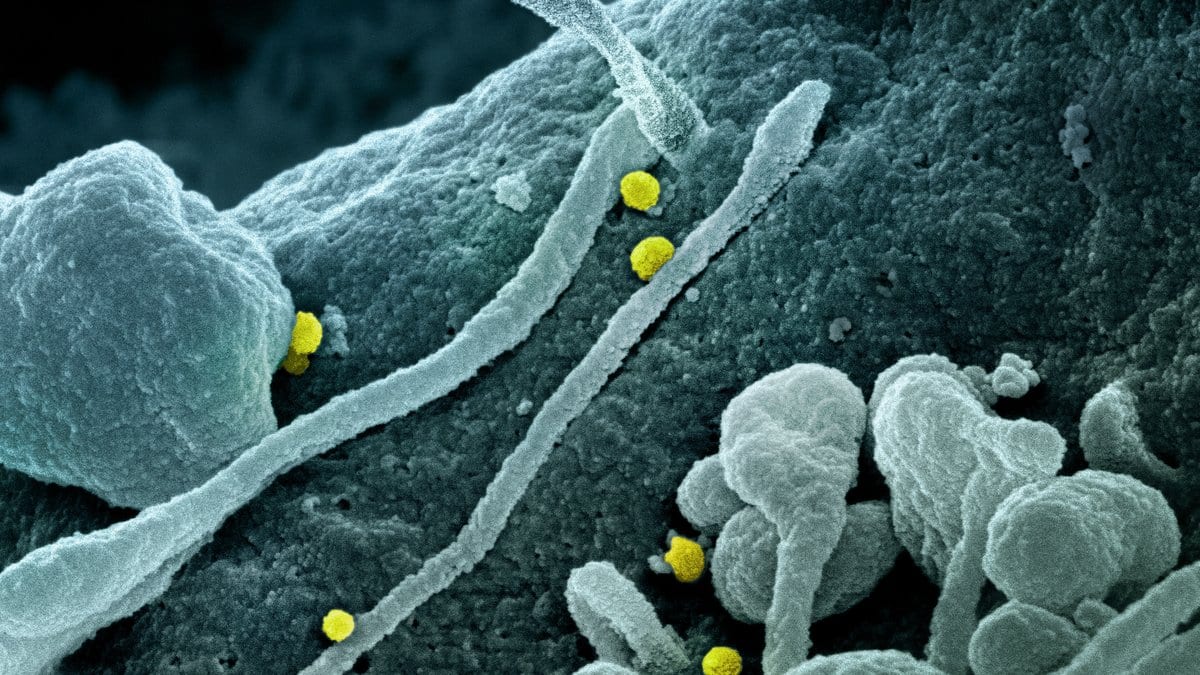
Researchers have identified four sites on a protein of the Crimean-Congo hemorrhagic fever virus where protective antibodies bind, and solved three crystal structures showing how the most potent of those antibodies attaches, in a paper published Aug. 21 in Nature Communications.
The team used nine monoclonal antibodies raised against the virus's nucleocapsid protein, the protein that wraps its genetic material, to identify the four antigenic sites and to place each one on either the head or the stalk region of that protein, according to the abstract. The antibodies protected animals to varying degrees, and how well one protected did not depend on whether its target site sat in the head or the stalk, the authors report. Those protection experiments were done in mice; the paper's acknowledgments record interferon-receptor knockout mice, and it reports no human data.
Three X-ray crystallography structures were obtained, including the nucleocapsid protein of the strain Afg09-2990 bound to the most potent antibody, 9D5, along with two structures of the protein by itself. Together, the authors write, these "revealed structural elements critical for mAb-9D5 broad-spectrum protective characteristics." The antibody itself is not new to this paper: the abstract records 9D5 as the first non-neutralizing monoclonal antibody shown to protect against the virus in earlier work.
The abstract describes Crimean-Congo hemorrhagic fever virus as tick-borne, endemic to Africa and Asia and expanding into parts of Europe, with mortality rates "approaching 40%," rising incidence and no currently approved countermeasures. The authors' stated conclusion is that their findings "provide a path towards the rapid identification of broadly protective anti-NP mAb countermeasures."
The work was led from the University of California, Riverside, with co-authors at the US Army Medical Research Institute of Infectious Diseases and the Centers for Disease Control and Prevention, and was funded by the National Institute of Allergy and Infectious Diseases and the Military Infectious Disease Research Program. Nature Communications says it is sharing the accepted version early and will replace it with the final version of record.
Sources
- Nature CommunicationsPeer-reviewed

Medical Disclaimer: This content is provided for general informational and educational purposes only. It is not medical advice and should not be used as a substitute for professional medical advice, diagnosis, or treatment. Always consult a qualified healthcare professional regarding any medical condition, concern, symptom, or treatment decision.