An Injectable Alternative to Retinal Implants Is Tested in Blind Mice
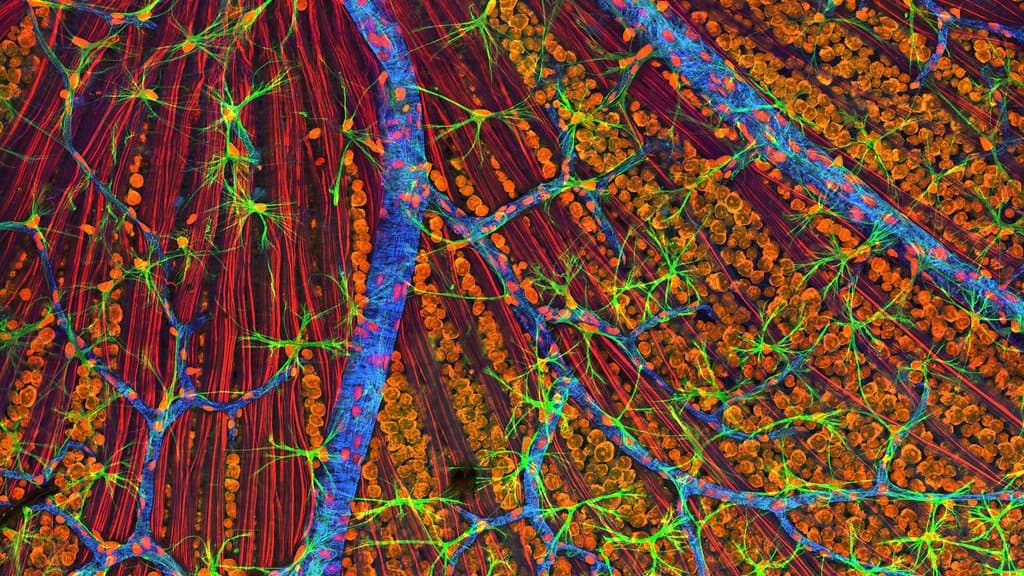
A team at Aarhus University injected light-sensitive nanoparticles into the eyes of blind mice and recorded light responses in the animals' visual cortex, in a paper published Sept. 22 in Nature Biomedical Engineering. Nobody has been treated with the particles. The work was done in a mouse model of retinitis pigmentosa, an inherited disease that destroys the retina's light-sensing cells, and in pig retinas kept alive outside the eye.
The authors describe the particles as an injectable retinal prosthesis. They are hollow spheres of graphitic carbon nitride, a semiconductor, and the shape borrows from the chloroplast, the light-harvesting compartment of plant cells. After injection they settle on the retinal surface beside the nerve cells that carry signals from the eye to the brain. Light striking a particle produces a faint current and a little heat, which in turn frees calcium inside the cell. The group presents this as an alternative to gene therapies that make retinal cells light-sensitive and to solar-powered implants.
The authors report that responses in the visual cortex met criteria they had set in advance in five of 14 treated eyes, against one of 14 eyes given inert control particles. The difference was not statistically firm, and its confidence interval spanned zero. Three of the seven treated mice also avoided the lit half of a two-chamber box; mice given control particles showed no such preference.
A standard test of the light-sensing cells found no signal in any injected mouse, which the authors read as evidence that the responses begin further along the visual pathway. In an isolated pig retina laid on a grid of electrodes, adding the particles raised those cells' average firing rate from 5 to 29 spikes per second immediately after a light pulse.
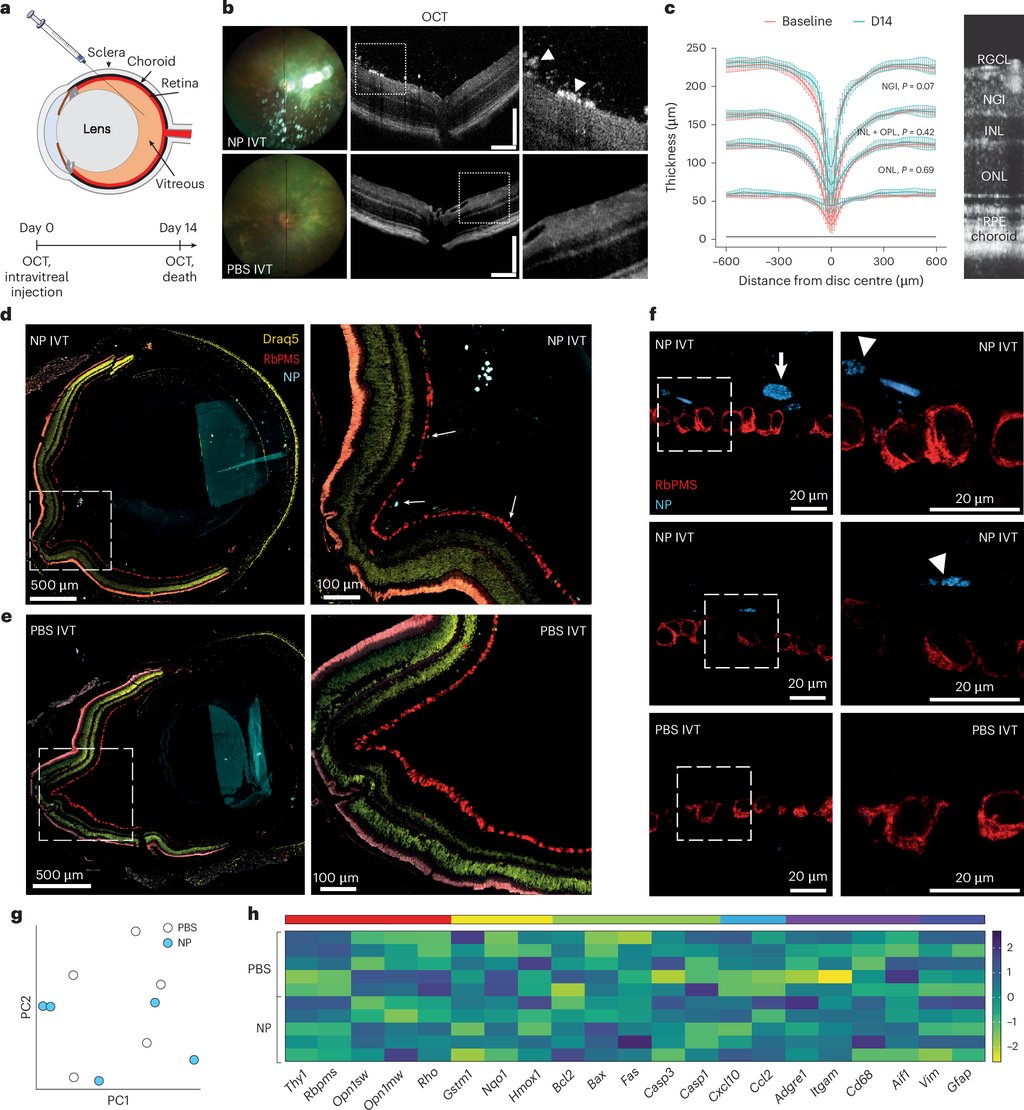
The paper also reports no change in retinal thickness or gene expression in healthy mice two weeks after injection, against eyes given buffer alone.
The mouse responses required relatively bright light, which the authors attribute to too few particles reaching the target cells. They say other delivery routes, including injection beneath the retina, should be explored.
Sources
- Nature Biomedical EngineeringPeer-reviewed

Medical Disclaimer: This content is provided for general informational and educational purposes only. It is not medical advice and should not be used as a substitute for professional medical advice, diagnosis, or treatment. Always consult a qualified healthcare professional regarding any medical condition or treatment decision.