The Ice Alaska's Whalers Work From Keeps Thinning, Climate Models Project
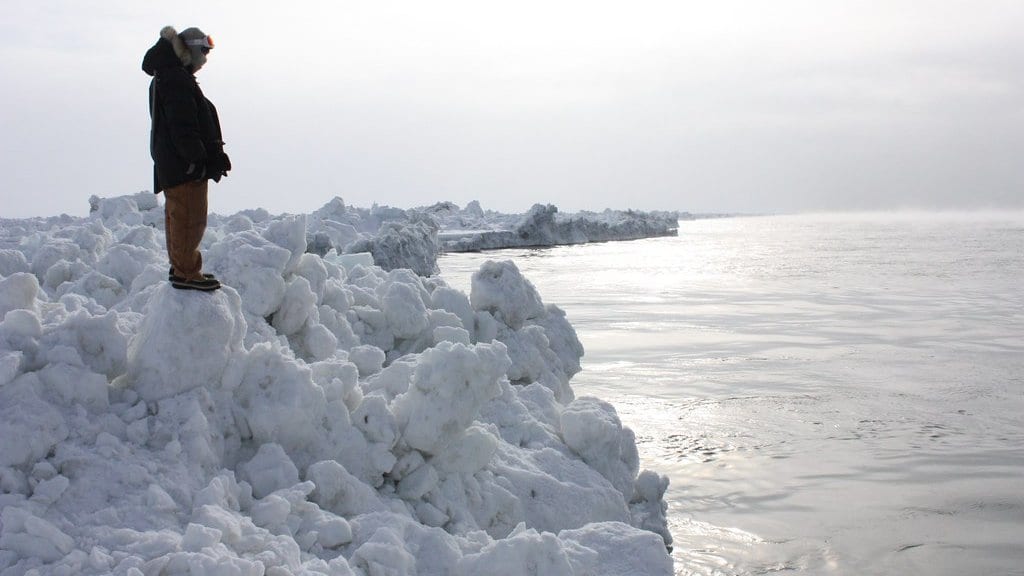
Sea ice off Utqiaġvik, Alaska, is projected to keep thinning through the rest of this century, and the spring bowhead whaling that crews conduct from that ice is the activity most affected, according to a study published Oct. 3 in Scientific Reports. A. K. DuVivier of the NSF National Center for Atmospheric Research and colleagues assembled sea ice and wind projections for the community across the 20th and 21st centuries.
Spring hunting at Utqiaġvik is done from the ice itself, so how thick and how stable it is decides whether crews can go out at all. The authors give that as their reason for assembling the projections: Arctic change may affect traditional subsistence hunting, including bowhead whale hunting.
The Scientific Reports paper draws on four datasets from the Community Earth System Model, a widely used climate model. The four were picked to differ in structure, in the emissions path they assume and in how finely they divide the map, so that projected change could be told apart from ordinary year-to-year swings and model uncertainty. DuVivier and colleagues report that thinning ice degrades conditions for ice-based spring whaling by mid-century, and that the autumn picture is much less clear: changes in wind speed and direction are harder to pin down, and their effect on autumn whaling is uncertain.
Datasets built at the same level of detail pointed the same way, which the authors call a robust and fairly predictable change. How fast the thinning arrives depended on that level of detail. These are model projections, not measurements of today's ice.
Residents of Utqiaġvik who shared knowledge of their environment and whaling practices are credited in the paper, along with the Sikumiut Field School held in the community in April 2025 and bear guards from the Ukpeaġvik Iñupiat Corporation. Co-author T. Moore interviewed residents, and the work began as Ana Fonongava’inga Stringer's undergraduate honors thesis at Vanderbilt University.
The US National Science Foundation funded the study. Scientific Reports posted it open access as an accepted manuscript that will be replaced by the final version of record.
Sources
- Scientific ReportsPeer-reviewed