Why the Seas Around Alaska and Siberia Absorb More Heat
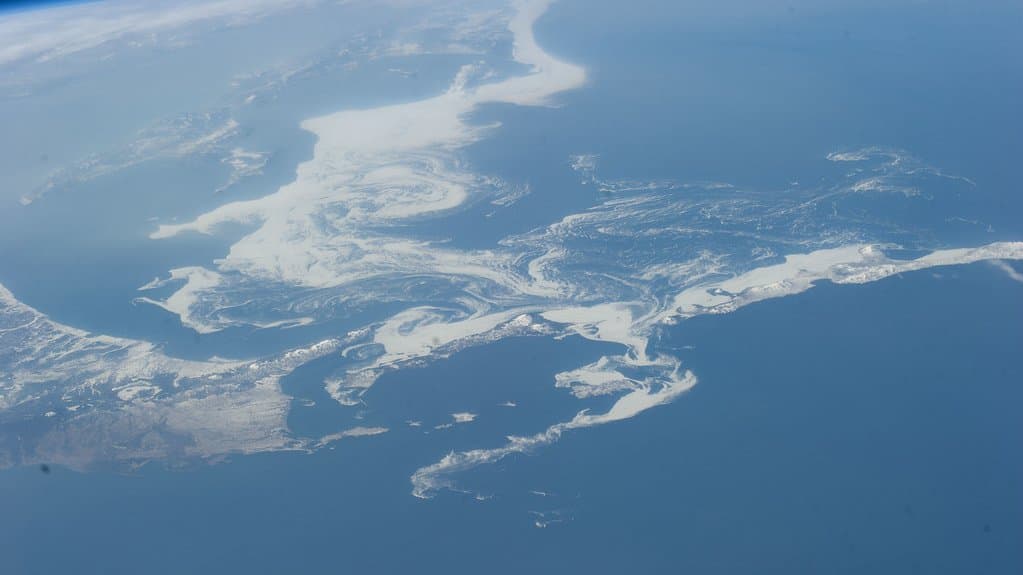
Less winter sea ice and a shift in Pacific winds have sped up the rate at which the far northern Pacific takes in heat, according to a study published Sept. 14 in npj Climate and Atmospheric Science. The change dates to the 1970s and covers the Sea of Okhotsk, the Bering Sea and the Gulf of Alaska.
Warming in those seas has already been measured. What the paper aims to explain is how they take the heat in, a process that has remained poorly understood. Climate models put the Pacific on course to become the ocean that holds the most human-caused heat this century, with its subpolar north the critical region for taking it up.
The team, led by Kai Ge of the Institute of Oceanology, Chinese Academy of Sciences, describes two chains of events. Less ice grows over the shallow shelves in winter, which warms the air above them. The warmer air cuts the heat the ocean gives back, so more of it stays in the water.
A second chain plays out in the atmosphere. Altered North Pacific winds have spun up the loop of currents that circles the subpolar ocean, carrying more heat north from lower latitudes.
The authors report that the extra heat is concentrated near the surface, which has left the warm top layer thinner and more sharply divided from the colder water below. They link that pattern to more marine heat waves, spells of unusually warm water and to disruption of the ocean's chemical cycles. These findings were produced by combining observations with model experiments.
Sources
- nature.comPeer-reviewed
