Antarctica's Ross Sea Had Its Warmest Summer on Satellite Record, Then Its Biggest Bloom
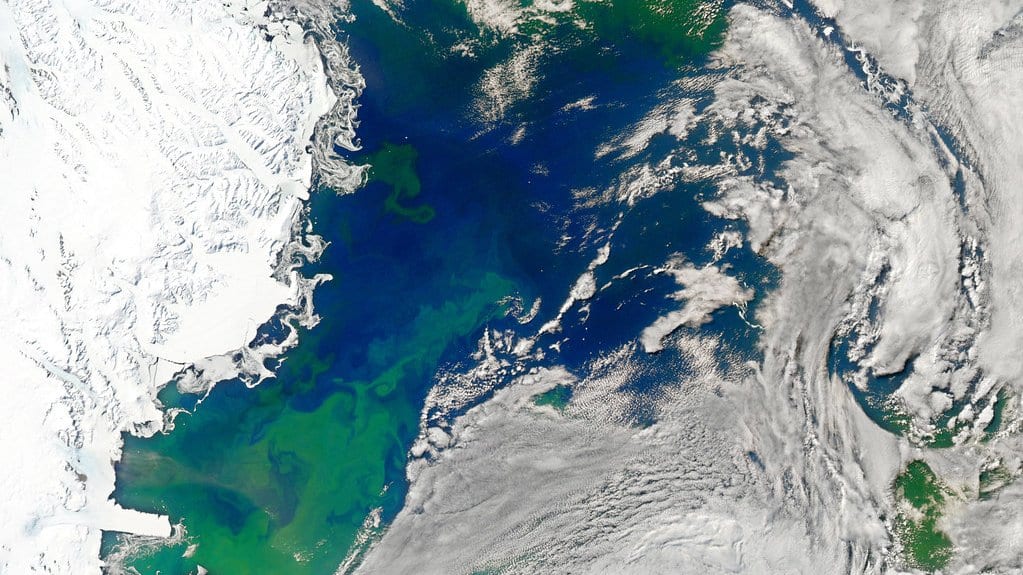
The eastern Ross Sea off Antarctica went through an extreme marine heatwave in the southern summer of 2022–23 and then grew its largest plankton bloom since satellite measurements of ocean color began, Zehao Wang, Fukai Peng and colleagues at Sun Yat-sen University reported Sept. 8 in Environmental Research Letters. They call it the most intense thermal event in that region's satellite record.
The authors say the sequence identifies a polar route by which weather over the ice can produce a heat extreme and a biological one at the same time. They add that it shows how strongly local sea-ice conditions will shape what grows in Antarctic coastal waters.
The study draws on satellite records of sea surface temperature, ocean color and sea ice, plus modeled weather and ocean data. It grades the event Category IV, which the marine heatwave scale labels extreme, with a regional cumulative intensity of 127.22 °C·days in January 2023, a measure of how far the water sat above normal and for how long. Summer sea surface temperatures peaked locally around 2.5 °C above the long-term average. Chlorophyll a, the pigment satellites use to gauge plankton, averaged 3.67 milligrams per cubic meter, the highest in the eastern Ross Sea since ocean-color records started in 1997.
The ice moved first. A north-south wind pattern pushed sea ice apart and opened the eastern Ross Sea polynya, a stretch of open water inside the ice, earlier than usual. Low cloud cover fell at the same time, letting more sunlight reach the surface. Warming and a more layered upper ocean followed, and the bloom came after that. In Terra Nova Bay, where the ice held, neither the warming nor the bloom happened.
Warming below the surface stayed in the shallow shelf water rather than spreading. This pattern suggests that local links among air, ice and sunlight drove the event more than heat carried in by ocean currents. The paper is open access.
Sources
- doi.orgPeer-reviewed