A Widely Used Gene Study Method Often Points the Wrong Way
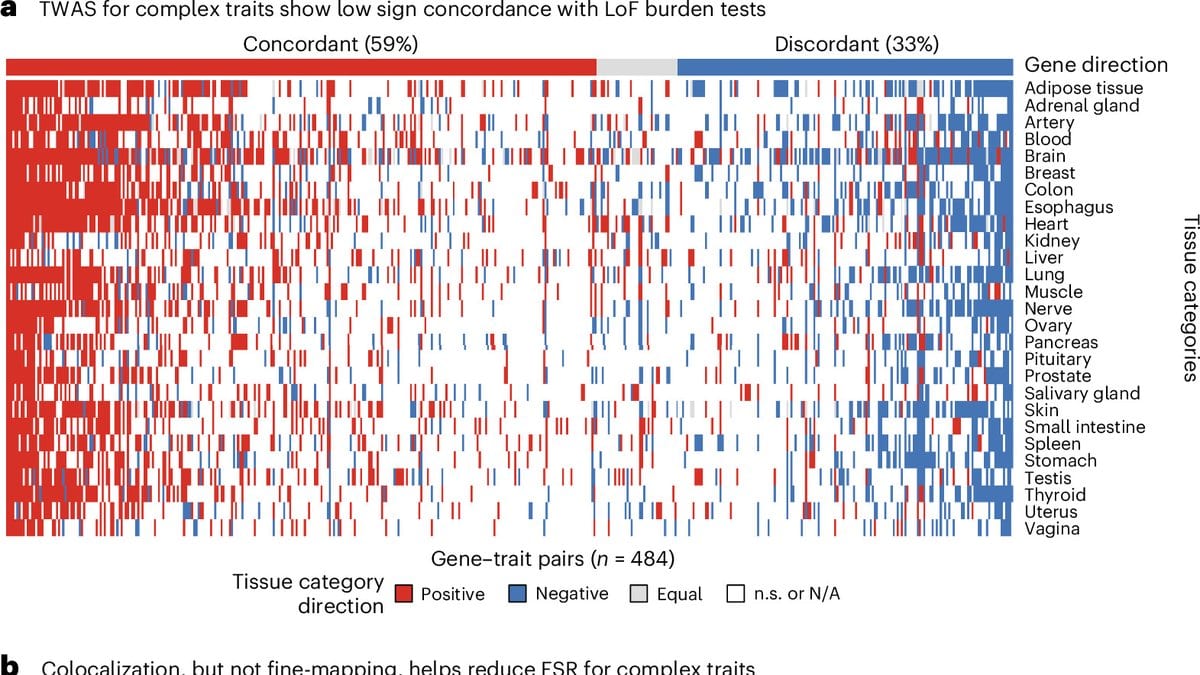
A Stanford-led group reports that a standard method for working out which genes drive a trait, and in which direction, gets the direction wrong for 23% of blood proteins and 33% of gene-trait pairs in complex traits.
The analysis, published Oct. 22, 2026, in Nature Genetics, covers transcriptome-wide association studies, which predict gene activity from a person's DNA and test it against a trait. The authors write that the direction these studies report is used to map how genes regulate one another and to choose drug targets.
Peter A. Gerlach, Nikhil Milind and colleagues, with senior author Jonathan K. Pritchard of Stanford University, checked the method in two settings where the right answer is known. For 2,907 proteins measured in UK Biobank blood samples, more activity of a gene should mean more of the protein it encodes. For 85 other traits, the group used rare variants that switch a gene off, which imply a direction, giving 730 gene-trait pairs to test.
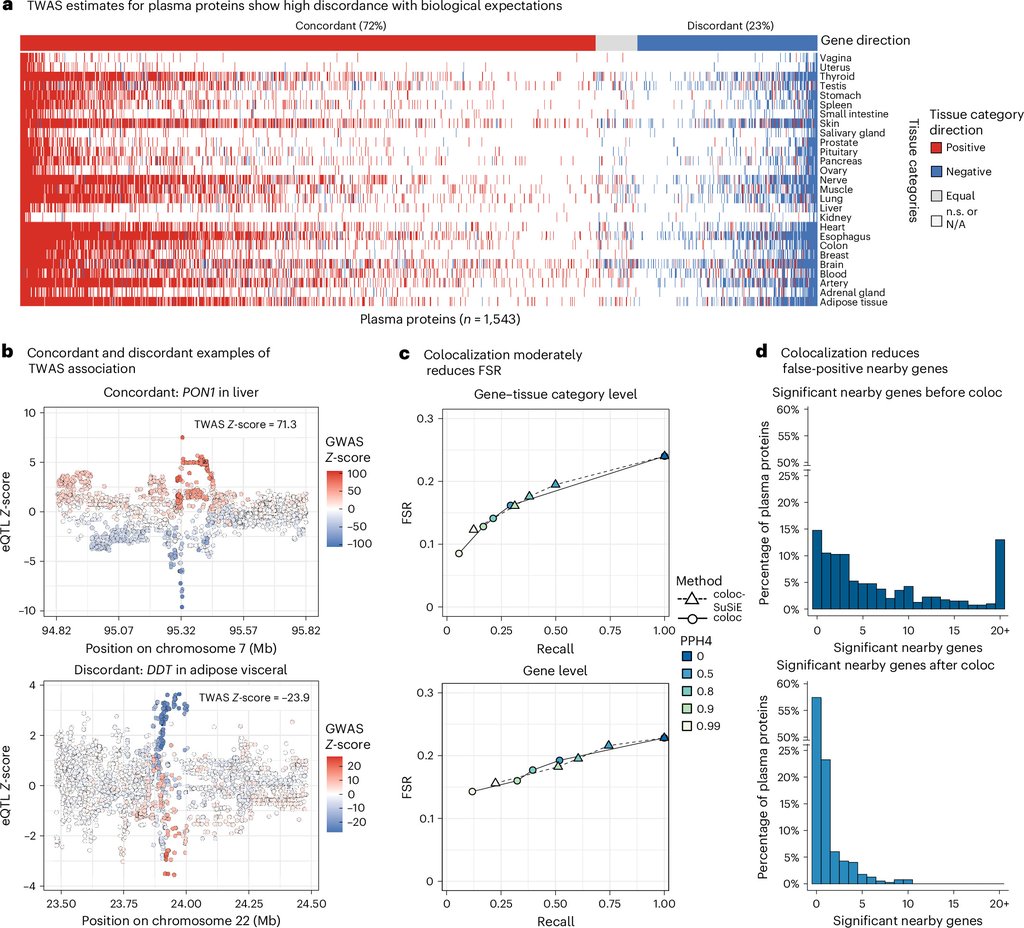
They report that the method was confidently wrong in more than 90% of the available tissues for 12% of those pairs.
The authors propose that most of the error comes from gene activity measured in tissues that have nothing to do with the trait: the variants controlling activity there sit beside the variants that matter and are inherited with them, so the association is real while its direction is not. Restricting the analysis to the tissue a protein comes from, and keeping only associations with a shared genetic cause, left no wrong directions among 40 genes, though most were discarded.
The authors say the mismatch is not evidence that the method invents wrong signs, but a problem in the gene-activity data behind it. They conclude that direction estimates from these studies should be interpreted with caution, and that the findings raise concerns about the method's reliability more broadly.
A second paper, Co-regulation confounds direction of genetic effects in transcriptome-wide association studies, by Tiffany Amariuta, ran in the same journal on the same day.
Sources
- Nature GeneticsPeer-reviewed