Dolphins Stranded in New Zealand Still Carry the Older Forever Chemicals
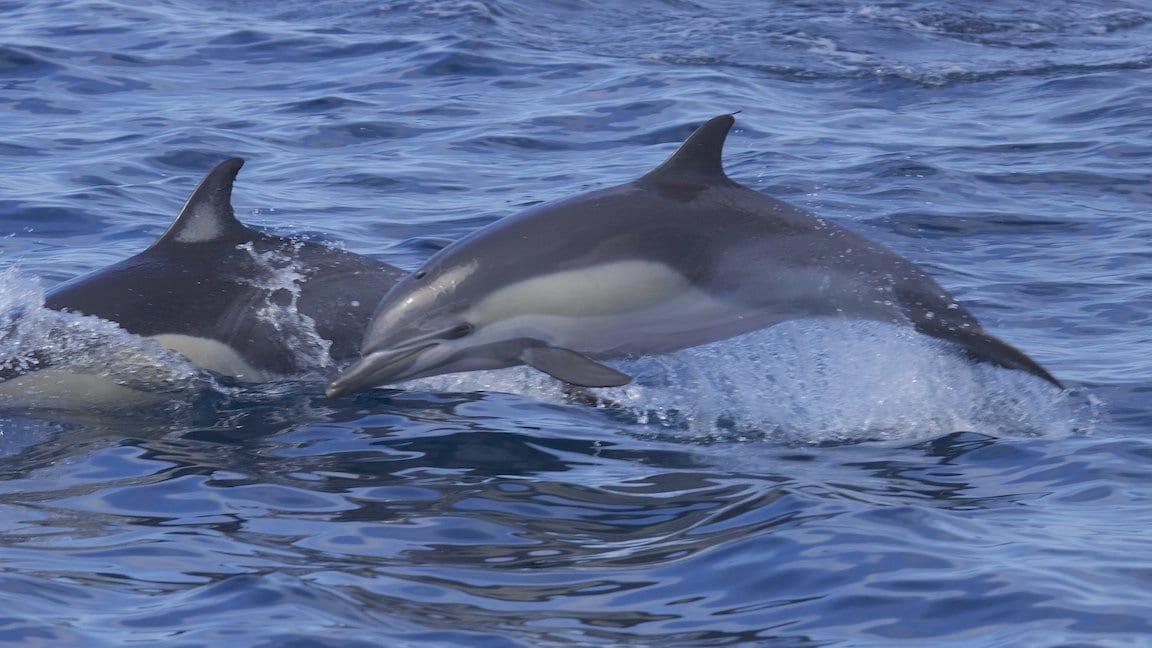
Researchers at the University of Auckland and Massey University measured 28 PFAS, industrial chemicals that barely break down, in the livers of 98 common dolphins recovered around New Zealand between 2003 and 2025. They report that the burden is still carried by PFOS and other long-chain compounds under long-standing production controls, not by the replacement chemicals now in use.
The authors describe the archive as a baseline for legacy PFAS in the Southern Hemisphere, where monitoring is sparse, and as a way to separate real environmental change from the variation that sampling and laboratory methods add. The paper was published Nov. 16, 2026, in npj Emerging Contaminants.
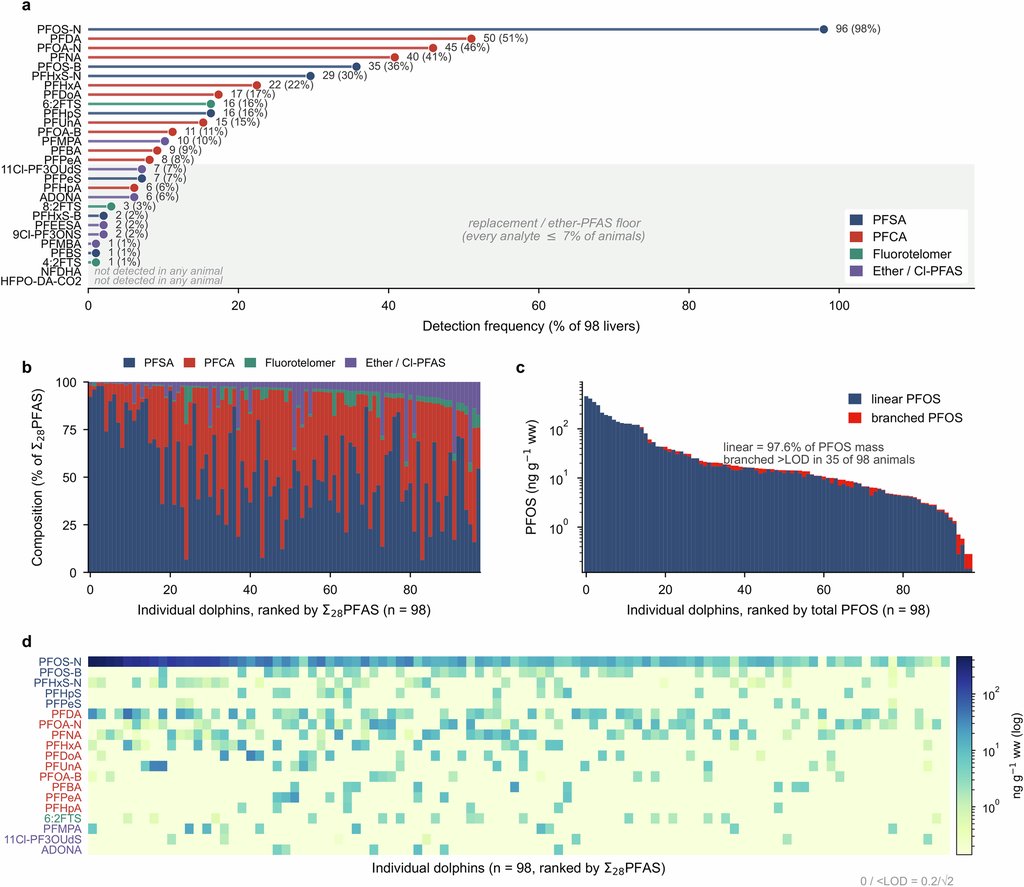
Across the cohort, PFOS made up a median 44.0% of the measured PFAS mass and was found in all but two animals. Sex, maturity and age explained little of the spread, and the authors report no sign that the stranding region shaped a dolphin's chemical profile.
Levels were lower in the most recent animals, but the paper reports that the apparent decline does not survive its own robustness checks. Every liver sampled before 2020 was analyzed in a single laboratory campaign, and every later one in a second, so the step between the two eras reflects the analysis, not evidence of environmental decline. Within the earlier stretch, the downward slope faded when each stranding event was counted once rather than each animal, and when the largest mass-stranded pod was excluded. The authors note that dolphins stranding together can share diet and exposure history, so treating each liver as independent overstates how much the record holds.
A model of how PFOS moves through a growing dolphin put its effective half-life at 2.46 years. The authors report that a simple regression reproduced the same measurements at least as well, so they offer the model as a population-level exposure history rather than a better prediction for individual animals.
The paper names the next step as re-analyzing archived samples from both campaigns on a single harmonized panel, with the stranding event rather than the animal recorded as the sampling unit.
Sources
- npj Emerging ContaminantsPeer-reviewed
