An Arctic Plankton Bloom Has Held Steady Through 20 Years of Shifting Sea Ice
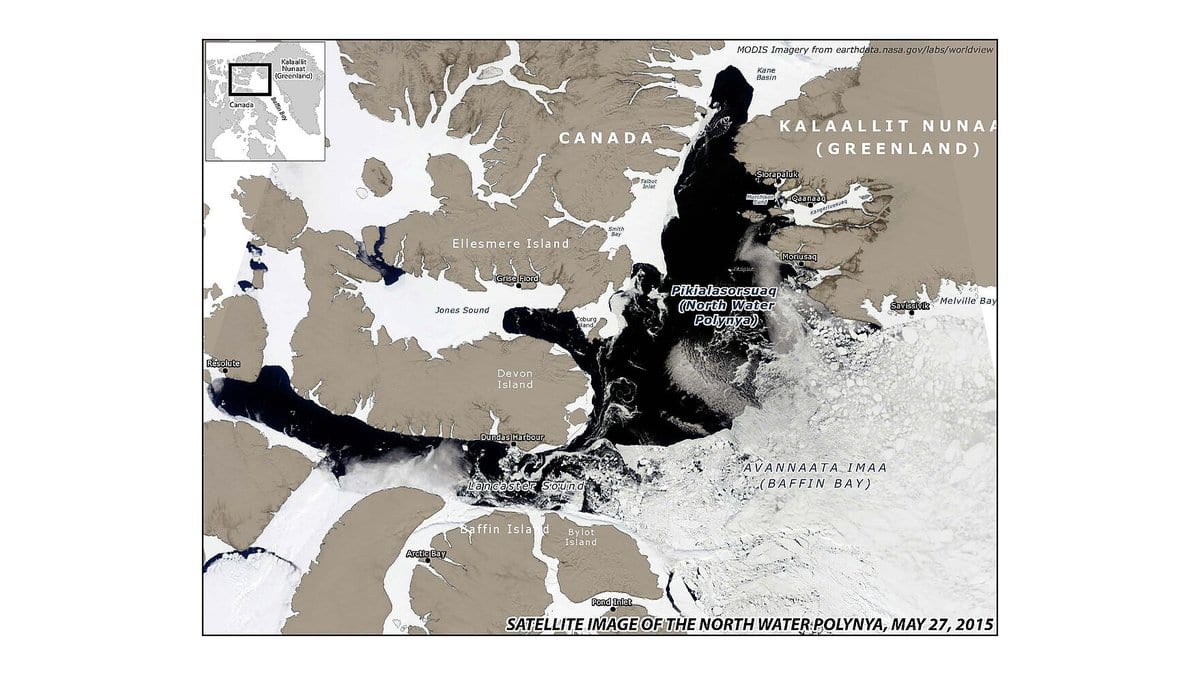
Plankton growth in the North Water Polynya, a stretch of open water that stays clear between Greenland and Ellesmere Island while the sea around it freezes, has remained steady across 20 years of satellite observations, according to a study published on August 24, 2026, in Communications Earth & Environment by researchers at the Takuvik laboratory of CNRS and Université Laval..
The study pairs satellite sea-ice records from 2003 to 2023 with depth-resolved estimates of primary production, the rate at which drifting algae turn sunlight and carbon dioxide into new growth. Production in the polynya, known locally as Pikialasorsuaq or Sarvarjuaq, "remains remarkably stable over the satellite record, despite pronounced interannual variability in sea-ice conditions," the authors write.
A second hot spot farther north, in Kennedy Channel, behaves in the opposite way. The paper reports that it is highly variable and forms only under particular arrangements of sea-ice arches (the ice bridges that jam across a strait and hold back the floes drifting south), and that the area it covers is constrained by the shape of the seafloor beneath it.
The study also shows that production is increasing in the northern part of Nares Strait, consistent with earlier ice retreat and longer open-water seasons. The researchers identify the arches as "key physical regulators of ecosystem functioning" at the entrance to the Last Ice Area, the waters north of Greenland and Canada where summer sea ice is expected to last longest.
Led by first author is Foucaut Tachon, the paper was received in October 2025 and posted August 24, 2026, as an accepted version, which is subject to further edits before the final version of record replaces it.
Sources
- www.nature.comPeer-reviewed