In a Sea Starved of Phosphorus, Microbes Are Not Waiting for Phosphate
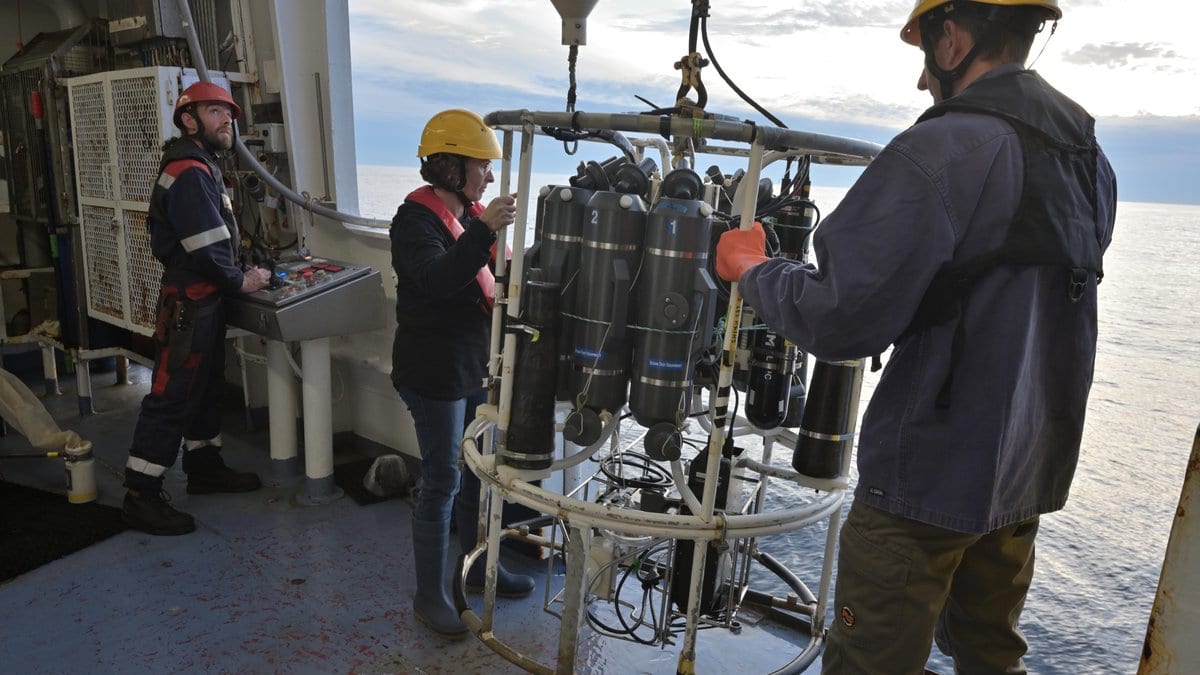
Microbes in the eastern Mediterranean take up at least as much phosphorus from organic molecules as they do from phosphate, the mineral form dissolved in seawater, according to tracer measurements published Sept. 7 in Scientific Reports. The pattern held at every station sampled, from the coast out to open water. The work was led by Eyal Rahav and Barak Herut of Israel Oceanographic and Limnological Research, with colleagues at the GEOMAR Helmholtz Centre for Ocean Research in Kiel and the University of Haifa.
Phosphorus is the nutrient that runs out first in that basin, one of the most nutrient-poor stretches of ocean anywhere, and it limits what grows at the base of the marine food web. How much of that demand is met by organic phosphorus rather than phosphate has been unresolved, and these measurements are an attempt to settle it.
On winter cruises the team used radiolabeled tracers, chemical markers that can be followed as cells absorb them. The test was then repeated in small tanks of seawater. Surface phosphate was present at nanomolar concentrations. ATP, an energy-carrying molecule and the organic form they tracked, was a thousandfold scarcer, at picomolar levels. Daily uptake per cell still put the organic form level with phosphate or ahead of it at every station. Both supplies were scarce enough to hold the community back.
The tank experiments moved the balance in both directions. Adding phosphate suppressed uptake of the organic form, and adding Saharan dust mainly stimulated it. The authors read that response, together with the uptake rates, as evidence that these communities adjust which source they draw on as availability changes. They propose the switch as a general adaptation to severe nutrient scarcity, a proposal their eastern Mediterranean data do not test elsewhere.
The paper is open access. The cruises were run aboard the research vessels Bat-Galim and Meteor, and Scientific Reports has released the accepted version ahead of its final edited text.
Sources
- www.nature.comPeer-reviewed