Stickier Ocean Particles Carry More Carbon Into the Deep Sea
Researchers at the Scripps Institution of Oceanography and the University of Lincoln have measured how stiff the inside of a sinking ocean particle is, and report that the stiffer ones hold bacteria off, break down more slowly, sink farther and carry more carbon into the deep ocean. The study was published Oct. 8, 2026, in Science.
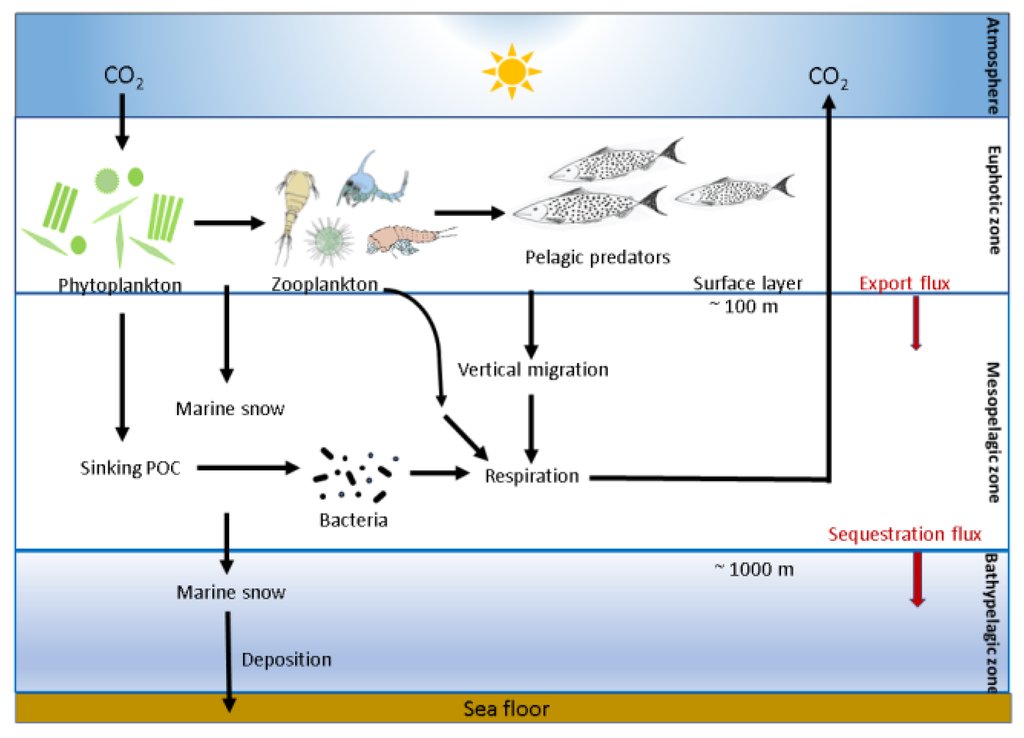
Marine snow, the slow drizzle of dead cells, waste and mucus that falls out of the sunlit ocean, is one of the main routes by which surface carbon reaches the deep sea. According to the paper, whether that carbon is released in the upper ocean or stored at depth depends on how fast a particle sinks and how fast bacteria break it down.
The team mapped the thickness of the fluid inside natural particles at nanometer scale using molecular rotors, dyes that spin faster in thinner fluid. Bryce G. Inman of Scripps and Lincoln, with Stuart Humphries at Lincoln and Farooq Azam at Scripps, reports that the particles are not uniform. They are structured living spaces, with thinner regions that bacteria can settle in and thicker regions that line up with a barrier keeping bacteria out.
The authors also measured how fast that thickness itself breaks down, and report that the more viscous particles take longer to degrade, sink farther and contribute more to carbon storage. They describe the result as a microscale physical constraint on the global ocean carbon pump, the movement of carbon from the surface into the deep sea. The researchers say little had been known until now about what physically limits bacteria from settling on and breaking down individual particles.
The work was funded by the National Science Foundation, the National Oceanic and Atmospheric Administration, the Simons Foundation and the UK's Engineering and Physical Sciences Research Council.
Sources
- SciencePeer-reviewed