Under Net Zero, Dam Reservoirs Would Become the Energy Sector's Top Emitter by 2050
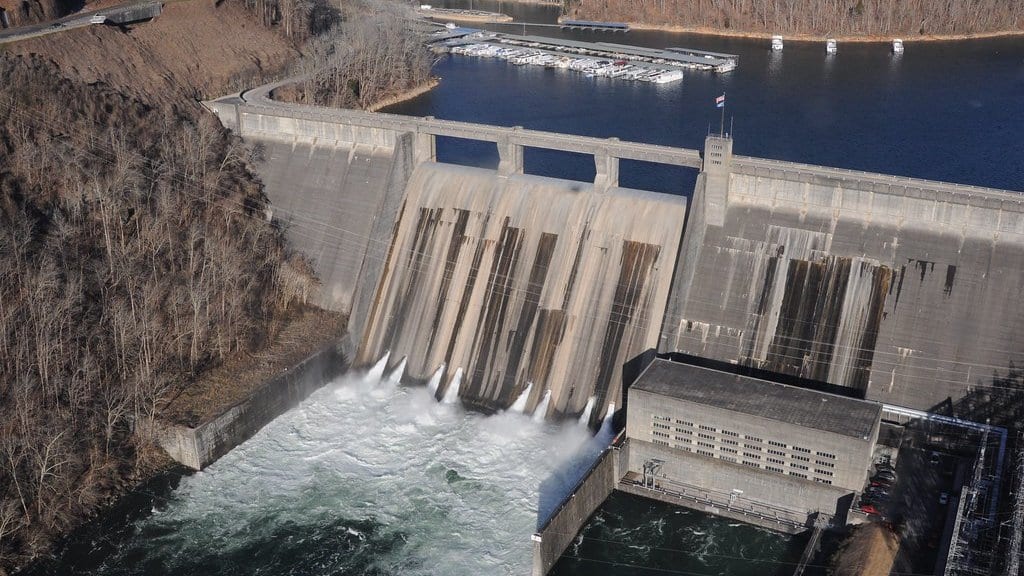
Greenhouse gases from hydropower reservoirs would account for 87% of energy-sector emissions by 2050 if the rest of the sector reaches net zero, according to a machine-learning projection published Aug. 31 in Communications Earth & Environment.
The figure is modeled output, not a measurement. Zilin Wang, Meili Feng and colleagues at the University of Nottingham Ningbo China, the University of Nottingham, University College London, Imperial College London, the University of Michigan and the University of Leeds write that they "employed machine learning models trained on published datasets to assess reservoir emissions over time, explicitly accounting for changing climatic conditions."
Under the net-zero scenario that the team models, emissions from installed and planned hydropower projects together would exceed those from conventional energy sources, the paper states. The authors put the 2050 share at 87%, with 44.6% from projects that are planned rather than already built. Planned reservoirs would emit about 2,509 million metric tons of carbon dioxide equivalent a year and reservoirs already constructed about 2,360 million metric tons, according to the paper.
Globally, the authors project that hydropower emissions surge during the 2060s, driven primarily by methane ebullition, the bubbling of methane out of the water. In North America, Africa and Europe they expect emissions to peak in the 2060s and then decline as conditions turn drier, while emissions in South America and Central and South Asia stabilize by the 2090s.
Sources
- Communications Earth & EnvironmentPeer-reviewed