Forests Are Growing Faster and Losing Their Ability to Bounce Back
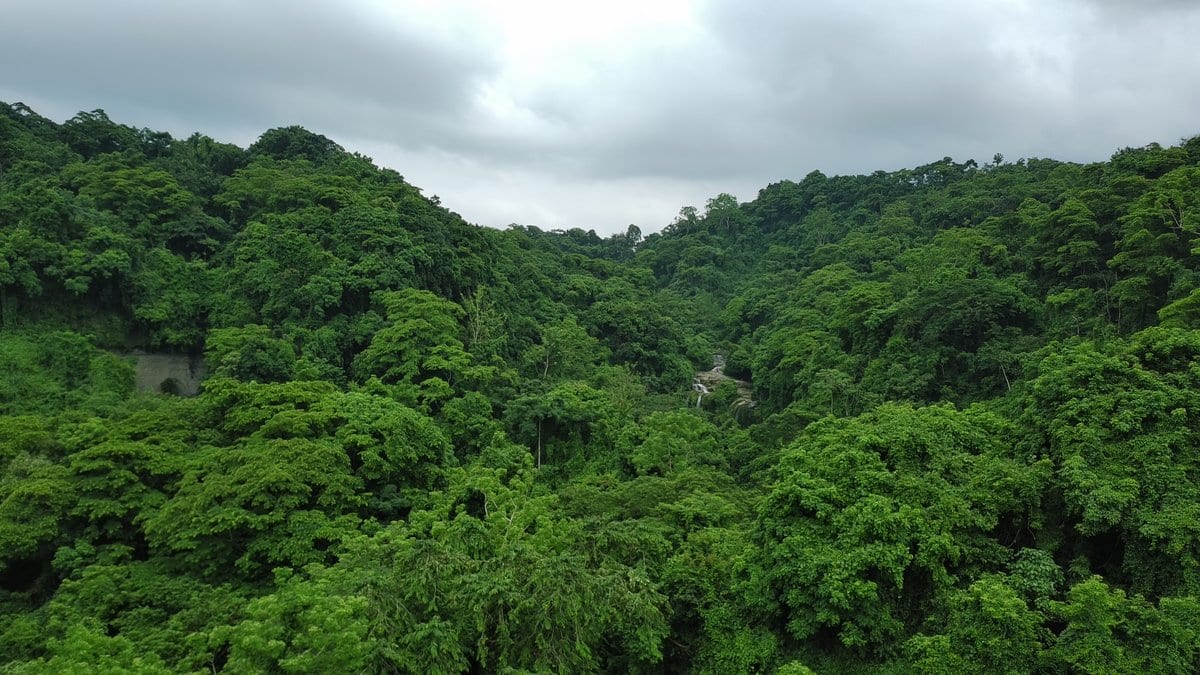
More than a third of the world's forests grew more productive and less able to recover from shocks at the same time between 2001 and 2021, according to a study published Sept. 10 in Communications Earth & Environment.
A rise in carbon uptake on its own does not show that a forest is in good health, the authors say, and they call for resilience to be built into forest monitoring so that forest carbon storage stays stable.
The study, led by Peiqing Jing and Zhenfeng Shao at Wuhan University, drew on several remote-sensing datasets covering that period. It tracked gross primary productivity, the carbon a forest takes in through photosynthesis, against resilience, a forest's capacity to recover after a shock.
Rising vapor pressure deficit, a measure of how dry the air is, was the primary driver of the resilience loss. Forests that are no longer intact proved twice as sensitive to that loss as intact ones, which the authors read as a sign that a simplified forest structure leaves a forest more vulnerable to dry air.
In tropical forests and in the boreal forests of the far north, drier air also tightened the link between carbon uptake and how efficiently forests used water. The authors say that tighter link reflects leaf pores limiting water loss rather than any improvement in how forests balance carbon and water. In intact forests, dry air loosened the same link.
The paper is open access. The work was led from the State Key Laboratory of Information Engineering in Surveying, Mapping and Remote Sensing at Wuhan University, with co-authors at the University of Oxford, Peking University and Louisiana State University. China's National Key Research and Development Program funded it in part.
Sources
- www.nature.comPeer-reviewed