Frozen Ground Is Thawing Deeper Across the Arctic, the Alps and Antarctica
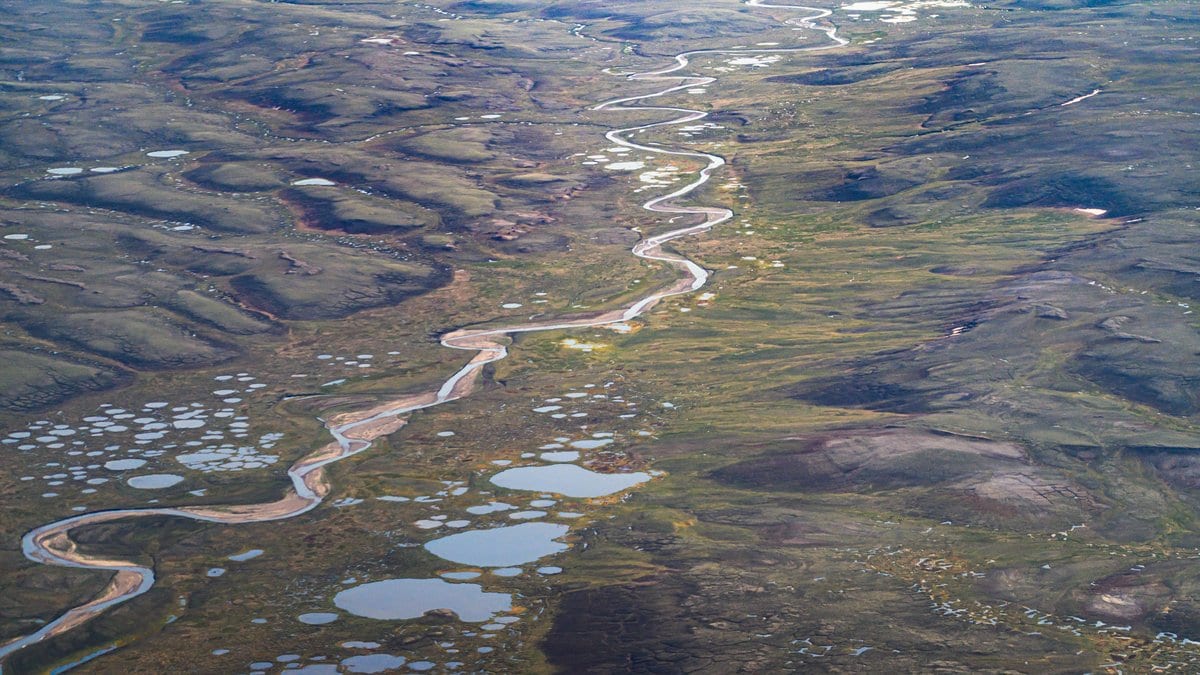
The layer of soil that thaws each summer above permafrost has been getting deeper at most long-running monitoring sites since 2000, according to a study published Aug. 26th of this year in Communications Earth & Environment.
Dmitry A. Streletskiy of George Washington University and colleagues used the Circumpolar Active Layer Monitoring network, or CALM, whose sites are measured in the field by probing, thaw tubes or borehole temperatures rather than from orbit. Of 316 registered sites, 156 had at least ten years of observations between 2000 and 2024; the average record runs 20 years, the paper says.
In the Northern Hemisphere, 66.4% of those sites, 91 of them, showed a statistically significant increase, 32.1% showed no significant change and two sites decreased, the authors report. By region, thaw depth rose significantly at 55.2% of Arctic sites, by an average of 0.8 plus or minus 0.8 centimeters a year; at 94.7% of European mountain sites, by 10.3 plus or minus 9.9 centimeters a year; and at 90.9% of high-elevation Asian sites in China and Mongolia, by 3.2 plus or minus 2.1. In the Southern Hemisphere, 37.5% of the 16 Antarctic sites increased significantly, by 2.5 plus or minus 2.8 centimeters a year, along with two of the three sites in the Central Andes.
The largest changes were in mountain permafrost, where the active layer doubled at several sites, according to the paper. The smallest were at sites with thick surface organic horizons and high ground-ice content.
To test what is driving the change, the team ran a panel regression against ERA5-Land reanalysis data. That analysis attributes Arctic increases mainly to rising thawing degree-days, a measure of accumulated summer warmth, followed by increases in total rainfall. The same test could not resolve climate controls in the European mountains, the authors write, where sites are few and conditions vary sharply over short distances.
The authors say their results indicate permafrost degradation this century is observed more broadly than previously reported. The paper is open access and groups the sites into four regions: the North American Arctic, Northern Eurasia, the Central Andes and Antarctica.
Sources
- www.nature.comPeer-reviewed