Cocoa's Spread in Ghana Is Linked to Food Farming Inside Protected Forests
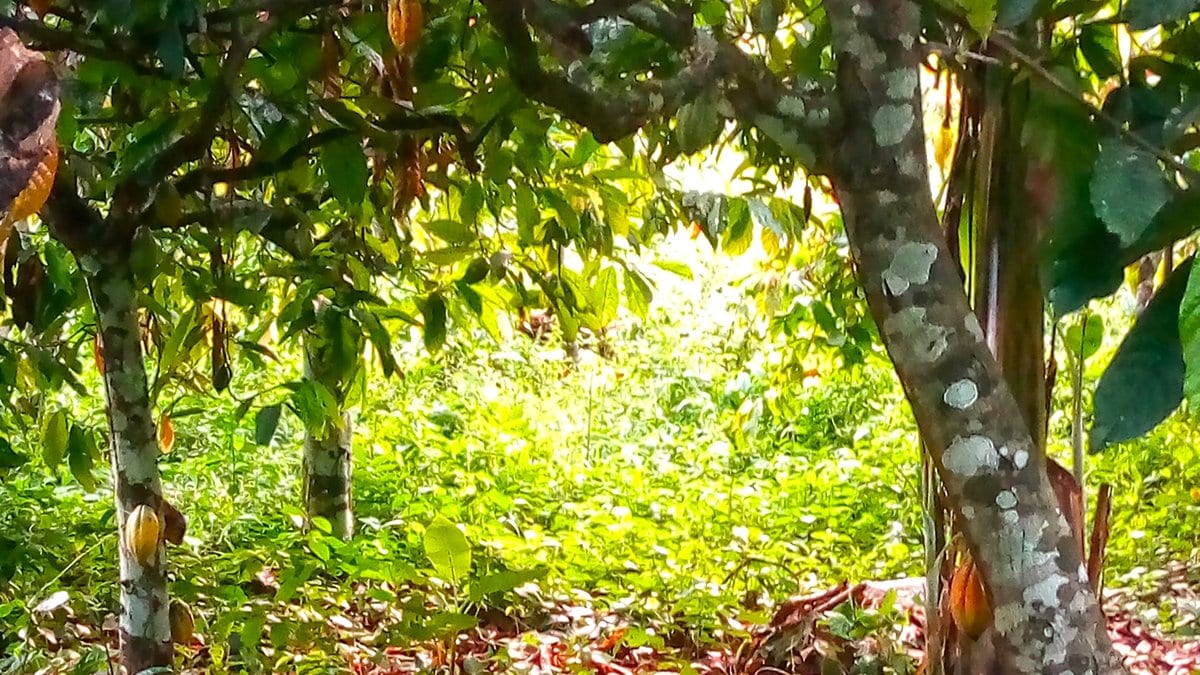
Cocoa expanding onto land that was already farmed in Ghana is associated with food crops being pushed into nearby protected forest reserves, and with more forest cleared inside those reserves, according to a study published Aug. 22 in Communications Earth & Environment.
Thomas Addoah of the University of Cambridge's Conservation and Development Lab and seven co-authors at Cambridge, UCLouvain, INRAE, ETH Zurich, and the University of Queensland combined satellite imagery with farmer interviews to test whether that displacement happens. Fieldwork covered 76 participating villages, the paper's acknowledgments record, and the Ghana Forestry Commission supplied the reserve boundary data.
From 2000 to 2019, areas with more intensive cocoa farming were associated with greater forest loss inside reserves from food crop cultivation, the authors report. The association was measured across satellite and interview data, not demonstrated as a cause.
For 2022 to 2024, the paper reports a second association: villages with greater exposure to sustainability programs showed reduced forest loss. Agroforestry, the practice of growing shade trees on cocoa farms, showed no protective effect at all, which the authors attribute to "minimal adoption" rather than to the practice itself.
Zero-deforestation commitments aim to cut forest loss from cocoa but "overlook a critical gap," they write, because when cocoa expands onto existing farmland, farmers may shift food-crop growing into nearby reserves instead. Their results, they write, "suggest current policies fail to address indirect deforestation from land displacement," and point to a need for land use governance covering both direct and indirect pressure.
Sources
- Communications Earth & EnvironmentPeer-reviewed