Earthquakes Have a Carbon Cost, and a New Study Puts a Number on It
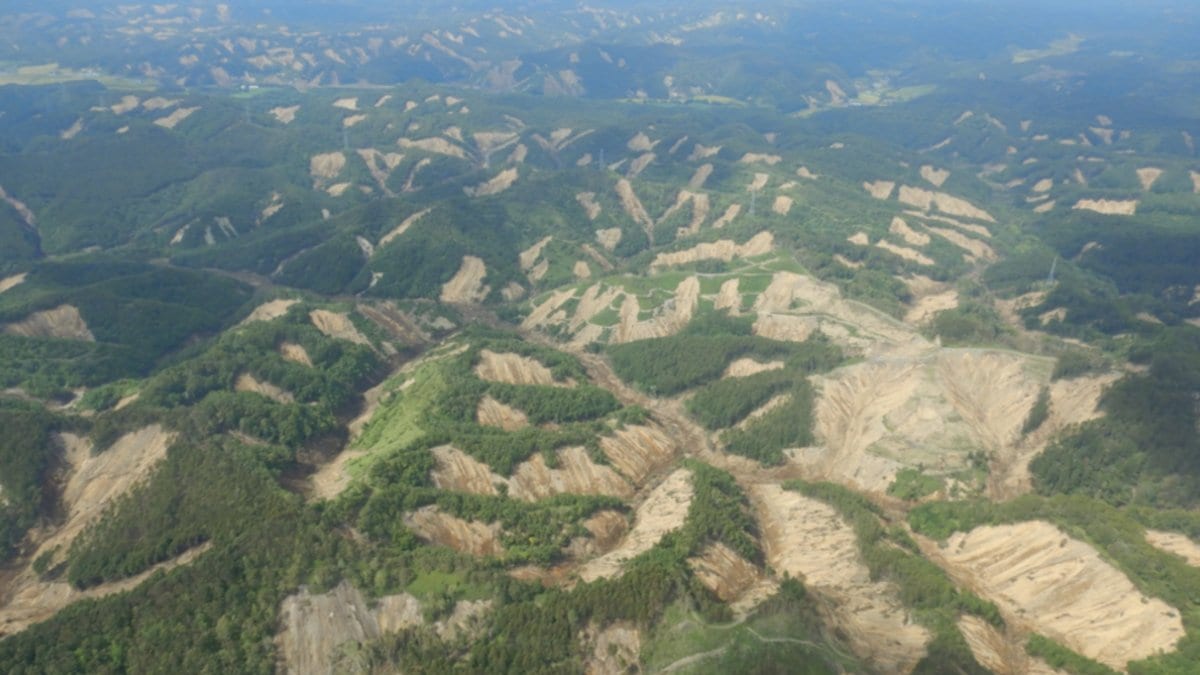
Strong earthquakes removed 38.86 ± 6.23 teragrams of carbon from the world's land ecosystems between 2006 and 2018, according to a study published Sept. 3 in Communications Earth & Environment. A teragram is a million metric tons.
The total is cumulative to 2022 and covers carbon lost when quakes trigger landslides and alter land cover. The estimate is derived rather than directly measured: the authors combined vegetation models, land-cover data, carbon-density products and earthquake records.
It takes forest ecosystems at least six years to begin recovering.
The losses fall unevenly. Of the affected countries, 84.6% are classified as emerging and developing economies. In Nepal and Ecuador, cumulative earthquake-induced carbon losses exceed half of each country's cumulative land-use change emissions over the period following the quakes.
Sichuan University in Chengdu led the work, with co-authors at Tsinghua University, Sun Yat-sen University, the Chinese Academy of Sciences and the University of California, Davis. The researchers write that a global quantification of these losses "has been lacking," and describe their result as "a global benchmark for carbon losses from geophysical disturbances" and a reference for national carbon accounting and disaster resilience strategies.
The paper is open access under a Creative Commons Attribution 4.0 license. The journal's record lists it as received Nov. 1, 2025, and accepted Aug. 25, 2026; Springer Nature states this accepted version will be replaced by the final version of record.
Sources
- Communications Earth & EnvironmentPeer-reviewed