August Tied for the Hottest Month Ever Recorded, Copernicus Says
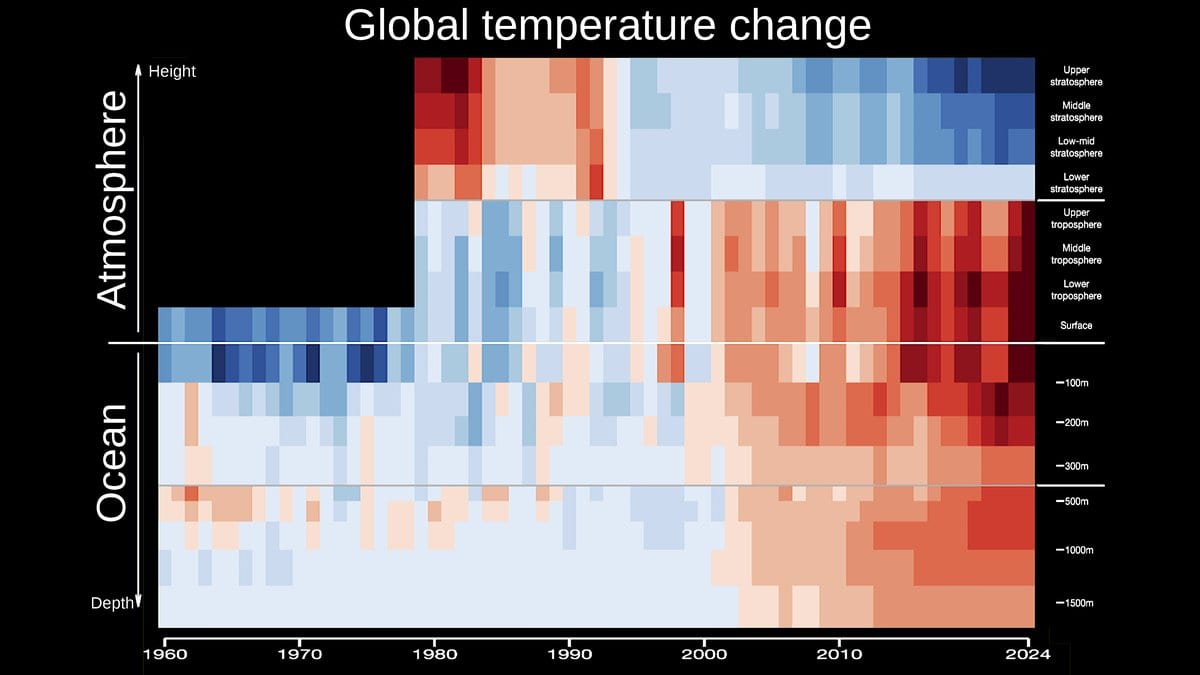
The Copernicus Climate Change Service said August 2026 was the joint warmest month ever recorded, tied with July 2023, at a global average surface air temperature of 16.96 °C. The service, run by the European Centre for Medium-Range Weather Forecasts, published the monthly figures on Sept. 10, 2026.
August was also the first month since November 2025 to sit above 1.5 °C of warming, at 1.65 °C above the estimated pre-industrial average. The service attributes the heat to warming from burning fossil fuels and to rapidly rising sea temperatures in the equatorial Pacific, where strong El Niño conditions are in place.
The ocean outside the polar regions averaged 21.07 °C over the month, the highest for any calendar month on record alongside March 2024, the bulletin says. Those values come from ERA5, the service's reconstruction of past weather, and it notes that some other sea surface temperature datasets do not show a monthly record.
Western Europe closed its warmest summer on record, ahead of 2003, after heatwaves that began in May. Parts of central and eastern Europe stayed unusually dry. Severe drought was reported in France, the UK, Hungary, Romania and Serbia, and river flows on the Rhine, the Danube and the Dnieper were exceptionally low.
"The impacts of these conditions are increasingly being felt by communities, economies and ecosystems across the world," said Samantha Burgess, Strategic Lead for Climate at ECMWF.
A separate US record came a day earlier. NOAA's National Centers for Environmental Information reported on Sept. 9, 2026 that the contiguous United States had just had its warmest summer in a 132-year series.
Copernicus said El Niño conditions in the tropical Pacific are forecast to strengthen further in the coming months, potentially into one of the strongest such events on record.