A River Basin Rarely Turns Rain Into Flow the Same Way Twice
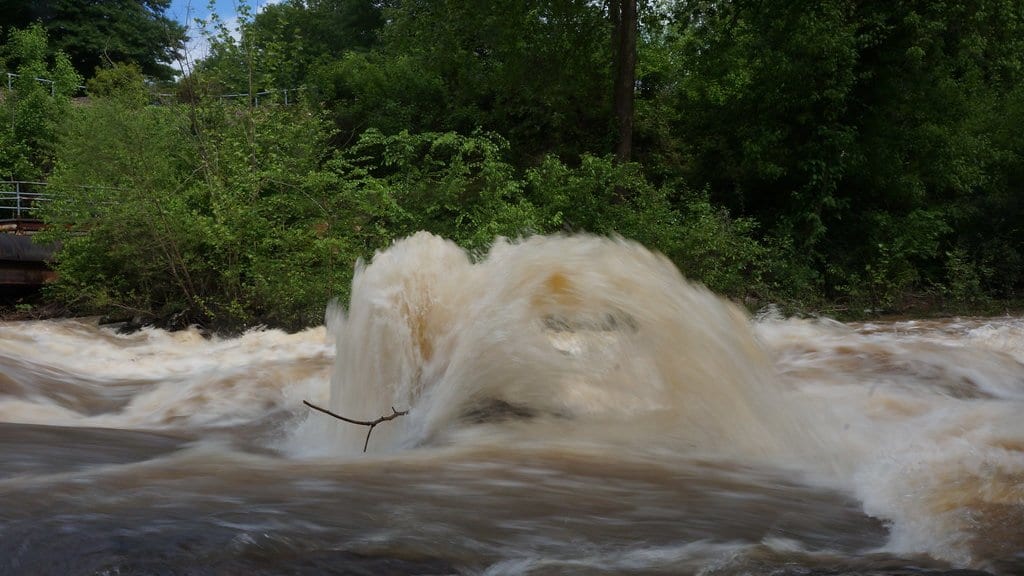
Ying Yan, Ali A. Ameli and a colleague at the University of British Columbia report that a river basin does not convert rain into streamflow the same way twice. They analyzed about 1.7 million runoff-producing events in 4,838 basins on six continents and found moderate to strong event-to-event variation in that conversion in nearly every basin.
Models used for flood forecasting and water-supply planning generally treat the conversion as a fixed property of a basin, so that a given amount of rain or snowmelt yields a predictable flow. The authors write that whether the conversion is stable or varies from event to event had been unknown at the global scale, and that the gap limits confidence in flood-risk and water-security assessments. Their paper was published Oct. 9, 2026, in Communications Earth & Environment and is open access.
The team sorted each event by the type of water arriving (rain, snowmelt or rain falling on snow) and by how wet the soil already was. Moderate to strong variation between events turned up in 95.6% of the basins in the dormant season, when plants are not growing, and in 99.0% in the growing season. Basins whose events arrived under very similar conditions were variable as well.
Where conditions differed from place to place inside a single basin, the variation between events was larger. Basins with more variable behavior also produced more variable runoff from event to event, an association the authors measured rather than a mechanism they tested.
The analysis was funded through Canada's NSERC Discovery Grants program and ran mostly on the shared high-performance computing clusters of Compute Canada.
Sources
- Communications Earth & EnvironmentPeer-reviewed