Amazon Fires Also Hurt the Forest With the Ozone They Make
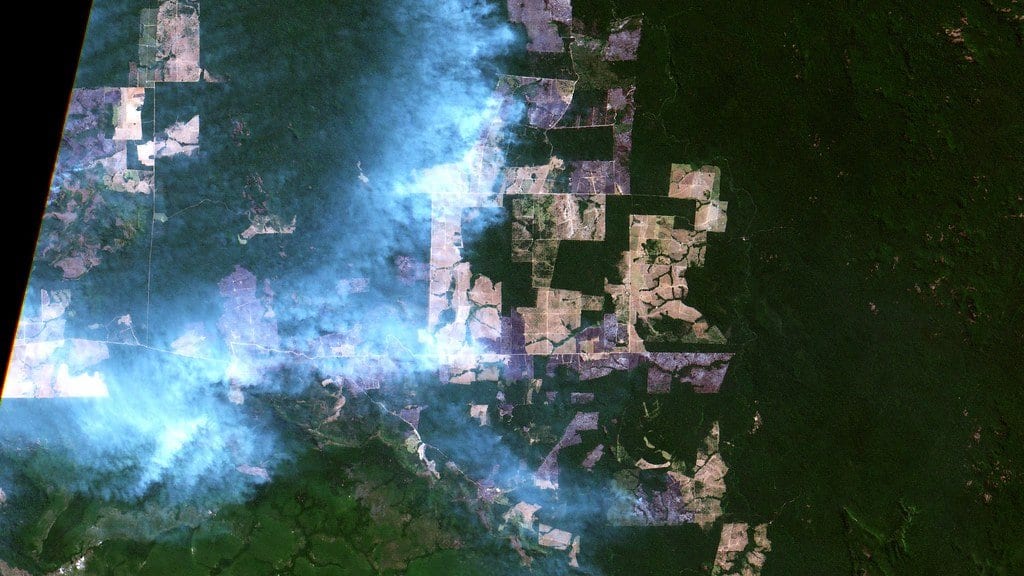
A study published Oct. 7, 2026, in Communications Earth & Environment estimates that ozone made by Amazon fires costs the forest extra carbon equal to about a quarter of what the fires emit directly. The figure is a model result rather than a measurement: 24% of direct fire emissions, with a range of 18 to 35%.
The pathway runs through the air, so it reaches trees well outside the burned area. Fires release nitrogen oxides, sunlight turns those into ozone near the ground, and the ozone enters leaves through their pores and cuts the carbon the plants take up. The authors argue that this indirect route belongs in the Amazon's carbon budget, where ozone is rarely counted.
Flossie Brown of the University of Exeter and ETH Zurich, Paulo Artaxo of the University of São Paulo and colleagues ran a land surface model, a computer model of plants, soil and water, using observed weather for 1997 to 2024 and hourly ozone from a separate Earth system model. The paper is open access.
The 18 to 35% range comes from how much tropical tree species differ in their sensitivity to ozone, and the authors say the contribution should be read as an order-of-magnitude estimate. Long-term surface ozone measurements in the Amazon are scarce, so the simulated ozone could not be checked against observations year by year.
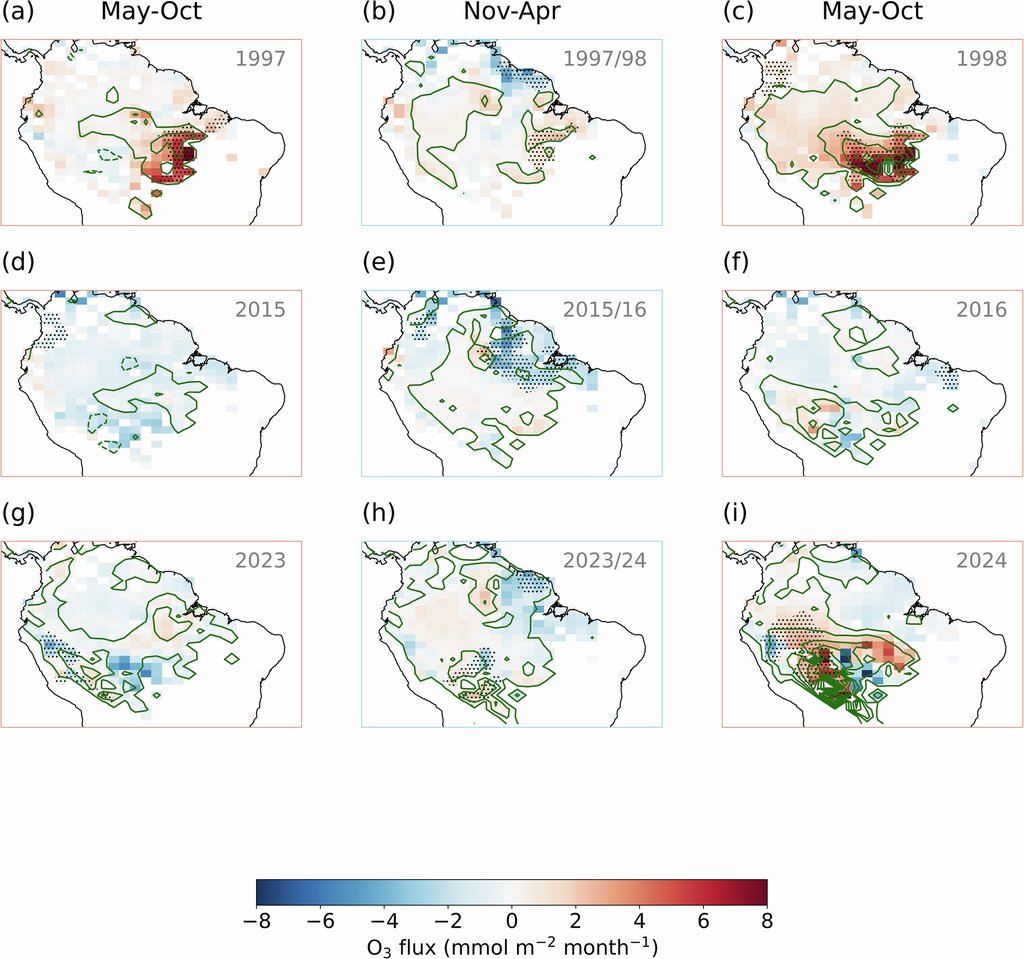
Drought might be expected to shield trees, because dry conditions make them close their pores and keep ozone out. The simulations suggest that shield fails where fires are heaviest. In the southern Amazon, growth lost to ozone in August of drought years averaged half the growth lost to the drought weather itself. In 2024, the year with the highest fire emissions in the simulation, ozone damage appeared despite widespread pore closure.
The paper notes that almost all Amazon fires are set by people, and that the modeled damage concentrates along the advancing agricultural frontier. The exception in the record is 2016, when fire activity stayed low through a drought and the simulation shows no significant ozone damage in the southern dry season.
Sources
- Communications Earth & EnvironmentPeer-reviewed