A Quantum Computer That Traps Single Atoms in Laser Light Starts Work in Japan
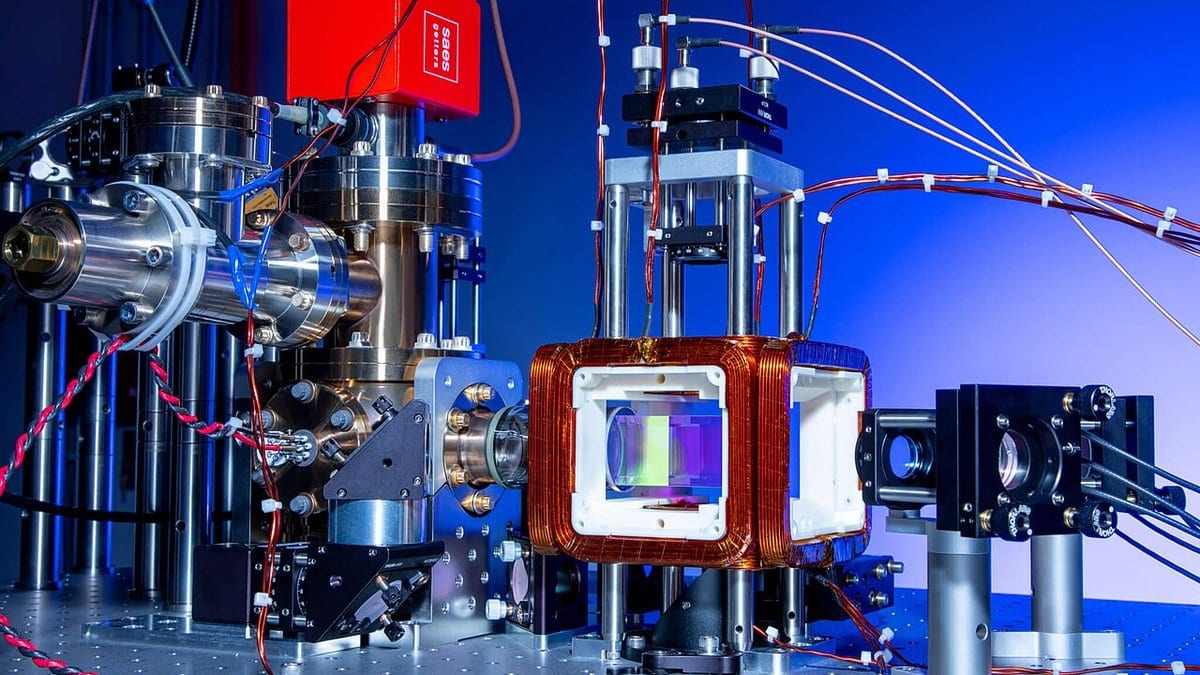
The Institute for Molecular Science in Okazaki, Japan, said on Aug. 24 that a neutral-atom quantum computer called "Shunkai" is in operation, running about 50 qubits. The institute, part of the National Institutes of Natural Sciences, describes the machine as Japan's first full-stack quantum computer of this type.
Shunkai stores each unit of quantum information in a single atom. According to the release, the atoms are held in an array by optical tweezers, meaning laser light focused tightly enough to trap them, and calculations are run by irradiating the atoms with microwaves or laser light. Results are read out by watching the fluorescence from each individual atom with a camera.
The system was developed by a team led by Kenji Ohmori, a professor at the institute, under Goal 6 of the Cabinet Office and JST Moonshot Research and Development Program, which is aimed at a fault-tolerant universal quantum computer. IMS says Hitachi Ltd. supplied the software stack and Infleqtion Inc. supplied the quantum processing unit.
The institute says the machine will run at roughly 50 qubits at the outset and later expand to roughly 500. That expansion is a planned step rather than present capability, as is the target IMS sets for the end of the project's second stage: 10,000 physical qubits with error detection and correction by March 2031. The second stage began in April 2026. The qubit figures are the institute's own and have not been independently verified.
Part of the machine is to be opened to outside users for developing applications and for demonstrating quantum error correction, IMS says. The institute also plans work with Yaqumo Inc., a company Ohmori founded and advises.
The name is an alternative reading of the given name of Harumi Shibukawa, the Edo-period astronomer who produced Japan's first domestically calculated calendar.