Fujitsu Builds a Quantum Computer Prototype Around Flaws in Diamond
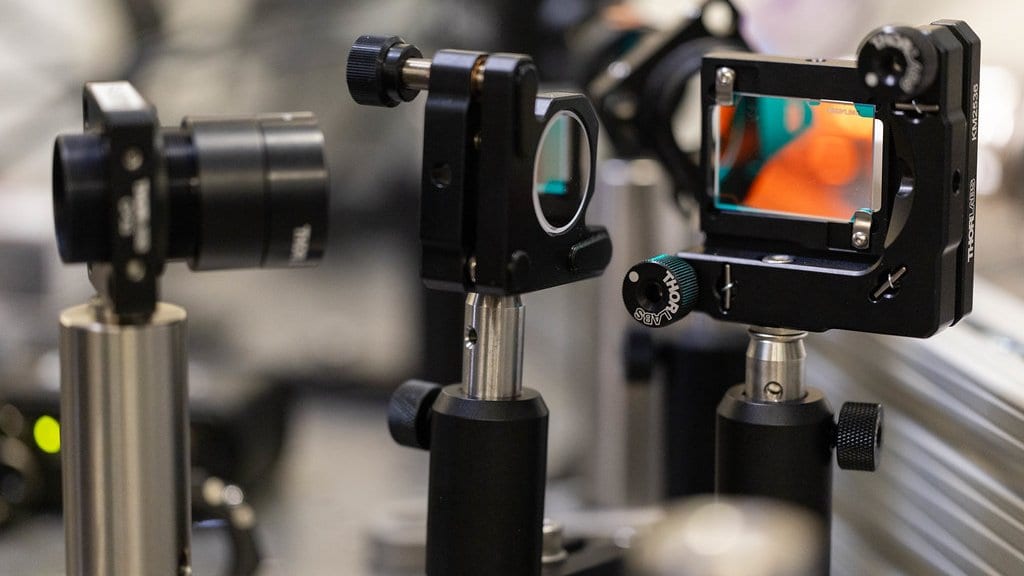
Fujitsu said on Sept. 8 that it has built and run a working prototype of a quantum computer that stores information in single tin atoms lodged in gaps in a diamond crystal. The prototype ran in a test environment, Fujitsu said. It could be operated from the Fujitsu Hybrid Quantum Computing Platform, the service the company's existing quantum users already reach, without additional specialist knowledge.
Fujitsu said the reason for building on diamond is scale. Light can carry a link between separate modules, the company said, so a larger machine would be assembled by connecting units rather than by enlarging a single processor.
The prototype operates at minus 271.6 degrees Celsius, warmer than the minus 273.13 degrees Celsius at which superconducting quantum computers typically run, according to the release. Both are close to absolute zero, so the machine still needs deep refrigeration. Fujitsu did not say how many qubits (the quantum version of bits) the prototype holds, and gave no error rates.
Fujitsu calls the prototype the world's first working diamond-spin quantum computer to combine tin-vacancy centers with photonic circuits, chips that route light rather than electricity. A footnote attached to that sentence in the release says its basis is research conducted by Fujitsu in September 2026. The release points to no outside check of the claim.
Diamond-spin machines usually place a nitrogen atom next to the gap that holds the qubit. Fujitsu used tin, which the release says is more symmetrical and less troubled by outside noise. The work comes from joint research Fujitsu began in 2020 with Delft University of Technology and QuTech, the Dutch quantum research institute that is part of TU Delft. Kees Eijkel, QuTech's general director, said in the release that demonstrating the scalability expected of diamond-spin quantum computing "remains a long and challenging journey."
The company said its next prototype, built from several linked modules, is planned for 2027, and that it will begin work on joining the diamond approach to superconducting hardware.