A 1941 Enigma Message Nobody Could Read Has Been Solved
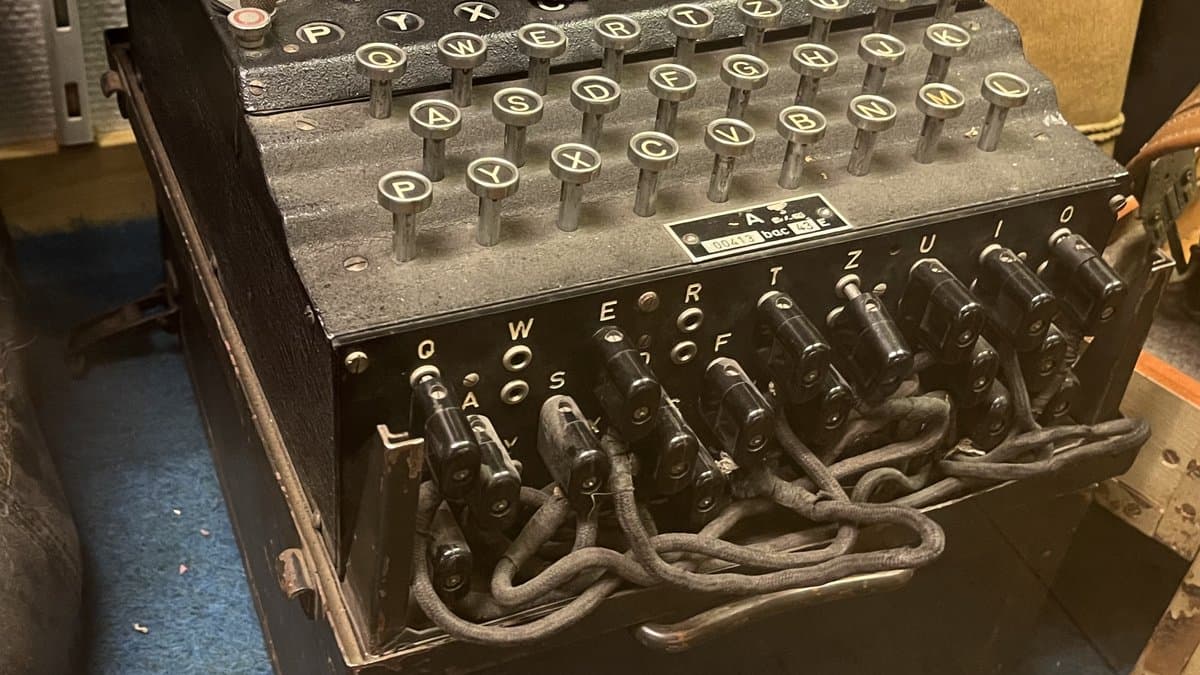
A German Army Enigma message sent on July 10, 1941, and unbroken since it was published online in 2005, has been decoded. Frode Weierud of Crypto Cellar Research, who published the message, says that Carter Leffen asked him to check a break produced by OpenAI's GPT-6 Astra, and that the key and the plaintext proved correct.
The message was sent to the radio station of the SS-Totenkopf division's quartermaster. The decrypt runs to 82 letters, and a case study published by Leffen renders it in English, approximately, as: "Please specify the route of march. I am in Rosenow, Rosenow. Immediate reply by radio." The signature is tentatively read as Waschbusch.
Leffen's account, as Weierud relays it, is that he only pointed the model at the site's list of unbroken messages. It chose this one and suspected the text resembled another message from the same day that had already been broken. It settled on the repeated place name ROSENOW as a crib, a guessed fragment of plaintext, and then wrote its own Enigma simulator and Bombe, the wartime key-searching machine, in Python and C++.
Weierud says that the copied-out enciphered text carried several errors, and that the machine's left-hand wheel turns over at the 72nd letter, which happens rarely and is known to make a break harder. He writes that those factors may be why earlier attempts failed.
It is not the only Enigma message broken with an AI model. Weierud reports that on Sept. 21 Jack Willis announced breaking another 1941 message using Anthropic's Claude Opus 5, which he describes as relying on strong human guidance. Leffen's case study makes no claim to a world first.
Weierud writes that of close to 1,000 messages in the German Army collection, seven Enigma messages now remain unbroken. He says the work would have taken a human researcher weeks or even months.
Weierud adds that the logs are still being analyzed, and that it is not clear how the model obtained Bundesarchiv references it cites. The references are correct but are not on his website.
