Researchers Watch Rust Move Through the Hidden Gaps in Old Steel
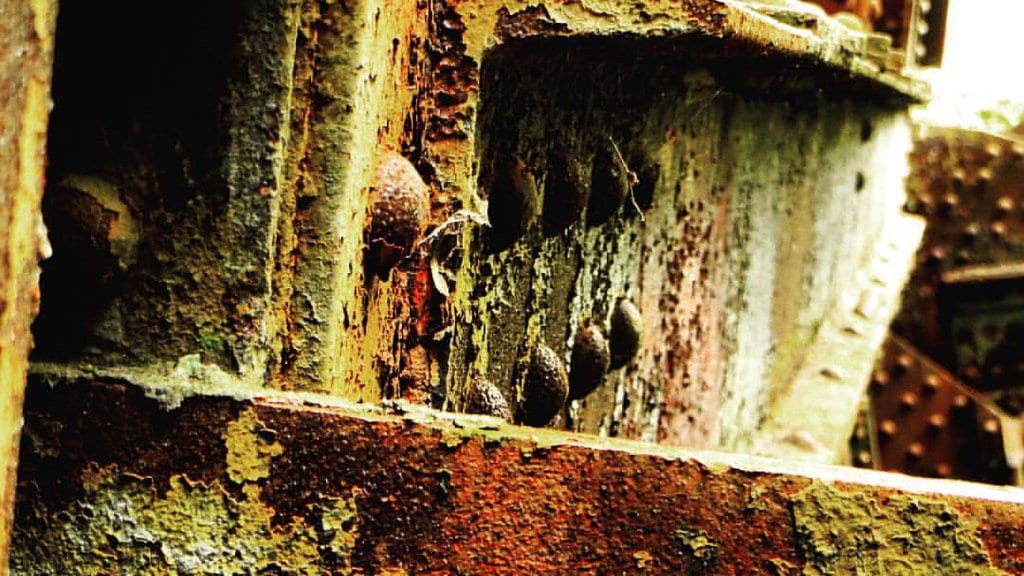
Researchers in Switzerland have traced how crevice corrosion, rust inside a joint's gap, begins and spreads through riveted steel. A team from ETH Zurich and Empa, the Swiss Federal Laboratories for Materials Science and Technology, reported in Communications Engineering on Sept. 19, 2026, that the damage advances as a cascade of chemical reactions that migrates across the gap rather than sitting in one place.
The study presents what the authors call an experimental and computational framework for building predictive models and targeted ways of slowing corrosion in heritage steel structures. Riveted steel is what a great many 19th-century bridges and buildings are made of, and this kind of corrosion works in the space between plates, where it cannot be seen from outside. Fabio Enrico Furcas of ETH Zurich's Institute for Building Materials, senior author Ueli Angst, and their colleagues followed the chemistry of a laboratory crevice as it happened, using an array of small electrodes that read the gap at many points at once. They then examined the rust left behind under an electron microscope and with X-rays, and modeled which products the chemistry should produce.
The swings in pH long observed inside crevices, they report, come from that migrating cascade, and which reactions run depends on which of two forms the dissolved iron is in. Those conditions make different corrosion products settle out in different places, leaving an alkaline zone above pH 12 near the mouth of the gap and an acidic one below pH 5 further in.
The team also checked the account outside the laboratory against corrosion products sampled from a crevice in a 140-year-old riveted steel structure.
Oxygen starvation and acid buildup inside crevices were already established features of the process. What the paper takes on is the reaction pathways behind them and how they are coupled across the gap.
Sources
- www.nature.comPeer-reviewed