Not All Texas Quakes Are Wastewater's Fault: A Physics Test Reassigns Blame in Fort Worth

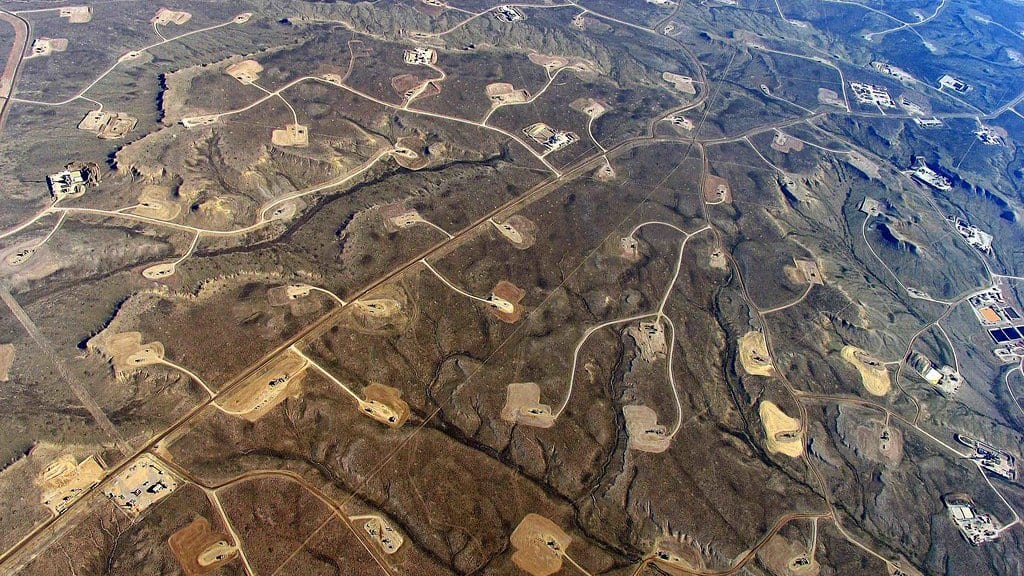
For years, the shorthand explanation for the earthquakes shaking north-central Texas was simple. Drillers inject enormous volumes of salty wastewater deep underground; the water raises pressure on ancient faults, and the faults slip. The correlation between the rise of disposal wells and the arrival of felt earthquakes in a region that had been nearly aseismic was hard to argue with.
Simple stories are useful, and often incomplete. A study published July 23 in the journal Seismica takes the Fort Worth basin's earthquake record and asks a harder question, one fault sequence at a time: which cause actually fits the physics here? (Grigoratos et al., 2026). The team, Iason Grigoratos, Alexandros Savvaidis, Heather DeShon, and Stefan Wiemer, brings together researchers with deep roots in the field, including the Texas seismic monitoring program TexNet.
Their method matters as much as their answer. Rather than lean on the timing coincidence that "quakes rose as wells arrived," they applied an established probabilistic framework that models how pressure from an injection or a frack job should physically diffuse through rock and load nearby faults. Then they hindcast: given a candidate cause, how many earthquakes should have appeared, where, and when? They compared that prediction against the real catalog, and against a baseline of natural tectonic loading with no human input. A cause only earns credit if the physics and the numbers line up.
Run that test across the basin, and the single label breaks apart. One earthquake sequence is best explained not by wastewater disposal but by hydraulic fracturing, the shorter, higher-pressure process of cracking rock to release gas. Two others, the Irving-Dallas and Lake Lewisville sequences, do fit a wastewater-disposal cause, but with a crucial condition attached: the link holds only when the model assumes large diffusivity values, meaning pressure travels through the rock unusually easily. Change that assumption, and the case weakens. And three of the region's most talked-about clusters, at Venus, Azle, and Cleburne, showed no significant association with wastewater disposal at all.
Those conditions are central to the study's conclusion. Saying wastewater "caused" the Irving-Dallas quakes without noting that the link depends on a high-diffusivity assumption would overstate what the physics supports. And Azle in particular has a history of resisting the simple explanation. Earlier work already found it behaved differently from a straightforward pressure-buildup story, so a result that declines to pin it on disposal fits, rather than contradicts, what the field had begun to suspect.
There is a bigger structural conclusion underneath the case-by-case verdicts. The framework the team started with assumed that each patch of ground responds consistently over time to fluid injection. That assumption, they found, does not hold in the Fort Worth basin. Instead of widespread fault reactivation across the region, the basin produces "isolated sequences on a small percentage of faults." The seismic action is concentrated on a few unlucky structures, not smeared across the whole geology.
For anyone deciding how to manage the hazard, that is close to good news. Widespread reactivation would mean the whole basin is primed, and any well could be trouble. A few isolated problem faults, by contrast, can be identified, watched, and managed with targeted measures, adjusting or pausing operations near the specific structures that respond, rather than clamping down on an entire industry across a whole region.
Human activity is still driving earthquakes in a place that barely had them a generation ago. The study instead shows that the causes differ from one sequence to another, with some linked to wastewater disposal, one better explained by hydraulic fracturing, and others showing no significant association with wastewater disposal.
Sources
- SeismicaPeer-reviewed