Microplastics Make Heat and Ozone Harder on Bumblebees

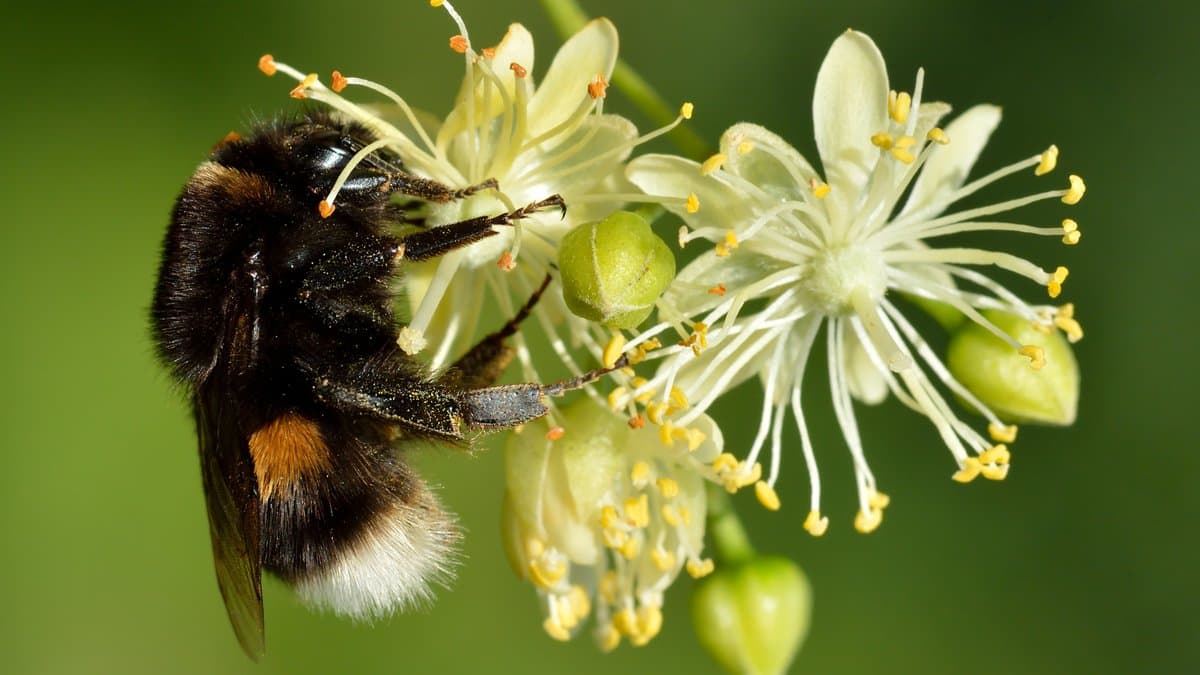
A bumblebee working a city park on a hot afternoon is not dealing with one problem at a time. The air can carry ozone, a gas that forms when sunlight works on traffic exhaust. The flowers, the water and the soil carry plastic worn down into pieces too small to see. And the afternoon is hot. Laboratory tests, for reasons of their own, usually hand an animal one of those at a time.
A team led from the University of Bayreuth set out to test them together. Writing in the journal Microplastics and Nanoplastics on Sept. 18, 2026, Gwen Kühn, Heike Feldhaar and colleagues describe an experiment that gave buff-tailed bumblebees every possible combination of three pressures: ozone at concentrations found in real outdoor air, heat, and low-density polyethylene, the soft plastic of shopping bags and food wrap, ground into microplastic. Their reason for doing it that way is the one they state at the top of the paper: outdoors, pollinators meet several of these pressures at once, and the mix may be worse than the parts.
This is a collaboration across three institutions. The bumblebee work sits at Bayreuth; the protein analysis was done at the Gene Center of LMU Munich; the air chemistry comes from Forschungszentrum Jülich and the University of Cologne.
Of the three acting alone, the plastic was the one that mattered most for survival. It had the strongest effect on deaths among the single pressures, the authors report. Ozone by itself, and heat by itself, did not push the death rate past what chance could explain. That is a statement about what this experiment could detect, not a finding that ozone and heat are harmless.
Add plastic, and they did. In bees that had also been exposed to microplastic, ozone raised deaths, heat raised deaths, and the two together raised deaths. With all three at once the effect was stronger than the separate effects predicted, which is what the authors mean by a synergistic effect: the combination does more than the sum of its parts.
The three do not arrive independently. Hot, sunny weather is what drives ozone formation at ground level, so heat and ozone tend to show up together, a link the authors make themselves when they set out what their results could mean.
The paper is peer-reviewed and free to read. It is also an accepted manuscript rather than a final one: the publisher says this text will be replaced automatically by the version of record, so wording and figures can still change.
For the mechanism, the team looked inside the bees, at an organ called the fat body, which does much of the work a liver does in us. They measured which proteins were there and in what amounts. Each pressure, the authors say, leaves its own mark. Ozone sets off a response to oxidative stress, the damage reactive oxygen does inside cells. Heat shifts the insect's metabolism. The plastic brings on responses to tissue damage, and the chemistry a body uses to break down foreign substances. The verb in the paper is careful: the protein changes suggest this; they do not show it.
Why would plastic make heat worse? The authors offer one possible explanation and mark it as one: bumblebees carrying microplastic may stand heat less well than bees without it.
What the study does not settle is whether pressures generally stack this way. In 2025 a separate group working in Italy reported the opposite kind of interaction in the same species in Proceedings of the Royal Society B: two common plastics, polystyrene and acrylic, each cut bumblebee survival on their own, and more so at higher doses, yet the two given together did not. Combinations can cancel as well as compound, and which one happens seems to depend on the particular pair.
That is the argument for testing every combination, and it is the part someone assessing risk can act on. Safety testing is usually done one substance at a time. If combinations sometimes multiply and sometimes cancel, one at a time will sometimes read low. The paper's closing line keeps the conditional: the steady build-up of microplastic, rising temperatures and the higher ozone that comes with them could, the authors write, become a serious health risk for pollinators in the years ahead.
Sources
- Microplastics and NanoplasticsPeer-reviewed
- doi.org