A Beach Sand Sample With a Known Answer, Sent to 49 Laboratories

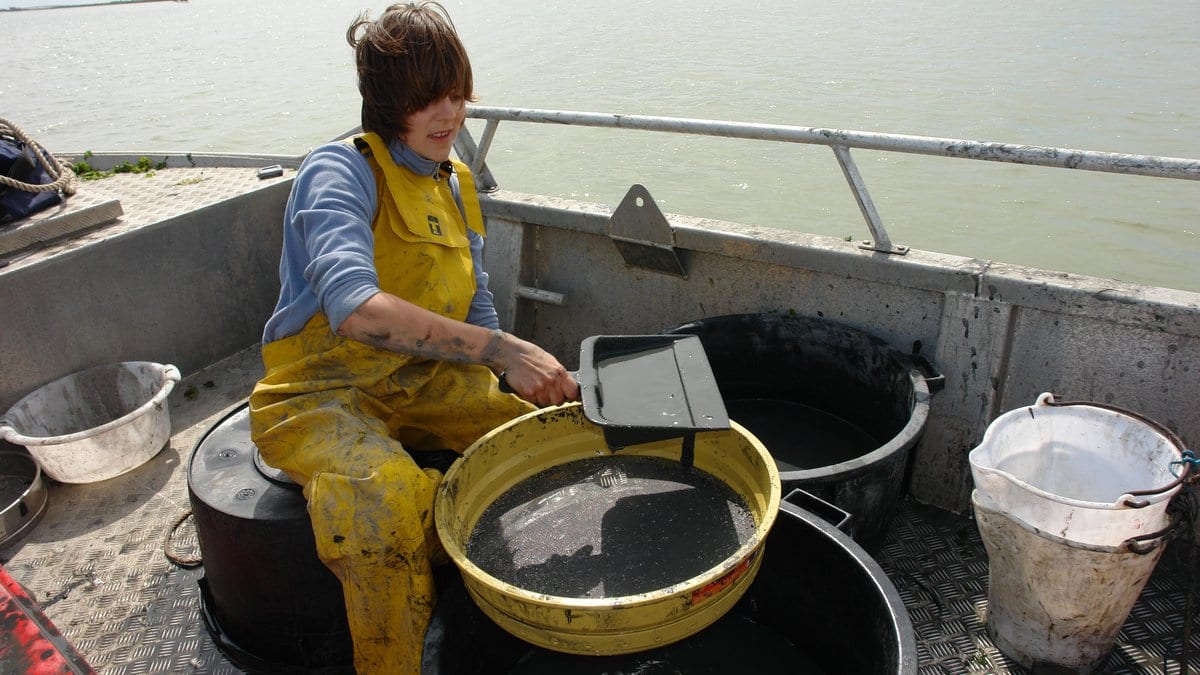
The sample was beach sand, and whoever opened the package had no way of knowing what was in it. Someone else knew exactly. A counted set of plastic particles had been mixed into the sand before it was sealed and sent to 49 laboratories in 41 countries. Each laboratory was asked to do what it would do with any sample off a beach. Find the plastic, count it, say what kind it is. This time the right answer was already on file.
The grader was the International Atomic Energy Agency, which has spent years training laboratories to make this particular measurement. Marc Métian and eight colleagues published the results online Oct. 16, 2026, in Marine Pollution Bulletin. The point of a spiked sample is that it closes a gap nobody can otherwise close. Every published number for how much plastic sits on a beach rests on a laboratory having found what was there, and a low count can mean a clean beach or a method that misses most of what it is looking for.
Performance split by size, and sharply. For the larger particles, 1 to 5 millimeters across, 22 of the 49 laboratories returned the exact spiked count. For the fraction below that, 0.3 to 1 millimeter, one did. The criterion is worth reading literally, because it is strict: only the exact number counts, not a near miss, so a laboratory could come close and still not appear in that tally.
The second result is not about precision at all. Of the 41 laboratories that also identified the type of plastic, 18 reported no transparent polystyrene particles whatever. The particles were in the sand they were given. Where fragments this size are picked out by eye under a microscope, a colorless one on pale sand is the easiest thing in the sample to pass over.
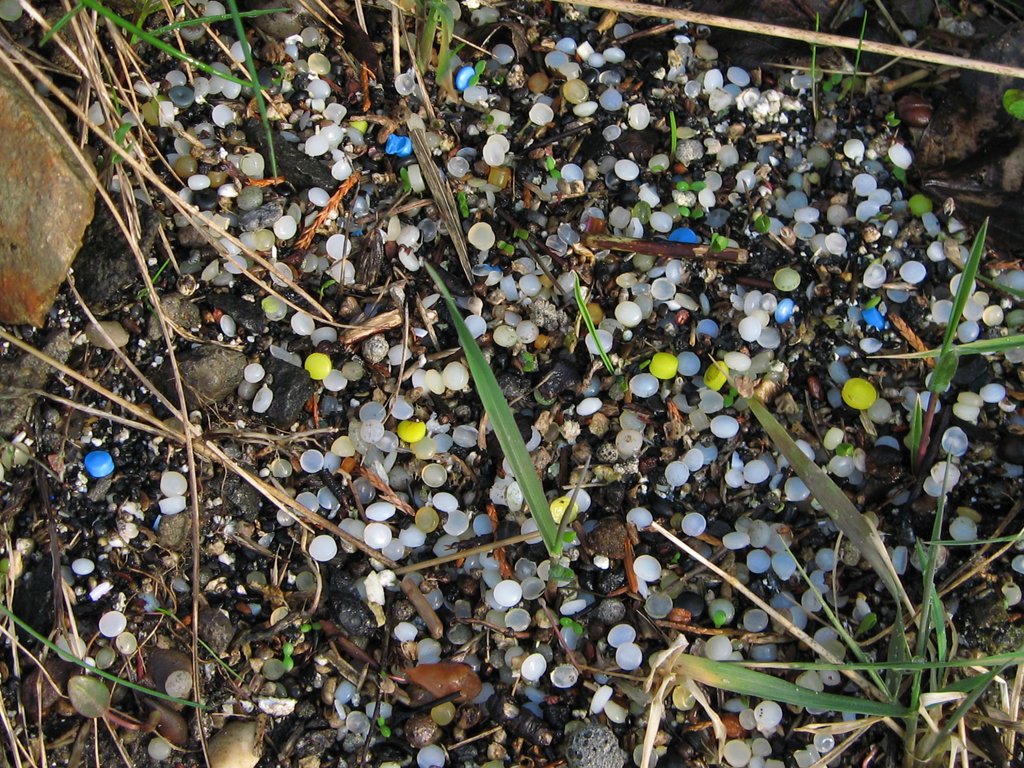
About one reported particle in four could not be matched to anything the organizers had put in. That is either stray plastic picked up in the laboratory itself or a particle assigned to the wrong polymer, and it is a number about this one exercise rather than a verdict on beach counts published elsewhere.
One ordinary bench habit separated the better results from the worse. Before anything is counted, the plastic is floated off the sand in a dense salt solution, and that mixture has to be agitated. Laboratories that shook their samples mechanically recovered about 1.77 times as much polystyrene as those that stirred them with a magnet. The figure is the authors' modeled estimate, from a statistical model in which the agitation step was the only variable that predicted how much polystyrene came back, and it covers polystyrene alone rather than recovery in general. It is also the one finding here that a laboratory can act on by changing a single step.
The shape of the exercise is unusual, as the paper itself acknowledges. Under its NUTEC Plastics initiative the agency developed the harmonized method these laboratories follow and provided their training and equipment, with the stated aim of building analytical capacity in the Global South. Then it set the test and marked it. It closes by naming priorities for the next phase of that same program: better recovery of small and transparent particles, and more standardization of agitation, contamination control and data reporting. The grading standard, at least, was not the agency's own judgment of its own work. It was a count fixed before the sand went out. All but one of the nine authors are at the agency's marine laboratories in Monaco, and the exception, Saif Uddin, is at the Kuwait Institute for Scientific Research.
The authors call this the first proficiency test of its kind, and the claim is narrower than it sounds. Laboratories have been compared before. A 2020 study handed laboratories around the world the same water sample and asked whether they were measuring the same thing, and a global interlaboratory study published in June 2021 concluded that harmonization was urgently needed. What is new is a graded test, with a spiked sample and a fixed answer, for large microplastics in beach sand.
One limit of scope governs all of it. These are particles you could lift with tweezers, and the test says nothing about the much smaller fragments that dominate most coverage of plastic pollution. What it measures is capability in the laboratories any global monitoring network would have to be built from. On the biggest particles, many of them can already do the job. On the small and the colorless, the agency's own exam leaves most of them short of it.