Germany Had a Quiet Tornado Year Until One Evening in August

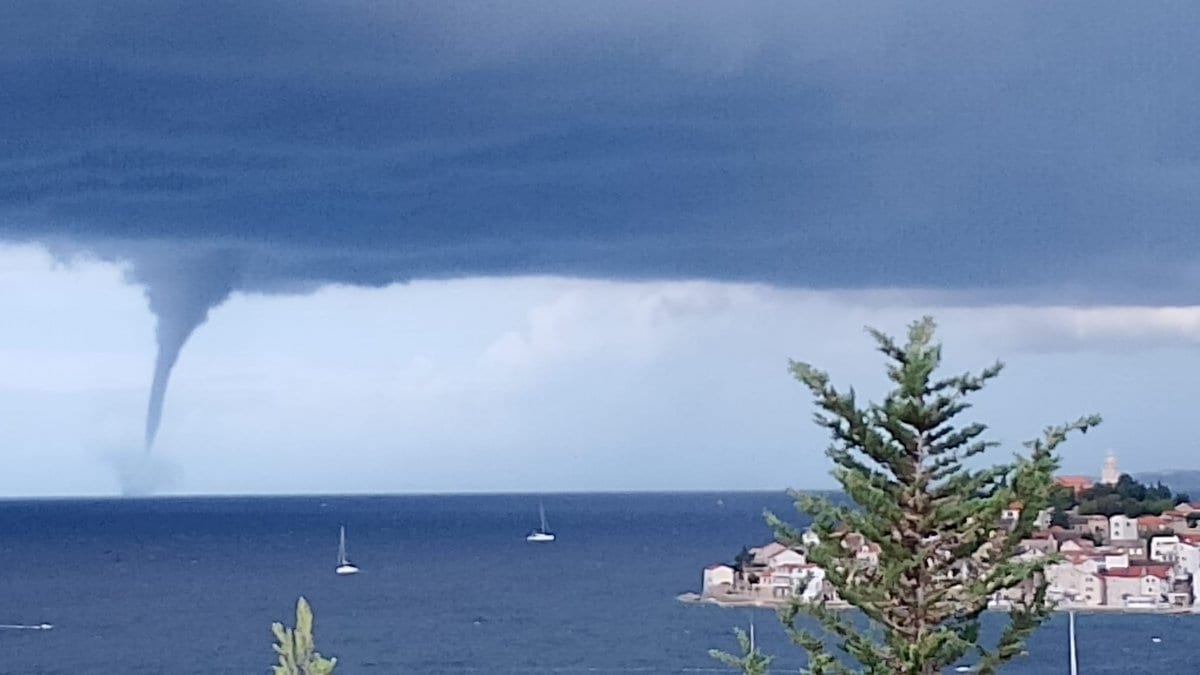
By the middle of August, Germany's tornado season had barely started. Long spells of high pressure and drought shaped the summer across much of the country, and the thunderstorms that carry tornadoes largely failed to form. The first suspected case of the year to be confirmed was a waterspout seen from the North Sea island of Borkum on June 3, 2026, and it turned out to be three of them. That is the latest start to a German tornado year since at least 2000. By mid-August, 13 cases had been confirmed.
Then, on the evening of Aug. 19, 2026, a low-pressure area tracked west to east across the middle of Germany and on into the night, throwing out severe thunderstorms that produced tornadoes again and again. In a preliminary balance of the season published Oct. 19, 2026, the Deutscher Wetterdienst, Germany's national weather service, counts 19 confirmed tornado cases on that one day, more than half of the 34 it has confirmed for the whole year.
Nineteen is the day's total, not the size of the outbreak. Sixteen tornadoes have so far been confirmed as belonging to the one thunderstorm low; the release counts separately a tornado near Fürstenwalde and two waterspouts near the island of Norderney the same day. The difference matters. The database Germany files its cases into defines an outbreak by the weather system behind it: at least five tornadoes from one and the same system, with at least one of them strong, meaning IF2 or higher on the International Fujita scale. On that definition, those 16 are the largest tornado outbreak in the records of the European Severe Weather Database, which the European Severe Storms Laboratory runs. The last comparable outbreak, the weather service says, was the windstorm Kyrill on Jan. 18, 2007, which produced 14.
That record is younger than it sounds. The first documented German tornado dates from the year 689, but the number of documented cases stays comparatively low until about 2000. Around then, digital photography and the spread of the internet made a tornado far easier to record, back up with pictures and share over distance. So the weather service states its claim carefully, and twice: the largest outbreak that can be found in the records, and the largest among outbreaks centered on Germany. An older and bigger one would simply not be in the file.
The strongest tornado of the German year came the same evening, at Ohrdruf in Thuringia. It is rated IF2.5, which corresponds to winds of about 250 kilometers per hour.
Whether a wind event was a tornado at all, rather than a sudden downward gust from the storm, is not obvious from the damage, and settling it takes work. Reports arrive at the weather service's tornado expert group from social media, from the press, and in private letters. The group, which works with other specialists in a German tornado expert network called TOREX, reads the pattern of damage on the ground against the images from the weather radars. A suspected case is confirmed, or it is not.
That is why every figure in the balance is marked provisional. The investigations into the suspected cases from that evening are still running. Numerous suspected cases from the rest of the year have not been finally assessed, and more could be added before the end of the year. The weather service and TOREX will go back over them in early 2027, and the service expects some further cases to be confirmed then. It does not expect the shape of the year to change: even with the August outbreak, it says, the 2026 season should finish clearly below the long-term average.
The average it is measured against is 49 tornadoes a year for 2000 to 2025, a figure from a paper on German tornado statistics published in Meteorologische Zeitschrift in February 2026 and cited in the release. The swing from year to year is wide, and it follows the weather patterns that settle over the country in summer: the expected range runs from 29 to 69 cases. At 34 so far, the season sits in the lower part of that spread rather than outside it.
The release also takes on the question an August like that one invites. The annual counts run through weaker and stronger phases, the weather service says. On the current data, there is no indication of any change in German tornadoes as a result of climate change, and none of an increase, in either their strength or their number. What moves the figure from one year to the next, on the agency's own account, is the summer weather.