El Nino's Long Echo: How a Yearly Climate Cycle Rewrites Tropical Forests for Decades

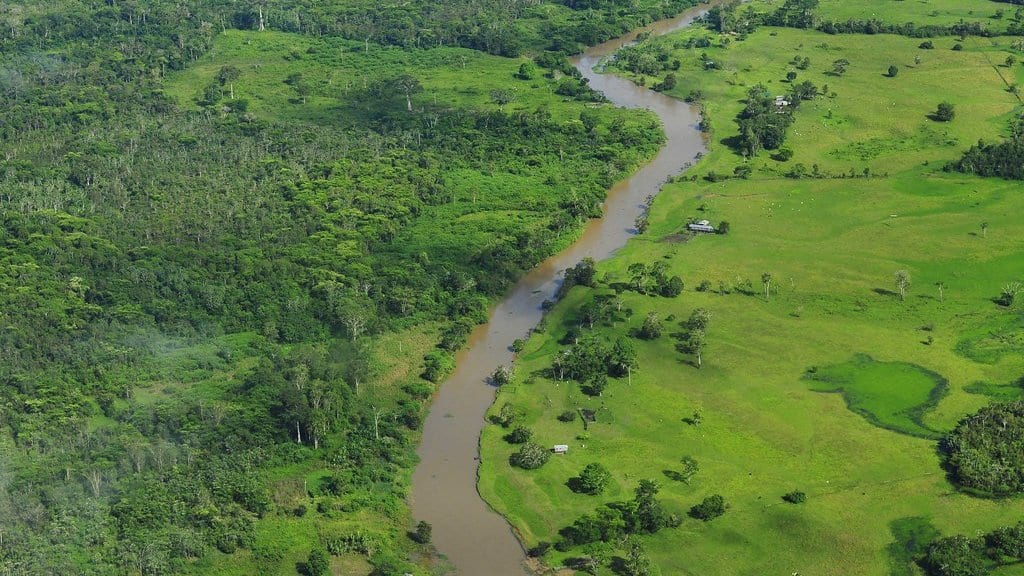
El Nino is famously a creature of the calendar. It flares roughly every two to seven years, tips global weather off its usual paths for a season or two, and fades. Ask what it does to the world's rainforests and the intuitive answer is a matching pulse: a dry year in the Amazon, a stressed year in Borneo, then a return to normal. A short shock with a short shadow.
A new study argues the shadow is far longer than the shock, long enough to be measured in decades.
Writing in Earth System Dynamics, Nora Fahrenbach and Robert Wills examined how the El Nino–Southern Oscillation (ENSO) imprints itself on tropical vegetation across 11 climate models from the CMIP6 archive (Fahrenbach & Wills, 2026). They were not simply asking whether an El Nino year browns a forest; that much is well established. They were asking what happens when you listen to the vegetation signal not year by year but across the low, slow frequencies: the ten-, twenty-, thirty-year rhythms. There, they found something the seasonal view hides.
The technical description is "spectral reddening", a shift of energy toward the slower end of the spectrum, the way a sound reddens when its low tones swell. In plain terms, the models show ENSO's fingerprint on leaf area amplifying by 20 to 25 percent at multi-decadal timescales, rather than washing out as noise. A cycle that announces itself in single seasons quietly accumulates into swings that outlast any individual El Nino by decades, and the effect concentrates where the tropics are greenest and most consequential: the northern Amazon and Southeast Asia.
How does a short atmospheric wobble stretch into a decades-long vegetation trend? The answer, in the models, runs through the soil. ENSO shifts patterns of rainfall and evaporation, and those shifts alter near-surface soil moisture, a variable with a longer memory than the atmosphere above it. Vegetation responds to the moisture, and in responding, feeds back on it: canopy cover changes how much water is drawn up and released, nudging the moisture state that shaped it. Land and water lock into a slow conversation, and that coupling is what lets a fast ocean-atmosphere oscillation leave a low-frequency mark on the biosphere. The land, in effect, remembers.
One wrinkle keeps the picture from being too tidy. The amplification shows up clearly in leaf area (how much canopy the models grow), but it is muted in net primary production, the carbon plants actually bank. The reason is respiration: as the vegetation flushes, it also breathes off more carbon, so the greenness signal and the carbon-uptake signal do not move in lockstep. For anyone tempted to read this as a straightforward story about the tropics soaking up or shedding carbon on decadal cycles, that gap is a caution: leaves and carbon are not the same currency.
The finding matters most for a stubborn problem in climate science: what makes decade-scale variability predictable. Much of the climate's slow rhythm is chalked up to the ocean, the sluggish overturning of heat in the Pacific and Atlantic. Here is a land-based source of decadal variability that is, at least in the models, orderly rather than random. If ENSO reliably seeds multi-decadal vegetation swings through soil moisture, then the state of tropical soils and canopies carries information about the years ahead, a signal forecasters could, in principle, exploit to push the horizon of climate prediction outward.
The honest boundary around all of this is that it lives inside the models. This is a CMIP6 result: 11 simulations of how the Earth system behaves, not a direct measurement of the real Amazon over the past century. Models are where mechanisms like this can be cleanly isolated (you can hold the physics fixed and watch the soil-moisture feedback do its work), but they also carry their own biases in how they render tropical rainfall and vegetation, and the 20-to-25-percent figure is a modeled range, not an observed one. The obvious next step is to hunt for the same reddening in long observational and paleoclimate records, where the messiness of the real world will test whether the land truly remembers as the simulations say it does.
For now, the study reframes a familiar character. El Nino is not only the noisy seasonal disruptor of headlines and forecasts; in these models it is also a slow architect, its brief pulses banking into vegetation shifts that ripple across the tropics for a generation. The echo, it turns out, may last far longer than the shout.
Sources
- Earth System DynamicsPeer-reviewed