The One Air Pollutant Europe Isn't Cleaning up Blows in From the Sahara

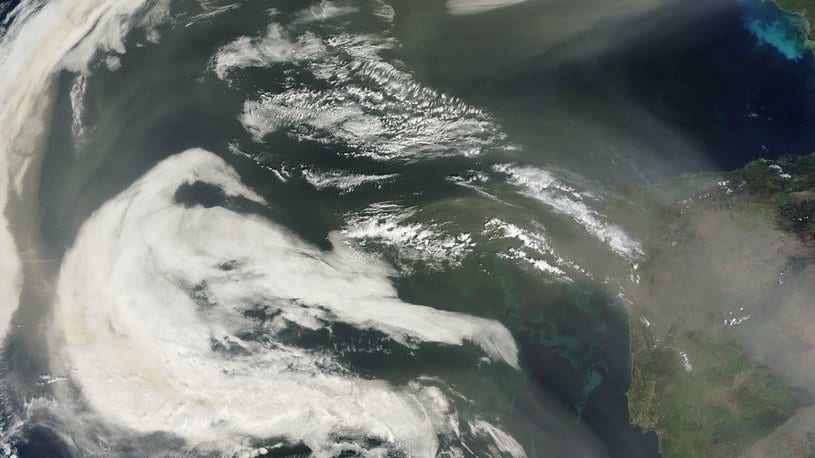
For two decades, the story of Europe's air has been one of slow, hard-won improvement. Cleaner engines, tighter industrial rules, and the retreat of coal have pulled soot and sulphur down year after year. Ask a European city whether its air is getting better and the honest answer, for most pollutants, is yes.
One pollutant did not get the message. It is not made in Europe at all. It arrives on the wind from a desert two thousand kilometres away, and over the past ten years it has been arriving in greater quantities.
A team led by researchers at the Paul Scherrer Institute in Switzerland set out to measure exactly how much. Reporting in Nature on 15 July, Imad El Haddad, Kaspar Dällenbach, Petros Vasilakos and their colleagues pooled a decade of measurements from more than 100 monitoring stations spread across the continent. It is one of the most complete pictures yet assembled of how much Saharan dust Europe actually breathes, and how that figure has been changing.
The trend runs the opposite way to almost everything else in the air. Over the ten years studied, desert dust concentrations rose by roughly 10 to 25 percent, an increase of about half a microgram per cubic metre. The burden is not spread evenly. In southern Europe, closer to the source, stations averaged 5.3 micrograms per cubic metre, more than double the 2.1 recorded across central and northern Europe. To put the longer arc in view, the researchers also drew on ice-core records: dust levels over Europe have more than doubled across the 150 years since industrialization began.
Here is the finding that matters most, and the one easiest to get wrong. The rise is not because more storms are blowing dust north. The number of dust-bearing storms has held roughly steady. Across some 500 events the team analysed, what changed was their strength. The storms have grown more intense, and stronger storms lift and carry more dust. Behind that intensity sit two shifts: the steady drying of the Sahara itself, and altered patterns of atmospheric circulation steering the plumes toward Europe. More powerful storms over a more desiccated desert, in other words, not simply more of them.
That distinction shapes what the dust does once it arrives. Fine mineral particles behave in the lungs much as any other fine particulate matter does, and the health signal in the data is clear enough to see day by day. On days thick with dust, the researchers found measurably higher mortality from heart attacks and respiratory problems. The long-term consequences of chronic exposure, including conditions such as asthma and chronic bronchitis, are harder to pin down and will take more study to quantify.
The dust also lands on Europe's fastest-growing source of electricity. As the continent covers more ground in solar panels, airborne dust matters in a way it did not a decade ago. It dims the sunlight reaching the panels and settles on their surfaces, both shading and soiling them, and output falls. A cleaner grid, it turns out, is not entirely insulated from a dirtier sky.
None of this is a reason to discount the progress Europe has made on the pollutants it can control. The uncomfortable point is subtler. Some of the air quality that traffic rules and cleaner power have delivered is being nibbled back by dust that no European regulation can touch, because it originates on another continent. And the same warming reshaping Europe's weather is expected to keep drying the Sahara and energizing its storms, which points in one direction for the years ahead.
The measurements stop at the present. What they establish is a trend that has already turned, over a full decade, across a continent's worth of instruments. That trend is up.