Teaching Generative AI to Discover Crystals, Not Just Copy Them

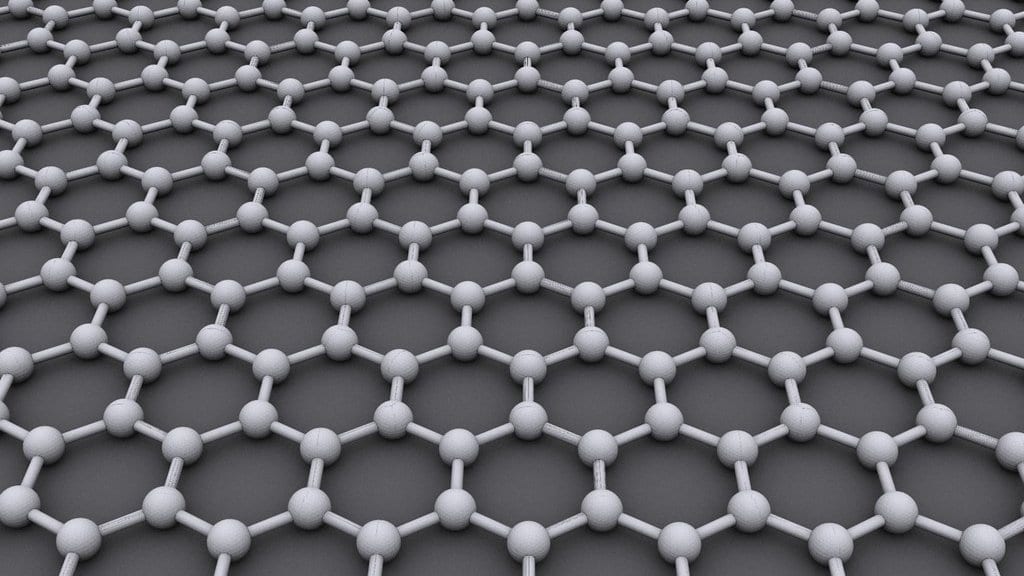
Ask a generative model trained on a database of known crystals to invent something new, and it faces a quiet contradiction. Everything in its training rewarded it for producing structures that look like the ones it has already seen, because looking familiar is how such models are scored. The safest way to earn a high mark is to hand back a near-copy of something real. That instinct is exactly what makes the models trustworthy and exactly what makes them poor explorers. The genuinely new material, almost by definition, sits in a region the training data barely touches, where the model has learned to assign low probability and therefore rarely ventures.
A study published on 6 July in Nature Machine Intelligence takes direct aim at that contradiction. Hyunsoo Park and Aron Walsh at Imperial College London argue that the usual training objective (maximise the likelihood of the data) is the wrong compass for a model meant to discover. Their fix is to bolt a reinforcement-learning stage onto a generative diffusion model, so that after learning what real crystals look like, the model is rewarded not for imitation but for hitting a set of explicit goals. The work first appeared as an arXiv preprint in November 2025 and has now cleared peer review.
The novelty-versus-validity trap
The problem the paper names has a familiar shape to anyone who has watched AI wander into materials science. Push a generative model hard toward novelty (reward it for producing things unlike its training set) and it will happily invent chemistry that is nonsense: compositions that would never hold together, structures no furnace could make. Rein it in toward validity and it retreats to the safe, known, already-catalogued. Novelty and validity pull in opposite directions, and most systems land somewhere unsatisfying on the slider between them.
Park and Walsh's response is to stop treating that as a single dial and instead define several rewards at once. Their reinforcement-learning stage scores each generated crystal against multiple objectives simultaneously: creativity (how far it departs from known compounds), diversity (whether the model is exploring rather than fixating on one motif), and stability (whether the structure is thermodynamically plausible rather than a chemical fantasy). Crucially, the stability and validity checks are verifiable: the reward comes from a calculable property, not a vague preference, which is what stops the "be more creative" signal from degenerating into garbage.
How the reward reshapes the search
Mechanically, the system pairs a latent diffusion model (the generator) with an optimisation method borrowed from recent language-model training, group relative policy optimisation. Rather than nudging the model with a single scalar reward, the method compares a batch of candidates the model produces and pushes it toward the better ones relative to the group. Applied to crystals, that steadily drags the generator away from likelihood-based sampling, where it clusters around known structures, and toward the underexplored corners of compositional space where undiscovered materials would live.
The result the authors report is a generator that can be pointed at a target (a desired property, or simply "somewhere new and stable") and return candidate structures that satisfy the brief without collapsing into chemical implausibility. In their framing, the same reward machinery that keeps the outputs valid is what lets the model be pushed safely into unfamiliar territory. It is, in effect, a training-time steering wheel for generative discovery.
Why this is a recipe, not a result
Here the honest caveats matter, and they are substantial. This is a computational demonstration. The "novel, stable" crystals the model proposes are predicted to be stable by calculation; none has been synthesised in a laboratory, characterised, or confirmed to exist. Thermodynamic stability on a computed energy landscape is a strong filter, not a guarantee; the history of computational materials discovery is littered with structures that looked stable on a screen and never survived a crucible. Until something is made and measured, "discovered" is the wrong word; "proposed" is the right one.
Nor has the method been independently reproduced. And it lands in a crowded field: reinforcement learning applied to generative materials models is an active, competitive area, and several groups are circling the same novelty-versus-validity problem from different angles. This is a well-executed, clearly argued contribution to that conversation, incremental in the honest sense that it advances a shared line of work rather than opening a new one.
What makes it worth attention anyway is transferability. Nothing in the insight is specific to crystals: likelihood maximisation is the wrong objective for discovery, and a verifiable multi-objective reward can steer a generative model past imitation without letting it hallucinate. The same argument applies wherever generative models are asked to invent rather than reproduce, from molecules to catalysts to proteins. If the recipe holds up under independent testing and, eventually, in a lab, its value may be less the crystals it drew than the training principle it demonstrates. For now, that principle sits in simulation, waiting for someone to make one of its crystals real.
Sources
- Nature Machine IntelligencePeer-reviewed
- arXivPreprint