When the AI Runs the Instrument: An Agent Takes the Controls at the Beamline

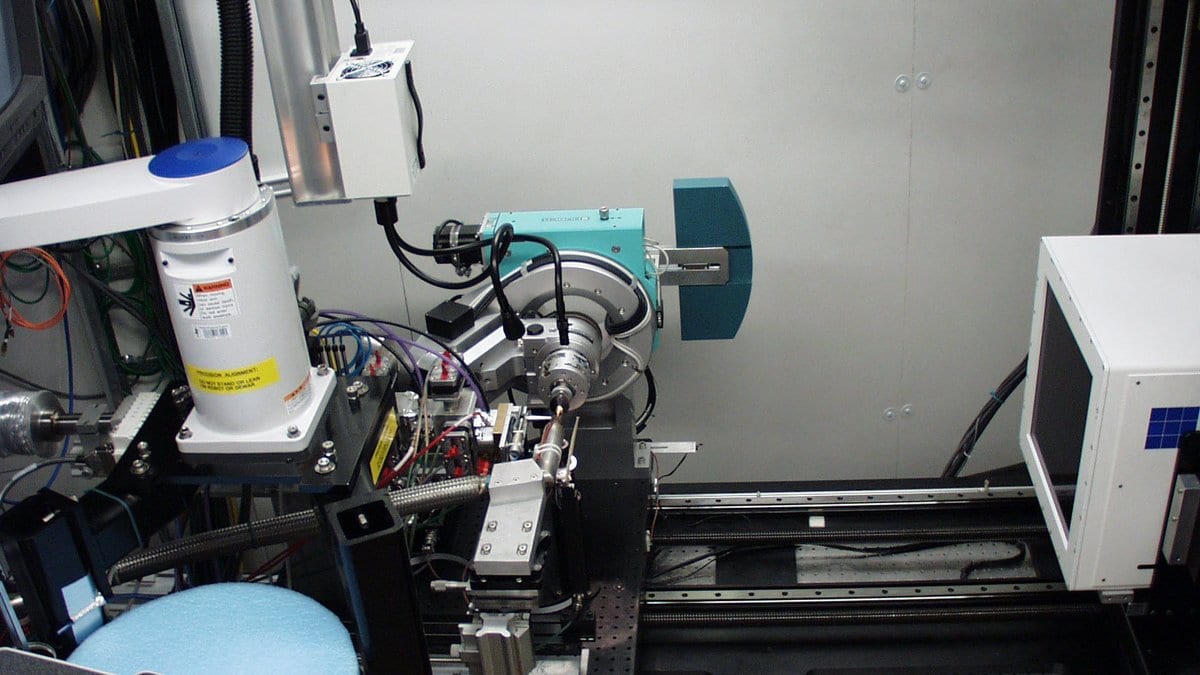
Time on a synchrotron beamline is one of the scarcer resources in experimental science. These facilities (building-sized machines that whip electrons around a ring to produce intense X-rays) are booked months ahead, and the hours a research group gets are precious. Making good use of them has always leaned on a particular kind of expert: someone who can tune the instrument, watch the data scroll in live, and judge on the fly whether the next measurement should tweak one setting or abandon the plan entirely. That judgment is hard to hire and harder to clone.
A paper published in Nature Machine Intelligence asks what happens when you hand part of that judgment to software. The authors describe what they call an agentic AI X-ray scientist: a large-language-model agent wired into the experimental loop so it can plan a measurement, operate the beamline, and reason about the results, all with less direct human steering than a run would normally require. The distinction the work is chasing is a real one. Plenty of AI already lives on the analysis side of science, interpreting data after the fact. Far less of it touches the instrument itself.
That is the line this demonstration steps over. Instead of a model reading a finished dataset, the agent sits inside the experiment as it unfolds: proposing what to do, issuing the commands, and interpreting what comes back well enough to inform the next move. It is the difference between an assistant that writes up your notes and one that runs the apparatus. And it is why the paper reads as an early data point for "agentic science": the idea that AI systems might not just answer questions about the world but conduct the measurements that produce the answers.
Two caveats deserve to travel with that framing, and the authors keep them close. The first is autonomy. This is not a machine left alone to do science while everyone goes home; it is a human-in-the-loop system, with the agent taking on chunks of work that used to require constant expert attention. Calling it a "fully autonomous scientist" would overstate what has been shown. A human still supervises. The second is reproducibility. This is a single demonstration. No independent group has yet rebuilt it and confirmed the results, which is the normal and expected state for a first-of-its-kind system, but it is exactly why one demonstration should not be read as a settled capability.
Set against the wider field, the direction is unmistakable. Agentic AI at synchrotron beamlines is an active research area, not a one-off stunt; the broader literature on automating these instruments has been growing steadily. What this paper contributes is a concrete, peer-reviewed instance of the agent crossing from the screen to the hardware. Whether that translates into routine practice depends on the unglamorous work still ahead: replication by other groups, at other facilities, on experiments the system wasn't tuned for. For now, the beamline has a new kind of operator on shift: one that plans and reasons, and still answers to a person watching over its shoulder.
Sources
- Nature Machine IntelligencePeer-reviewed